
Vandaag of morgen in huis

Kwaliteit gegarandeerd

Welkomstaanbiedingen ontgrendelen: GRATIS bezorging | Tot 80% korting | Gratis 30 dagen JoyPlus-proefperiode
Download de app
If you're considering buying a new 3D printer, you're likely overwhelmed by specifications and marketing promises. Especially in the advanced user segment, manufacturers promise high speeds and compatibility with advanced materials. But reality is often more challenging. Many users encounter the same problems: a printer that's fast on paper but delivers unusable results in practice, or a model that's "compatible" with special filaments but requires you to immediately purchase additional parts.
Before you make a decision, it's helpful to recognize the most common pitfalls:
An informed choice begins with seeing through these marketing claims and focusing on the specifications that truly matter.
To determine if a printer like the Creality K1C 3D printer lives up to its promises, we look at the technical solutions for the problems mentioned above.
The ability to print with abrasive materials like carbon fiber filament hinges on the extruder and the nozzle. A standard brass nozzle is soft and wears out extremely quickly when used with filaments containing carbon or glass fibers.
A professional 3D printer designed for these materials features:
The Creality K1C, for example, is equipped with a "Unicorn" tri-metal nozzle, which combines a hardened steel tip with a copper body and a titanium alloy heatbreak. This design is specifically intended to prevent clogs and resist wear from materials like carbon fiber.
A fast 3D printer is only useful if the print quality holds up at high speeds. The stability of the frame and the type of motion system are crucial here.
Printers like the K1C and K1 Max use a CoreXY structure and a rigid frame to ensure that the claimed speed of 600 mm/s actually delivers usable results.
Modern features like an AI camera and automatic calibration might seem like luxuries, but they have clear practical value.
Based on these criteria, we have selected a few options that suit different user profiles.
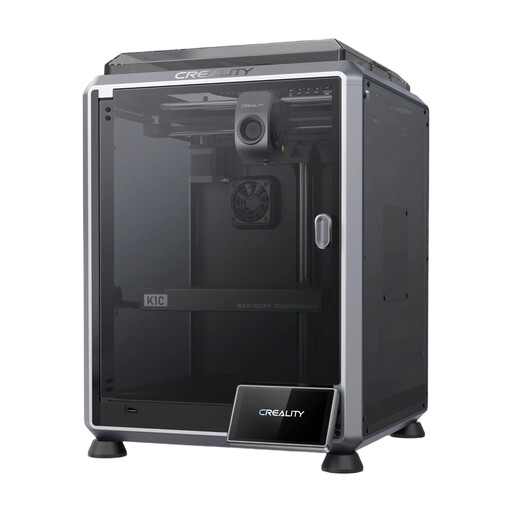
Why This Fits Their Persona: Ideal for the advanced hobbyist or small business that wants to produce functional parts and prototypes quickly and reliably. The focus is on efficiency and the ability to use advanced materials right away.
The K1C comes standard with a wear-resistant nozzle and an anti-clogging extruder. The AI camera and automatic calibration directly address the pitfalls of failed prints and complex setup.
Ready for carbon fiber filaments right out of the box. The combination of speed (CoreXY) and reliability (AI camera, auto-calibration) makes it an efficient production tool.
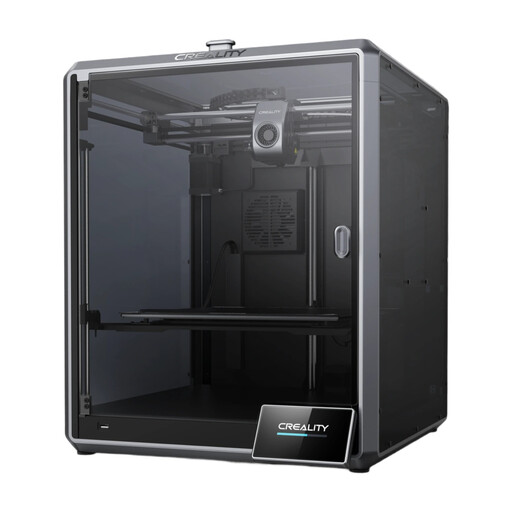
Why This Fits Their Persona: Suitable for engineers and designers who want to print large objects, such as enclosures or cosplay parts, in one piece without splitting them. Speed is important, but the build volume is the decisive factor.
Large prints are more prone to errors. The combination of a stable frame, AI camera, and a LiDAR sensor that scans the first layer significantly increases the reliability of long prints. This prevents wasted time and material.
The massive build volume of 300x300x300 mm. The addition of a LiDAR scanner for a perfect first layer is a significant advantage for large models.
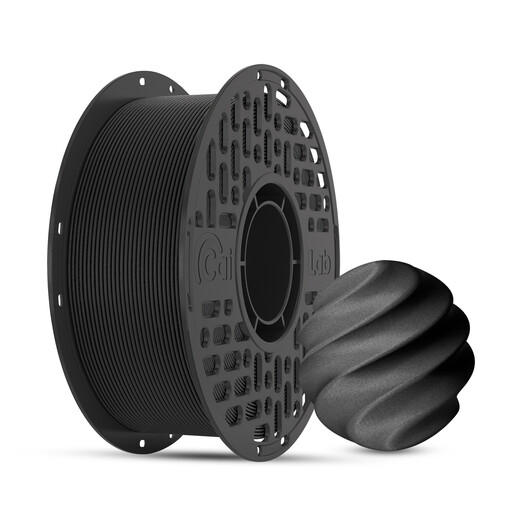
Why This Fits Their Persona: For the user who already has a capable printer (with a hardened steel nozzle) and is looking for a reliable, strong material for functional parts that need to be stiff and heat-resistant.
This isn't standard PLA with a 'carbon look.' It's PETG reinforced with real carbon fibers, resulting in functional strength and stiffness. It avoids the pitfall of weak, decorative 'carbon' filaments.
Combines the ease of printing of PETG with the added stiffness and heat resistance of carbon fiber. A great entry point for printing technical parts.
If you're specifically looking for materials for strong and lightweight parts, we have a current selection of filaments that meet strict criteria for performance and quality.
The primary difference is the build volume. The Creality K1 Max has a significantly larger print area of 300x300x300 mm compared to the K1C's volume. Additionally, the K1 Max features a LiDAR sensor that scans the first print layer for extra precision, while the K1C focuses more on material compatibility with its advanced 'Unicorn' nozzle. Your choice, therefore, depends on whether you prioritize large format (K1 Max) or optimized performance with technical filaments in a more compact size (K1C).
The K1C has a 'silent mode.' According to Creality's specifications, the noise level in this mode can be reduced to below 45 dB. This is comparable to the noise level in a library. Although 'quiet' is subjective, this feature makes the printer considerably more pleasant for use in a shared work or living space compared to many other printers running at full speed.
Yes, absolutely. Filaments reinforced with carbon fiber are highly abrasive and will wear down a standard brass nozzle in a short amount of time. This leads to inaccurate extrusion and poor print quality. You need a hardened steel nozzle or a similarly wear-resistant alternative. An advantage of the Creality K1C is that it already comes standard with a nozzle suitable for this purpose, so you don't need to make an immediate additional purchase.
