
Vandaag of morgen in huis

Kwaliteit gegarandeerd

Welkomstaanbiedingen ontgrendelen: GRATIS bezorging | Tot 80% korting | Gratis 30 dagen JoyPlus-proefperiode
Download de app
If you're looking for a 3D printer that can do more than just print standard PLA figurines, you'll quickly find yourself in a maze of technical specifications and marketing promises. The risk of making a poor purchase is especially high when you want to work with advanced materials like carbon fibre-reinforced filament. Many printers promise high speeds and versatility but fall short in practice. This article will help you recognise the pitfalls and evaluate the right specifications, with a focus on models like the Creality K1C 3D printer.
Before you make a decision, it's important to know what often goes wrong. Manufacturers advertise with impressive numbers, but the reality is sometimes different.
To avoid the pitfalls mentioned above, you need to pay attention to a few crucial technical specifications. These determine whether a printer can truly deliver on its promises.
For printing with engineering materials, a direct drive extruder is a must. It pushes the filament directly into the hotend, providing better control and reducing the risk of clogging, especially with flexible and abrasive filaments. The K1C, for example, is equipped with a robust, clog-free extruder.
The hotend must be suitable for high temperatures. A tri-metal "Unicorn" nozzle, like the one in the K1C, combines a hardened steel tip (wear-resistant for carbon fiber 3D printer filaments), a titanium heatbreak (prevents 'heat creep'), and a copper body (for rapid heating). A nozzle that can consistently reach 300°C is essential for materials like PA-CF and PET-CF.
A high-speed 3D printer needs a stable frame. A CoreXY system, where the print head is moved by two synchronous belts, is lighter and faster than traditional designs. This minimises vibrations at high speeds. Features like input shaping and vibration compensation, which the K1C has on board, are crucial for achieving sharp prints at high speed without sacrificing quality.
For materials like ABS, ASA, and nylon (PA), an enclosed 3D printer is not a luxury, but a necessity. A closed and controlled environment prevents 'warping' (the model deforming due to temperature fluctuations) and helps to contain fume emissions. An added benefit is that an enclosed design dampens noise, making it a more suitable quiet 3D printer for home or office use. The K1C has a built-in air filter with activated carbon, which further reduces odours.
Based on objective specifications, we have selected a number of printers that fit different user profiles and successfully navigate the aforementioned pitfalls.
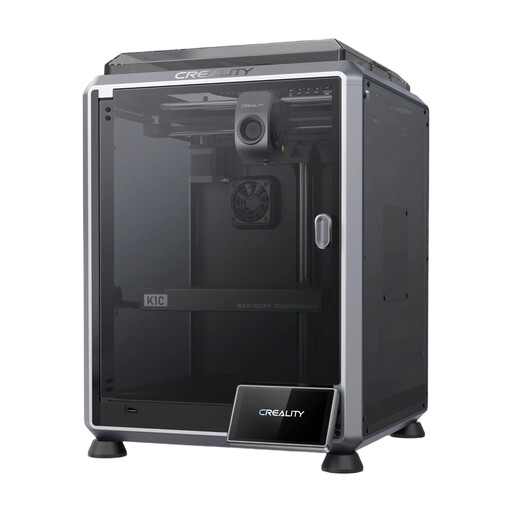
Why This Fits Their Persona: Ideal for the user who wants to create functional prototypes and parts with engineering materials. The combination of speed, reliability, and the ability to print with carbon fibre right out of the box makes this a workhorse for serious projects.
The robust, clog-free extruder and the tri-metal nozzle are specifically designed for abrasive filaments, avoiding the pitfall of material limitations. The standard built-in 3D printer with an AI camera reliably detects print issues.
Ready for PLA-CF, PA-CF, and PET-CF straight out of the box. The combination of a CoreXY system, automatic calibration, and an enclosed frame delivers consistent results at high speed.
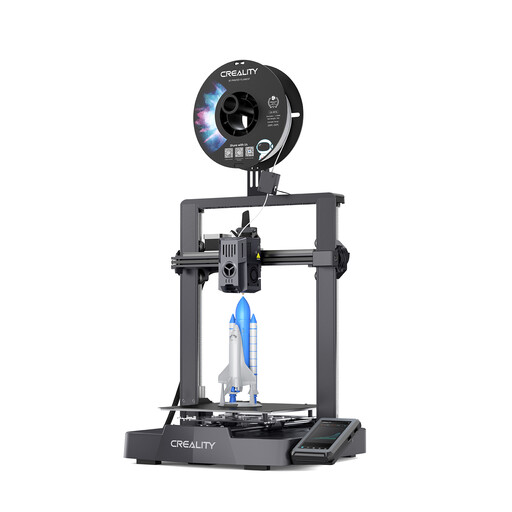
Why This Fits Their Persona: For the experienced hobbyist looking to replace their older, slower printer. This model offers a huge speed boost and modern conveniences like auto-levelling, without the complexity and cost of an industrial machine.
The Sprite Direct Extruder and 300°C hotend provide reliable performance for a wide range of filaments, including PETG and ABS. The automatic calibration truly works with a single touch, avoiding the "fake smart" pitfall.
A popular choice for its price-to-performance ratio. It offers high speeds and modern features previously found only on more expensive models.
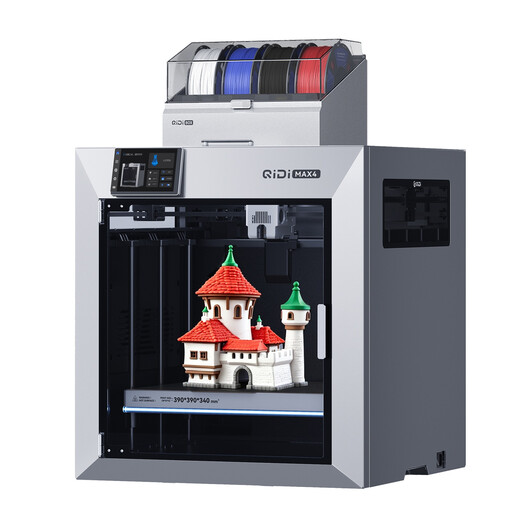
Why This Fits Their Persona: Perfect for small businesses or prosumers who need to print large objects, moulds, or prototypes in a single run. The heated chamber and multi-material options make it a versatile production machine.
This model tackles material limitations head-on with an actively heated chamber (65°C) and a high-flow hotend, allowing it to reliably print with demanding materials like ABS-CF and PPS-CF. The enormous build volume is real, not just a marketing figure.
A gigantic 390x390x340mm build volume, combined with a heated chamber and the option to expand to 16-colour printing. This offers a scalable solution for professional applications.
Yes, the K1C has a special 'silent mode' that, according to the manufacturer, reduces the noise level to below 45dB. This is comparable to the sound in a library. The fully enclosed frame also helps to significantly dampen the printer's mechanical noise, making it suitable for use in a living or office space without causing too much disturbance.
A 3D printer with an AI camera, like the Creality K1C, offers two key benefits. First, error detection: the camera continuously monitors the print and can detect 'spaghetti' failures or dislodged objects. The printer then automatically pauses, preventing waste of expensive filament. Second, remote monitoring: you can watch your print's progress live via the Creality Print app on your phone, wherever you are. This provides peace of mind, especially during long prints.
Printing with carbon fibre-reinforced filaments is abrasive and can quickly wear out standard nozzles. The K1C is prepared for this with a hardened steel nozzle tip, which lasts much longer. Maintenance is therefore comparable to a standard FDM printer: keep the build plate clean, check the belt tension periodically, and ensure the extruder is free of filament residue. Thanks to the wear-resistant components, you won't need to replace the nozzle after every few prints.
