
Vandaag of morgen in huis

Kwaliteit gegarandeerd

Welkomstaanbiedingen ontgrendelen: GRATIS bezorging | Tot 80% korting | Gratis 30 dagen JoyPlus-proefperiode
Download de app
A ceramic frying pan may seem straightforward to choose at first glance. However, pans vary considerably in their coating, compatibility with different heat sources, size and care requirements. A pan that works well on gas is not automatically suitable as an induction frying pan. And a product with the word “ceramic” on the packaging does not always have a PFAS-free non-stick coating.
If you fry, roast or sauté food every day, it is therefore worth looking beyond price and appearance. Below, you will find the key points to check, along with some popular choices for different kitchen needs.
Ceramic non-stick coatings can vary between manufacturers. Check whether the product description explicitly states PFAS-free, PTFE-free or PFOA-free. The term “ceramic coating” alone does not provide enough information about the full composition.
According to the product descriptions, the Redchef Starlight Series, Brabantia Onyx and Brabantia Dusk feature a PFAS-free ceramic coating. Other pans only state that the coating is ceramic. This is an important distinction if you are specifically looking for a PFAS-free frying pan.
A pan suitable for all heat sources will generally need a magnetic base. So look for the specific specification “suitable for induction”, rather than relying solely on “all hobs”. For example, the 28 and 32 cm Tefal Easy Cook & Clean are suitable for gas, electric and ceramic hobs, but according to the product information they are not suitable for induction.
Also check that the base diameter matches the induction zone. The Brabantia Onyx Sauté Pan is listed as having a base diameter of 17 cm. A pan that is too large for a small zone may heat less evenly.
A pan may be dishwasher-safe according to the manufacturer, while hand-washing can help extend the life of the coating. For ceramic coatings, preferably use a soft sponge, mild washing-up liquid and wooden or silicone utensils. Avoid metal spatulas, abrasive scouring pads and sudden changes in temperature.
Pay attention to the oven temperature limit too. According to the product description, the Brabantia Dusk can be used in the oven up to 200 °C. A dishwasher or oven symbol without clear temperature information is not enough for a safe comparison.
A 24 cm frying pan is practical for one to three people, eggs, pancakes and smaller portions. A 28 cm frying pan offers more room for meat, vegetables or a meal for several people. However, a larger pan requires a suitably sized cooking zone and enough storage space.
A pan set containing 24 and 28 cm pans can be useful if you often prepare different portion sizes. Check that both pans have the same heat-source compatibility and care requirements.
Aluminium heats up quickly and is relatively lightweight. Recycled aluminium may appeal to anyone considering material use; however, check whether a certification mark or certified percentage is specified. For example, the Brabantia Dusk states that it is made from 100% recycled forged aluminium and carries an RCS quality mark. The Tefal Renew set states that it is made from 100% recycled aluminium.
Stainless steel can feel sturdier, while cast iron retains heat for longer. A cast-iron roasting pan is particularly suitable for slow cooking, roasting and oven use, but is heavier than an aluminium ceramic frying pan.
A ceramic coating can make it easier to release food, but its service life also depends on temperature, utensils and cleaning. Do not heat an empty non-stick pan on a high setting for extended periods. Use a little oil when recommended in the instructions.
For sauces, stews and larger portions, a ceramic sauté pan or sauté pan with a lid is often more practical than a shallow frying pan. A glass lid lets you monitor the cooking process and helps retain moisture in the pan.
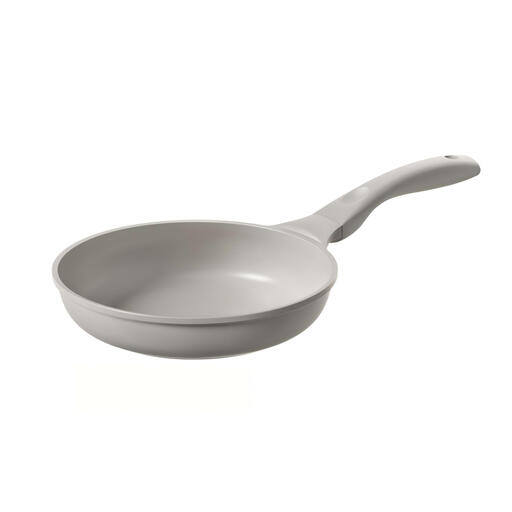
Why it suits this profile: The 24 cm size is easy to handle for everyday portions, and according to the product description, the pan is suitable for induction, gas and electric hobs.
The product information explicitly states that the ceramic coating is free from PTFE, PFOA and PFAS, and specifies the permitted heat sources.
24 cm, ergonomic handle and, according to the product description, dishwasher-safe. Do not use metal utensils.
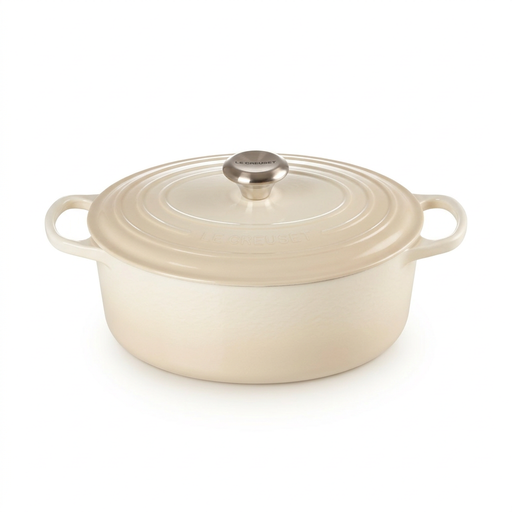
Why it suits this profile: This cast-iron roasting pan is designed for roasting, slow cooking and oven dishes involving larger cuts of meat, poultry and vegetables.
The specifications list a suitable lid, enamelled cast iron and use on all heat sources, including induction.
31 cm oval shape, oven-safe and suitable for all hobs. Hand-washing with mild washing-up liquid is recommended.
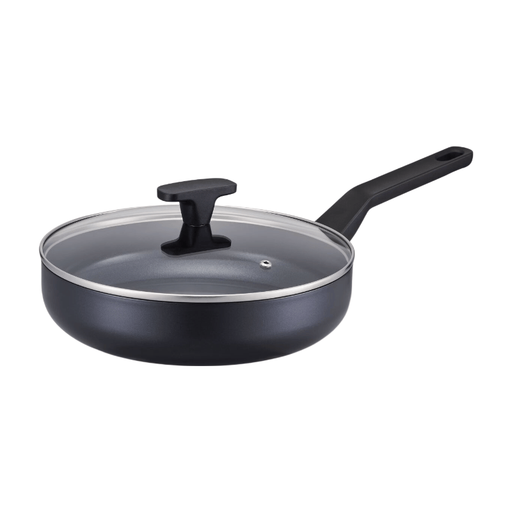
Why it suits this profile: The high sides, lid and capacity for simmering make this ceramic sauté pan suitable for sauces, stews and family meals.
According to the product description, the coating and heat-source compatibility are clearly specified: PFAS-free, ceramic and suitable for induction.
100% recycled aluminium according to the product information, glass lid and suitable for gas, electric, ceramic and induction cooking.
We have put together a complete, up-to-date list of products that fully meet these strict selection criteria and the applicable European safety regulations.
A durable frying pan is not determined solely by the use of recycled materials. Correct use, repair options, coating care and the expected service life also play a part. Where possible, store pans with space between them to prevent scratches.
That depends on the base. Only choose a pan that explicitly lists induction as a suitable heat source. A ceramic coating alone does not make a pan suitable for induction.
There is no fixed service life that applies to every model. High temperatures, metal utensils, abrasive scouring pads and dishwasher cycles can put more strain on the coating. Hand-washing and cooking on a moderate setting can help preserve its properties for longer.
A lid is not always necessary for frying, but it is practical for sautéing, simmering and stewing. If you want to combine several cooking techniques in one pan, consider a sauté pan or sauté pan with a glass lid.
