
Vandaag of morgen in huis

Kwaliteit gegarandeerd

Welkomstaanbiedingen ontgrendelen: GRATIS bezorging | Tot 80% korting | Gratis 30 dagen JoyPlus-proefperiode
Download de app
More and more people are questioning what's in their cookware. The discussion around PFAS in everyday products, including pans with traditional non-stick coatings, has likely not escaped your notice. If you're looking for a new frying pan, you want to make a conscious choice without having to struggle through complex marketing jargon.
This article is intended as a practical guide. We'll explain what to look for when purchasing a PFAS-free frying pan and highlight several popular choices that meet the demands of a modern kitchen.
A good pan is an investment in your cooking enjoyment. To make the right choice, there are a few specifications that will help you find a pan that suits your cooking style and kitchen appliances.
The most common choice for a PFAS-free frying pan is a pan with a ceramic non-stick coating. These layers are made from natural materials (sand and clay) and do not contain controversial substances like PFOA and PTFE. A ceramic layer allows you to cook with little to no oil and prevents food from sticking, which significantly simplifies cleaning. This type of pan is often considered a healthy frying pan because no chemical substances are released during normal use.
Not every pan works on every hob. If you have a modern kitchen, it's crucial to check if the pan is suitable as a frying pan for induction. Induction hobs require a pan with a magnetisable base. It's also useful if you have an oven-safe frying pan. This gives you more flexibility, for example, to sear a dish on the hob and then finish it in the oven. Always check the maximum temperature to which the pan (and its handle) is oven-safe.
For most daily meals in a household of two to three people, a 24 cm ceramic frying pan is an ideal size. It's large enough for frying a couple of eggs, a piece of fish, or a portion of vegetables, yet compact enough to handle and store easily.
Based on the criteria above, we have selected a few pans that stand out for their specifications and functionality.
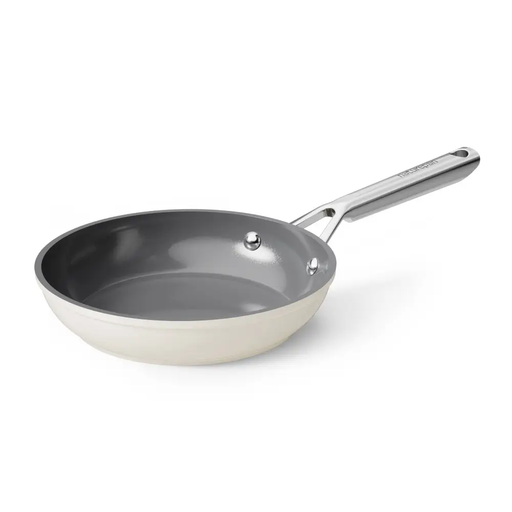
Why It Stands Out According to the manufacturer, this pan's ceramic coating is reinforced with diamond and titanium particles. This is claimed to make the layer extra durable and scratch-resistant. The combination of an aluminium core and a stainless steel handle is designed for efficient and even heat distribution.
Key Features
Who Is It For? For the home cook seeking a stylish and versatile pan for daily use. The milky white finish and the 'cool-touch' handle make it a practical and beautiful addition to any modern kitchen.
View the naturepan DiamondTitan 24cm Milky White
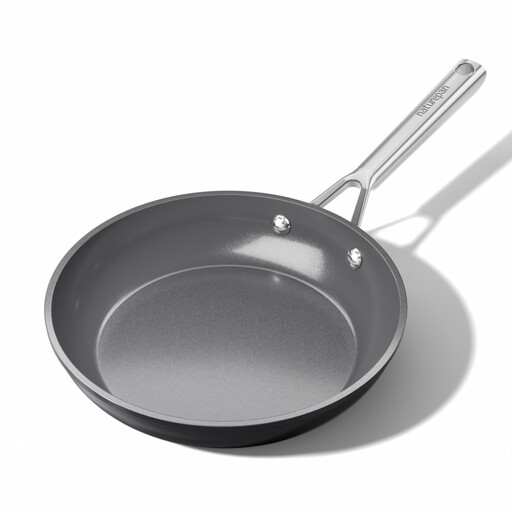
Why It Stands Out Like its white counterpart, this grey version features a ceramic coating that the manufacturer claims is reinforced with diamond and titanium. A key difference is its higher oven resistance. The fully encapsulated base is designed for rapid heat distribution and is easy to keep clean.
Key Features
Who Is It For? Ideal for the cook who likes to move their pan from the hob to the oven. The higher temperature resistance makes it suitable for a wider range of recipes, such as finishing a steak or a frittata.
View the Naturepan Diamond Titanium 24cm Grey
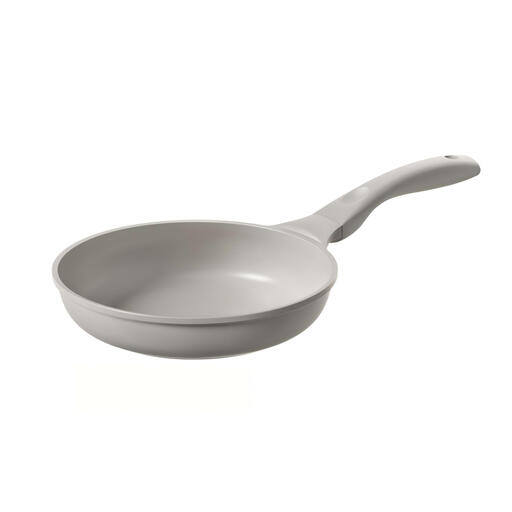
Why It Stands Out This pan from Redchef focuses on ease of use and an ergonomic design. The handle is made of Bakelite, a material that stays cool during cooking on the hob. The pan is designed for both left- and right-handed users and features a drip-free rim to prevent spills.
Key Features
Who Is It For? Perfect for those looking for a no-nonsense, lightweight, and practical PFAS-free frying pan for quick, daily meals. It's a functional choice that prioritises comfort and convenience. Please note: this pan is not intended for oven use.
View the Redchef Starlight Series 24cm
The search for the perfect pan is a personal one. Perhaps you're looking for a different size, a pan with a copper look, or specific features. There are countless options available to suit various cooking styles and budgets.
Explore more copper ceramic non-stick frying pans
A pan with a ceramic non-stick coating is made without the synthetic substances PFOA and PTFE, which fall under the PFAS group. The main advantage is that you can cook with peace of mind, as no chemical substances are released with proper use. Additionally, the coating is often hard and smooth, meaning you need less oil or fat, and the pan is easy to clean.
To maximise the lifespan of the ceramic coating, here are a few tips:
No, not automatically. Whether a pan is suitable for induction depends on the material of its base, which must be magnetisable. Therefore, always check the product description or packaging for the induction symbol (a coil icon) to ensure you are buying a frying pan for induction. All the pans recommended above are suitable for induction.
