
Vandaag of morgen in huis

Kwaliteit gegarandeerd

Welkomstaanbiedingen ontgrendelen: GRATIS bezorging | Tot 80% korting | Gratis 30 dagen JoyPlus-proefperiode
Download de app
A cast-iron wok retains heat for a long time and can be suitable for stir-frying, steaming, roasting and slow cooking. However, not every pan is practical for every British kitchen. A heavy wok can be awkward on a narrow induction zone, while an untreated iron pan requires more maintenance than an enamelled cast-iron wok.
The product description does not always tell you immediately what to check. Pay particular attention to these three common pitfalls:
A cast-iron pan is known for retaining heat and having a sturdy construction. With an untreated cast-iron wok, you should allow for seasoning, hand washing and immediate drying. Otherwise, moisture can cause rust. Applying a thin layer of oil after cleaning helps protect the pan during storage.
An enamelled cast-iron wok has an applied enamel coating. According to the relevant manufacturer’s product information, this coating can simplify maintenance and provide protection against corrosion. Do not use a metal scouring pad and avoid sudden changes in temperature. Filling a hot enamelled pan with cold water straight away can damage the surface.
Be aware of the difference between cast iron and pure iron. According to the product description, the COOKER KING wok in the set below is made from nitrided pure iron, not cast iron. This material is intended for rapid heating and stir-frying, but it also requires careful drying and oiling.
If you are looking for a wok for induction, it is best not to rely solely on the word “induction” in the title. Check the following points:
According to the product information, various Staub woks are suitable for gas, electric, ceramic and induction hobs. Even with a wok suitable for all hobs, it is still important to compare the dimensions of the base with your cooking zone.
A 30 cm wok is a practical size for several portions, but capacity and weight vary by model. For example, the 30 cm Staub wok has a capacity of 4.4 litres. A model with the same diameter may still feel different because of its height, rim shape and handles.
Consider how you plan to use it:
Because of its weight, a cast-iron wok is less suitable for lifting high above the hob and “tossing” food as you might with a lightweight steel wok. Traditional wok cooking usually involves high heat and a round base; on a flat British hob, a flat base is often more practical.
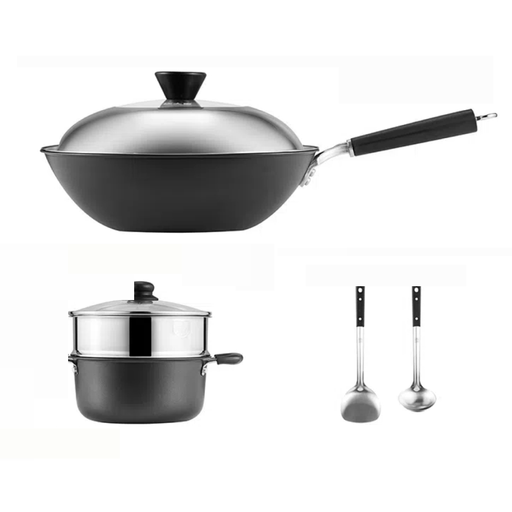
Why it suits this profile: The set combines a 32 cm, 4.5-litre wok with a soup pot, steamer insert, spatula and ladle. This is practical if you want to try several cooking techniques without buying each item separately.
The product information lists the material, diameter, capacity and weight separately. However, bear in mind that the wok is made from nitrided pure iron and must be seasoned before use.
4.5-litre capacity, 32 cm diameter and accessories for steaming and serving. Hand washing and immediate drying are recommended.
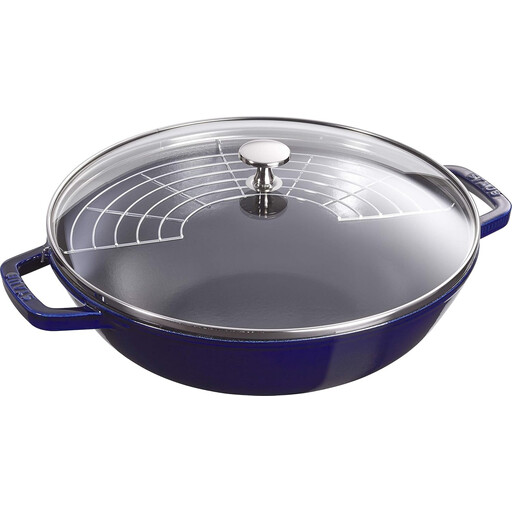
Why it suits this profile: This Staub wok is designed for anyone who wants to alternate stir-frying with slow cooking and steaming. The flat base and stated compatibility with all common hob types make it suitable for a range of British kitchens.
The product details explicitly mention a flat base, glass lid and storage rack. This means you do not have to base your decision solely on the diameter or colour.
Enamelled cast iron, 30 cm size, glass lid and suitability for induction, gas, electric and ceramic cooking.
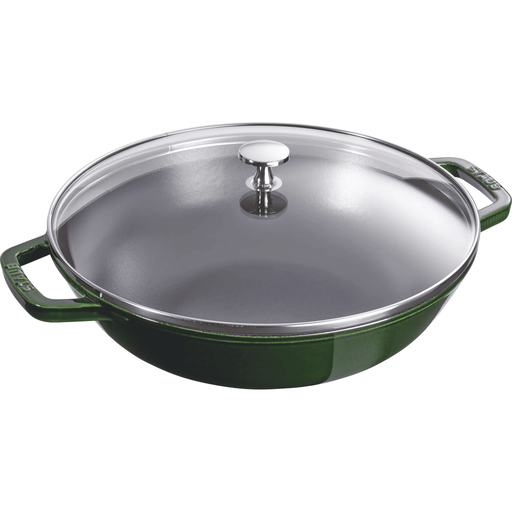
Why it suits this profile: This model is ideal if you want to use a cast-iron wok both on the hob and at the table. The product information states a diameter of 30 cm and long-lasting heat retention for different cooking methods.
The stated size makes it easier to check your cooking zone and storage space in advance. Before buying, check whether your specific model is suitable for oven use.
30 cm diameter, enamelled cast iron and a design that, according to the product information, heats up quickly and retains heat for a long time.
We have compiled a complete, up-to-date list of products that fully meet these strict selection criteria and the applicable European safety regulations.
The expected service life depends largely on the material, use and maintenance. Always follow the manufacturer’s instructions. For an untreated wok, these basic rules generally apply:
Seasoning is generally not required for enamelled cast iron, but gentle cleaning products and a soft sponge can help protect the surface. Also check whether dishwasher use is permitted: the information varies by product and model.
It can be, but always check the product details. A flat, magnetic base is important. Models explicitly stated to be suitable for induction, gas, electric and ceramic hobs are generally more versatile, but the diameter of the base must also match your cooking zone.
Dry the pan immediately after cleaning and do not leave it standing in water. With untreated iron, a thin layer of cooking oil helps provide protection. If surface rust does appear, follow the manufacturer’s maintenance instructions and re-treat the surface.
Some models are oven-safe, but this depends on the handles, lid and finish. Therefore, check the product specifications before use. Always use oven gloves: cast iron and the handles can remain hot for a long time.
