
Vandaag of morgen in huis

Kwaliteit gegarandeerd

Welkomstaanbiedingen ontgrendelen: GRATIS bezorging | Tot 80% korting | Gratis 30 dagen JoyPlus-proefperiode
Download de app
A wok may seem simple, but small differences can have a big impact on how enjoyable it is to cook with. A pan that works well on gas may not heat as evenly on induction. A non-stick coating needs different care from stainless steel or carbon steel. And a 36 cm wok may not fit comfortably on an average hob or in a kitchen cupboard.
For home cooks in the Netherlands, there are three common pitfalls to watch out for:
The material affects how the wok heats up, how heavy it is and how much care it needs.
Labels such as 304 stainless steel or 316 stainless steel describe the type of steel. According to PURECOOK’s product description, 316 stainless steel is more corrosion-resistant than 304 stainless steel. This is a material property, not a guarantee that every part of a product is made from 316 stainless steel. So check the full product specifications.
A non-stick wok can be handy for eggs, vegetables, fish and dishes that use little oil. Look for specific information:
According to USELUCK’s own product description, its ceramic Ti coating has a PFAS-free, non-toxic composition. This claim comes from the brand; don’t treat it as a general guarantee for every ceramic pan. Even with a coating that doesn’t contain the substances mentioned, careful use is still important: avoid scratches, overheating and scouring pads.
If you’re looking for a healthy wok, it’s better to focus on the actual material, care instructions and how you cook than on general marketing terms. For example, using less oil depends on the recipe and cooking technique.
A 30 cm wok is a popular size for a household. It gives you room to stir-fry without taking up too much space. A 32, 34 or 36 cm wok may be more practical for larger families or dinner parties.
Also check:
A wok with a lid is useful for braising, simmering and keeping moisture in. A glass lid lets you keep an eye on your food without opening the pan. A traditional Chinese wok for gas has a round or curved shape, but a flat base is often more practical for hobs in the Netherlands.
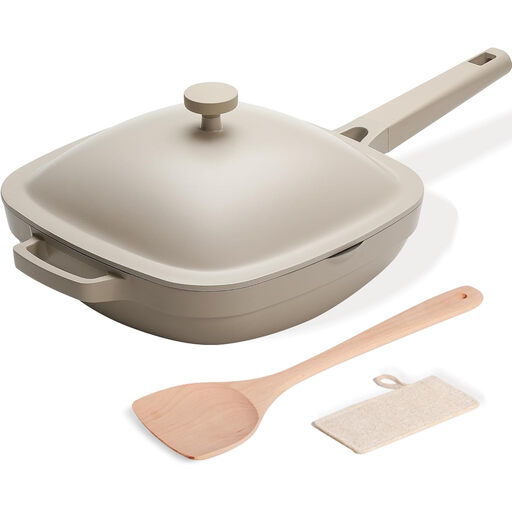
Why it suits this type of cook: With a capacity of 3.8 quarts and a relatively lightweight cast aluminium body, this pan is well suited to everyday meals, stir-fries and smaller households. According to the product description, it is suitable for all types of hobs, including gas.
The specifications give both the size and hob compatibility. Bear in mind that this pan is not dishwasher-safe or oven-safe.
Ceramic coating, lid, two pouring spouts, plus a wooden spatula and scrubber included.
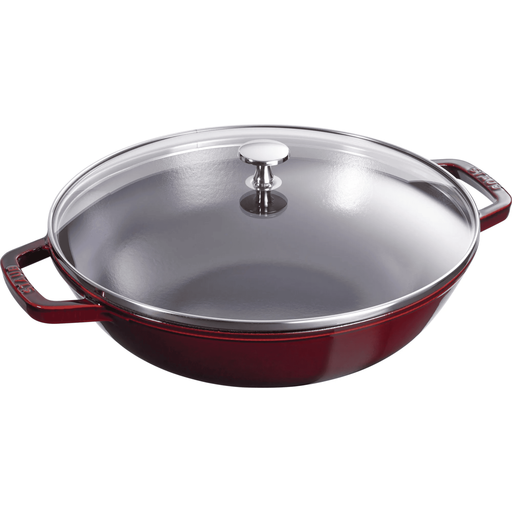
Why it suits this type of cook: This cast iron wok is designed for anyone who values heat retention, versatility and long-lasting use. It measures 30 cm and, according to the product description, is suitable for gas, induction, electric and ceramic hobs.
The product specifications state the material, diameter and hob compatibility. Cast iron is heavier than aluminium or thin stainless steel, though.
Cast iron construction, glass lid, two side handles and oven or grill use according to the product description.
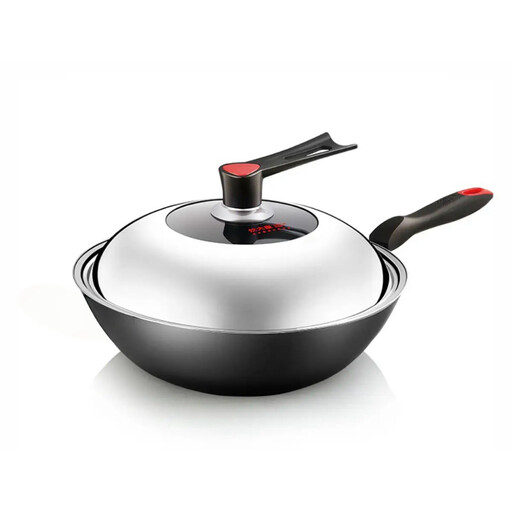
Why it suits this type of cook: Carbon steel is a good choice for fans of high-heat cooking and traditional wok techniques. This pan is designed for stir-frying, searing, braising and steaming, and comes with a glass lid.
The care requirements are clear: wash by hand, dry straight away and season regularly. This helps avoid expecting a pan that needs no maintenance.
30 cm carbon steel, glass lid and a surface that can develop a patina with use, according to the product description.
The right way to clean your wok depends on its material:
A dishwasher isn’t automatically suitable for every wok with a lid. Dishwasher use is not recommended for the USELUCK pan. The 30 cm MAXCOOK honeycomb wok is described as hand-wash only, while the 28 cm Maxcook Tri-Ply 304 stainless steel wok is described as dishwasher-safe. Always check the exact model.
We’ve put together a complete, up-to-date list of products that meet these strict selection criteria and the applicable European safety requirements.
Choose a wok with a magnetic, flat base and check that induction is specifically mentioned. A round Chinese wok without a suitable base may not work properly on an induction hob. Models with a wide, flat base are usually more practical for kitchens in the Netherlands.
It depends on the material and how well you look after it. Stainless steel and cast iron can last a long time with normal use. Carbon steel can also be durable, but it needs to be stored dry and maintained regularly. With a non-stick wok, the coating’s lifespan largely depends on avoiding scratches and overheating.
Not necessarily for quick stir-frying, but a lid is useful for braising, simmering, steaming and keeping moisture in. Choose a glass lid if you want to keep an eye on your food while it cooks. Check the diameter too: a 30 cm lid won’t fit a 32 cm wok.
