
Vandaag of morgen in huis

Kwaliteit gegarandeerd

Welkomstaanbiedingen ontgrendelen: GRATIS bezorging | Tot 80% korting | Gratis 30 dagen JoyPlus-proefperiode
Download de app
A spilt drink, muddy paw prints or a mark on the sofa: a regular vacuum cleaner alone usually won’t remove moisture and dirt from fabrics effectively. A carpet cleaner sprays water and cleaning solution into the fibres, then sucks up the dirty liquid. These machines can also be used as spot cleaners, upholstery cleaners, sofa cleaners or car upholstery cleaners.
However, not every model is right for every situation. Marketing claims such as “professional cleaning”, “powerful suction” and “deep cleaning” don’t tell you much if key specifications are missing. Look out for these three common pitfalls.
A higher wattage doesn’t automatically mean a machine will suck up more dirt. The power rating mainly tells you how much electricity the motor uses. Also look at the stated suction power in Pa or kPa, the brush width and how the machine separates clean and dirty water.
A 600 W carpet cleaner may be easy to handle for spot cleaning and small areas. For larger carpets, bigger tanks and a wider nozzle may matter more than a higher wattage alone.
A compact, portable carpet cleaner is handy for stairs, sofas and car seats. But a small clean water tank means you’ll need to refill it more often. Work will also be interrupted if the dirty water tank fills up quickly.
So always check:
A dual-tank system keeps clean water separate from the dirt that’s been sucked up. This also makes maintenance easier to manage.
A steam carpet cleaner or model with a hot water function may offer extra options, but not every fabric is suitable for heat or moisture. Check the care label on your carpet, sofa or car seat, and test the cleaner on an inconspicuous area first.
Don’t use water on materials that are dry-clean only or aren’t water-resistant. If your machine uses steam or hot water, also check the temperature setting, the instructions and the cooling time.
A high stated suction power can help draw water and loosened dirt out of fabric. Product specifications for different models may list figures such as 12 kPa, 13 kPa, 15 kPa, 17 kPa or 18 kPa. Only compare these figures between similar product categories, as manufacturers may present their measurement methods differently.
Drying time also depends on:
After spraying, make several passes with the suction nozzle without adding more water. This helps leave less moisture behind.
A compact model is often enough for occasional spills and stains. If you regularly clean a sofa, stairs or several car seats, larger tanks are more practical. The range includes models with around 0.7 to 1.7 litres of clean water and separate dirty water tanks.
A larger tank often makes a machine heavier. So choose a balance between capacity and portability. A machine weighing around 3 to 4 kg is easier to carry upstairs; a larger model may be more practical for a spacious living room.
A hose measuring 1.1 to 2.2 metres and a power cord measuring 3 to 5 metres determine how far you can reach without moving the machine. For a car, a long hose and a narrow nozzle are often more useful than a large floor brush.
Also check which accessories are included:
A wet and dry cleaner isn’t necessarily suitable for every type of liquid. Don’t use flammable or corrosive liquids, and follow the manufacturer’s instructions.
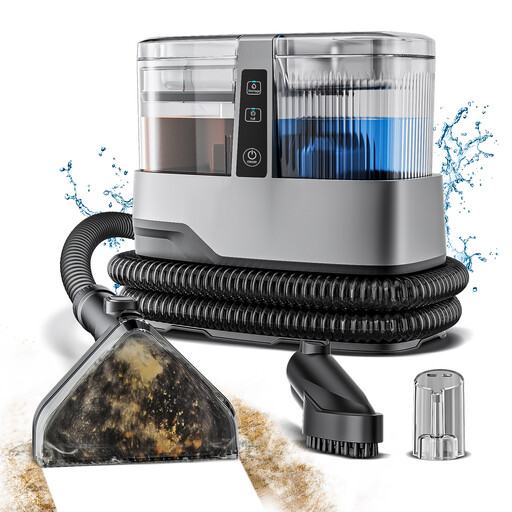
Why it suits this user: This corded model is designed for spot cleaning carpets, sofas and car seats. Its manageable size and 5-metre cable make it a good fit for households that only need to tackle a stain now and again.
The product specifications list both 600 W and 17 kPa suction power, as well as a dual-tank system. So you don’t have to rely on the wattage alone.
600 W motor, stated suction power of 17 kPa, two tanks and a 5-metre power cord.
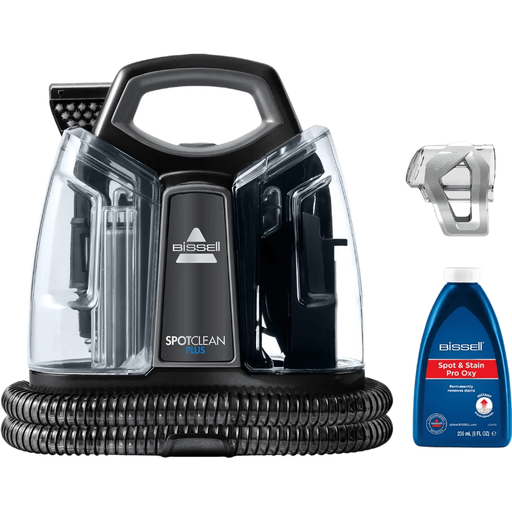
Why it suits this user: This model is a good choice for households that regularly clean sofas, stairs, rugs and car seats, and value good reach and easy maintenance.
The specifications list separate clean and dirty water tanks, a 2.2-metre hose and a HydroRinse tool for flushing the hose through.
Weighs 4.17 kg, with a 5-metre power cord, a 2.2-metre hose and a 1.1-litre clean water tank.
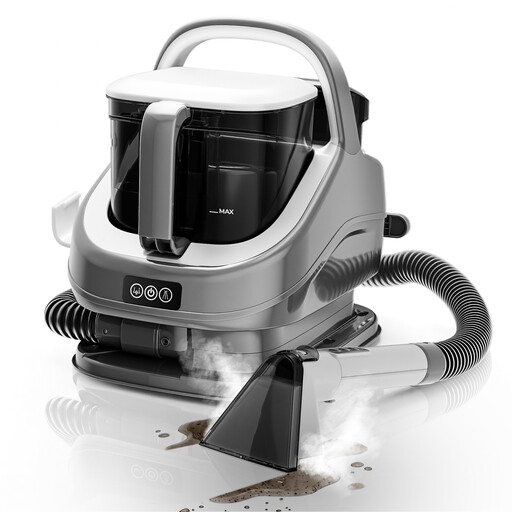
Why it suits this user: The three cleaning modes may appeal if you want to tackle different types of fabric and stains, for example in a home with pets or as part of regular car care.
As well as 1300 W, the product information lists 13 kPa suction power, tank capacities and clear warnings about fabrics that aren’t water-resistant. This gives you more context than a power rating alone.
Cold water, hot water and steam modes, a 1400 ml clean water tank, a 1200 ml dirty water tank and a 3-metre power cord.
We’ve put together a complete, up-to-date list of products that meet these strict selection criteria and current European safety regulations.
Only if the care label says the upholstery is water-resistant. Use a suitable upholstery cleaner, test it on an inconspicuous area first and take care not to soak the fabric.
Rinse the dirty water tank, nozzle and hose after every cleaning session. Let any removable parts air-dry completely before putting them away. This is more important for the machine’s lifespan and hygienic maintenance than simply wiping the outside.
Running costs mainly include electricity, water and cleaning solution. A corded model works while it’s plugged into a socket, while a cordless model means you’ll need to factor in charging and battery wear. Also check whether the brand recommends a specific cleaning solution and how much a refill costs.
