
Vandaag of morgen in huis

Kwaliteit gegarandeerd

Welkomstaanbiedingen ontgrendelen: GRATIS bezorging | Tot 80% korting | Gratis 30 dagen JoyPlus-proefperiode
Download de app
A spilt drink, muddy paw prints or a mark on the sofa: a standard vacuum cleaner mainly removes loose dirt from carpets, but not the moisture and dirt trapped deeper in the fibres. A carpet cleaner sprays water, with cleaning solution if needed, onto the surface and then vacuums it back up. This makes it suitable for carpets, rugs, sofas, mattresses and car interiors.
However, not every model is designed for the same job. Below, we cover the main pitfalls, key specifications and some suitable options for UK households.
A high wattage doesn’t automatically mean a machine will pick up dirty water well. Hose diameter, nozzle, water distribution and the design of the suction system all play a part, too. A 1,700 W model may also be heavier and noisier than a compact spot cleaner.
As well as the power rating, check:
A steam cleaner for carpets works differently from a wet and dry vacuum or upholstery cleaner. Steam may be suitable for some heat-resistant surfaces, but not all fabrics, adhesive layers or carpet fibres can withstand high temperatures. Always check the care label and test on an inconspicuous area first.
If a model uses hot water or steam, you should also follow the instructions for use. A brand’s claim about “sterilisation”, mite removal or bacteria removal is not a general guarantee for every surface. The UWANT B400 product listing mentions a 30-second steam function; treat this as a product specification, not a medical or hygiene claim.
Residual moisture and dirt can cause unpleasant smells. A machine with tanks, a hose and a brush that are difficult to rinse can quickly become less pleasant to use. If possible, choose a model with:
Empty and rinse the dirty water tank after every clean. Let all parts dry completely before putting them away.
Product information often gives suction power in Pa or kPa. The figures aren’t always directly comparable between brands, as testing methods can vary. Use them as a guide and consider what you’ll be using the cleaner for, too.
For small marks on a sofa or car seat, a compact spot cleaner with around 13 to 18 kPa is often suitable, according to the product listing. For larger areas, a wide nozzle, larger tanks and a longer hose matter more. The more moisture the cleaner extracts, the less time the surface will generally stay wet. However, drying time also depends on ventilation, the material and how much water you use.
A dual-tank design keeps clean water separate from the dirt that’s been picked up. Check the capacity of each tank individually. A clean water tank of 1.1 to 1.5 litres is practical for stains and smaller areas of furniture. For several rooms, a larger system may be more convenient.
A hose measuring 1.5 to 2.2 metres and a mains cable of around 5 metres give you more freedom of movement around stairs, sofas and cars. However, a larger tank also makes a machine heavier. If you regularly clean the back seats of your car, a compact, portable carpet cleaner may be a more practical choice.
Check whether the manufacturer says the machine is suitable for:
Only use cleaning solutions that are suitable for both the machine and the fabric. Test for colourfastness on a hidden area. Don’t clean fabrics labelled “dry clean only” with water unless the manufacturer expressly allows it.

Why it suits this type of user: This compact model is designed for stains on carpets, sofas, stairs and car seats. The included Spot & Pet cleaning solution is handy for your first use.
The product listing mentions a dual-tank design and removable tanks. This keeps clean and dirty water separate, and makes filling and emptying more straightforward.
500 W motor, 1.8-metre hose and a design made for smaller areas in the home and car.
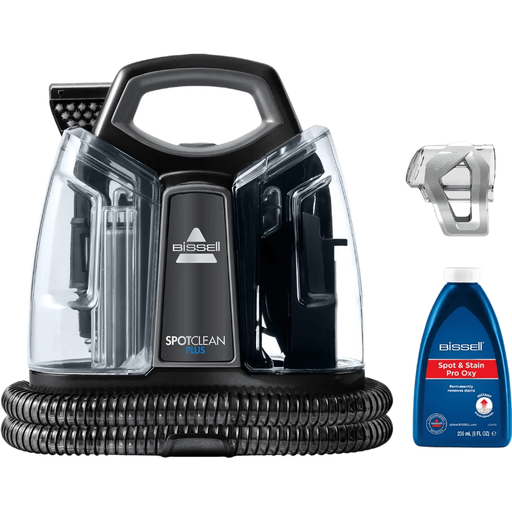
Why it suits this type of user: For a household that regularly cleans sofas, stairs and car interiors, this compact option offers extra reach and a dedicated set of accessories.
The product information lists a HydroRinse accessory for rinsing the hose, as well as a separate dirty water tank.
330 W, 2.2-metre hose, 5-metre cable, 1.1 litres of clean water and 0.725 litres of dirty water.
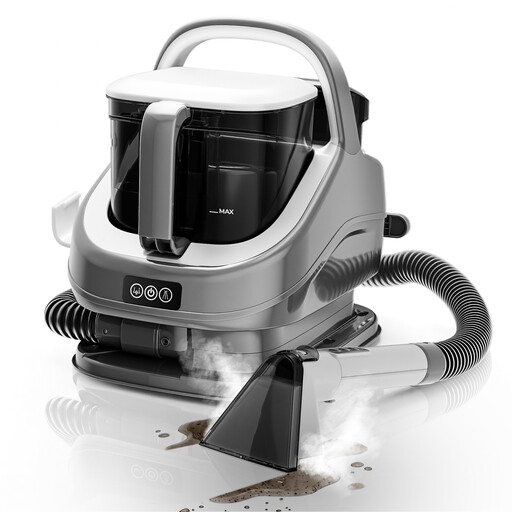
Why it suits this type of user: The choice of cold water, hot water and steam is useful if you clean different fabric surfaces and types of dirt.
The three cleaning modes make it clear which function you’re selecting. The manufacturer also provides warnings about non-water-resistant fabrics and overfilled tanks.
1,300 W, 13 kPa, separate 1.4-litre and 1.2-litre tanks, and a 3-metre cable.
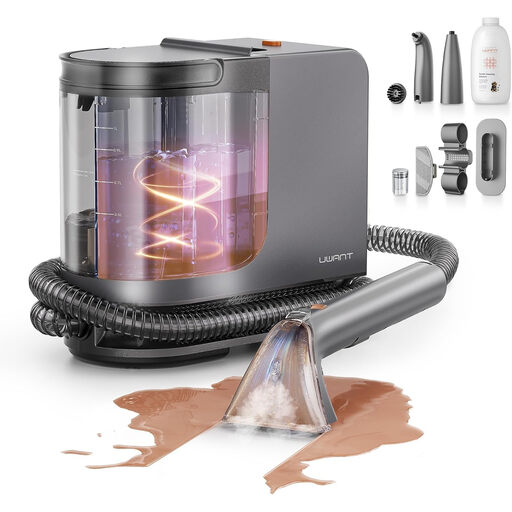
Why it suits this type of user: The wide brush and stated suction power are designed for quick cleaning of spills and muddy marks on carpets, sofas and car interiors.
The product listing mentions a 2-in-1 tank design and a noise level of around 75 dB. However, check the manual and terms of use when you receive the machine.
600 W, up to 18,000 Pa suction power according to the product listing, and a 14 cm brush.
We’ve put together a complete, up-to-date list of products that meet these strict selection criteria and the applicable European safety regulations.
A carpet cleaner isn’t a replacement for everyday vacuuming. Use it mainly for stains, occasional deep cleaning and fabric surfaces where vacuuming alone isn’t enough.
You can if the product information lists the surface as suitable and the upholstery is water-resistant. Use a narrow upholstery nozzle on sofas and car seats. Always test on an inconspicuous area first, and avoid soaking the foam padding.
It depends on your household, children, pets and how much foot traffic your carpet gets. Clean stains as soon as possible, and plan a full clean when the carpet looks visibly dirty or has a musty smell. Cleaning with water too often can leave unnecessary moisture in the fibres.
As well as the purchase price, you’ll pay for water, cleaning solution if needed, and electricity. Consumption varies by model and how long you use it for. A machine with larger tanks may be more efficient for cleaning several areas, while a compact spot cleaner uses less water and takes up less storage space for occasional jobs.
