
Vandaag of morgen in huis

Kwaliteit gegarandeerd

Welkomstaanbiedingen ontgrendelen: GRATIS bezorging | Tot 80% korting | Gratis 30 dagen JoyPlus-proefperiode
Download de app
A carpet cleaner can be useful for stains on carpets, fabric sofas, car seats or stairs. Yet many households buy a machine that remains unused after just a few cleaning sessions. The problem is often not the power, but the wrong combination of suction power, tank capacity, hose length and maintenance.
If you only focus on a high wattage or eye-catching terms such as “deep cleaning”, you may miss important details. Below, we explain which features you should really check and which type of carpet cleaner is best suited to your needs.
A motor power rating of, for example, 600 watts does not automatically tell you how much moisture and dirt the machine can remove from textiles. Airflow, the design of the suction nozzle and the stated suction pressure are also important. Manufacturers may also present performance in different ways.
It is therefore worth looking at the combination of wattage and suction pressure, for example in kPa. A carpet cleaner with strong suction can extract more dirty water from the fibres after spraying, but the result also depends on the fabric, the stain and the cleaning method used.
A portable carpet cleaner is practical for stairs, sofas and cars. However, a small clean-water tank means you will need to refill it more often during a larger cleaning job. A small dirty-water tank will also need emptying sooner.
Check whether the machine has separate water tanks. With a dual-tank system, clean water remains separate from the dirty water that has been collected. This makes filling, emptying and rinsing more straightforward.
A steam cleaner for upholstery uses heat and steam, whereas a classic spot cleaner applies water and cleaning solution to the fabric before extracting the moisture. These two technologies are not suitable for every material.
Always check the care label on your sofa, mattress, car seat or carpet. Test the cleaner on an inconspicuous area first. Non-water-resistant, glued, untreated or heat-sensitive fabrics may be damaged. You should also treat a brand’s claim about hygiene or bacteria removal as a claim made by the brand, not as a guaranteed result.
For occasional stains, a compact model with around 400 to 600 watts may be sufficient. For larger surfaces, tank capacity, working speed and the way you move the suction nozzle are at least as important.
A higher stated kPa value may indicate greater suction pressure, but it is not a complete prediction of the final result. Allow sufficient ventilation after cleaning and do not use more water or cleaning solution than recommended. Excess moisture can lengthen drying time and cause unpleasant smells.
Pay attention to the capacity of both tanks, not just the clean-water tank. If a product specifies, for example, a 1.5-litre clean-water tank and a 0.8-litre dirty-water tank, you will have a better idea of how long you can work continuously.
After every cleaning session, it is advisable to:
A self-cleaning function can make maintenance easier, but it does not replace emptying and drying the tanks.
For a carpet cleaner for sofas or cars, reach and portability are important. A 1.8-metre hose can be useful for corners and car seats. A longer mains cable reduces the number of times you need to change sockets.
Also check which suction nozzles are included. A narrow nozzle is useful for seams and small stains, while a wider brush works more efficiently on a seat cushion. Weight is another consideration. A machine that looks powerful on paper can become awkward if you regularly have to carry it up the stairs.
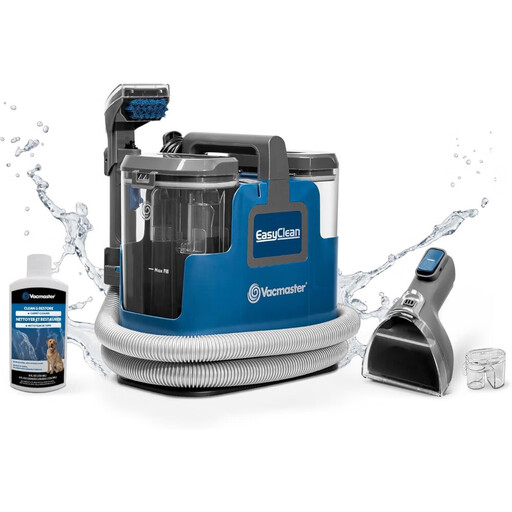
Why it suits this profile: This compact model is designed for spot cleaning carpets, sofas, stairs and car seats. Its integrated 1.8-metre hose provides extra reach without the need for a large machine.
The product information specifies a 500-watt motor and two removable tanks with capacities of 1.6 and 0.95 litres. This makes the key basic specifications clearer than offers that only make a marketing claim.
500-watt motor, separate water tanks and a portable design. According to the product description, Spot & Pet cleaning formula is included.
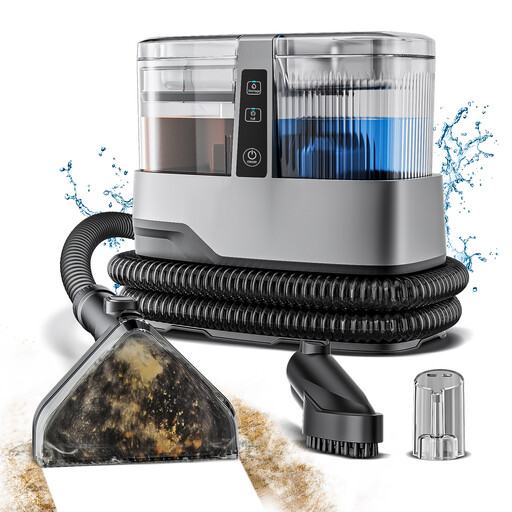
Why it suits this profile: Suitable for anyone who regularly wants to clean furniture, stairs, carpets and car interiors, while appreciating a longer cable.
The specifications state both 600 watts and 17,000 Pa suction pressure, along with a 5-metre cable. This makes the performance information more specific than simply describing the machine as having “strong suction power”.
Dual-tank system, easy-to-handle design and wet cleaning with spraying and extraction. The product information recommends warm water up to a maximum of 40 °C.
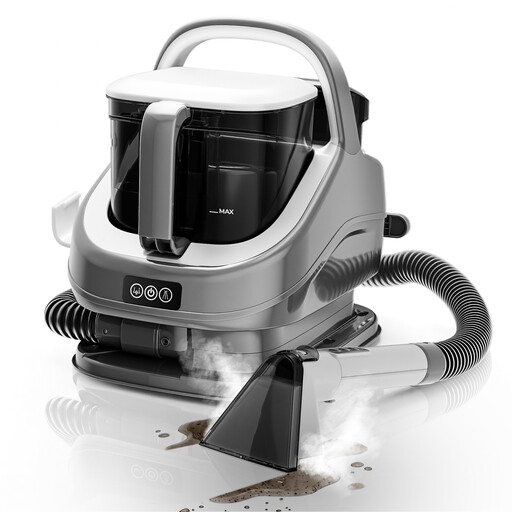
Why it suits this profile: A practical choice for households with pets, several fabric surfaces or recurring stains on sofas, stairs and in cars.
The product description lists separate 1,400 and 1,200 ml tanks and three settings: cold water, warm water and steam. This makes it more specifically suited to different uses than a standard wet and dry cleaner.
1,300 watts, a stated suction pressure of 13 kPa, a 1.1-metre hose and a 3-metre mains cable. According to the product information, the machine is suitable for pet areas and car seats.
We have compiled a complete, up-to-date list of products that fully meet these strict selection criteria and the applicable European safety regulations.
Vacuum the surface thoroughly first. Loose dirt and hairs could otherwise block the suction nozzle or hose. Then fill the clean-water tank with only the recommended amount of water and cleaning solution. Do not use boiling water unless the manual explicitly permits it.
For stubborn stains, work in short strokes and then pass the suction nozzle over the surface several more times without adding extra liquid. This helps remove more moisture. When removing pet stains, it is advisable to clear away solid residue first and test the cleaning solution on an inconspicuous area. Odour removal is not guaranteed; follow the product instructions and ventilate the room.
A steam cleaner for upholstery requires extra care. Take the temperature into account, test it on a small area first and do not use steam on materials that are not suitable for it.
It can be, provided the upholstery is water-resistant and its care label permits wet cleaning. Always test it on a hidden area first. Use only a small amount of liquid and make sure the sofa dries completely.
Empty and rinse the tanks after every use. Check the hose, brush and filters regularly. Allow removable parts to air-dry before closing or storing the machine. This helps to reduce unpleasant smells and blockages.
The running costs mainly consist of electricity, water and cleaning solution. A machine with larger tanks may mean fewer interruptions when cleaning larger surfaces, but it may also use more water. Therefore, do not compare only the purchase price. Consider the tank capacity, maintenance requirements and the price of a suitable cleaning solution too.
