
Vandaag of morgen in huis

Kwaliteit gegarandeerd

Welkomstaanbiedingen ontgrendelen: GRATIS bezorging | Tot 80% korting | Gratis 30 dagen JoyPlus-proefperiode
Download de app
A drink spilt on the carpet, mud on the car seat or a pet accident: an ordinary vacuum cleaner can usually remove loose dirt, but not the moisture and stain trapped in the fibres. A portable carpet cleaner sprays water, with cleaning solution if needed, onto the surface and then sucks up the dirty water.
However, it’s not a good idea to focus only on a high wattage or Pascal rating. The wrong machine could be heavy, struggle to remove water or be difficult to clean. Here are some points worth paying extra attention to.
A rating such as 13 kPa, 15 kPa or 18 kPa tells you about the stated vacuum pressure, but it doesn’t automatically indicate how well the machine will clean every fabric. The brush, spray nozzle, seal and way you use it all play a part too. Even a carpet cleaner with strong suction can leave damp patches if you move too quickly or use too much liquid.
So use the Pa or kPa rating to compare products within a category, rather than as your only buying criterion.
A large clean water tank means less frequent refilling, but it can also make the machine heavier. For stairs, sofas or car interiors, a compact model with a hose is often more practical than a large machine. Also check whether the dirty water tank is easy to remove. Any water left inside can cause unpleasant smells if you don’t empty and dry the machine promptly.
Not all upholstery can withstand hot water or steam. Always check the care label and test the cleaner on an inconspicuous area first. A steam carpet cleaner or a model with heated cleaning isn’t automatically suitable for every carpet, mattress or piece of furniture. Don’t use boiling water, and follow the manufacturer’s instructions.
Look at the combination of:
An upholstery cleaner with two tanks keeps clean and dirty water separate. This is more practical than a single reservoir, especially when dealing with several stains in a row.
A small tank is often enough for a spot stain. If you want to clean a sofa, rug and several seats, a model with a larger clean water tank is a better choice. Check the dirty water tank too: a small capacity may mean you have to empty it partway through.
How much water is left in the fabric depends on the nozzle, suction power and how you use the machine. Work in steady strokes, don’t use more cleaning solution than recommended, and air the room afterwards.
A car carpet cleaner needs to reach the back seats and floor without you having to keep moving the machine. A long hose and a mains cable several metres long can help. For household use, a low weight, a carry handle and built-in storage are important.
With electric models, check where the socket is and don’t use the machine on wet surfaces while it’s plugged in. Unplug it before cleaning the tanks, filters or hoses.
The recommendations below are based on the product specifications provided, such as power, tank layout, hose length and stated suction power. Claims made by brands about cleaning performance are not treated as guaranteed results.

Why it suits this profile: This compact model is designed for spot stains on carpets, sofas, stairs and car seats. Its dimensions and weight of 3.4 kg make it easy to store and move around.
The dual tank keeps clean and dirty water separate. The integrated 1.8-metre hose helps you reach awkward spots without needing a large machine.
500 W motor, dual water tank and Spot & Pet cleaning solution included, according to the product information.
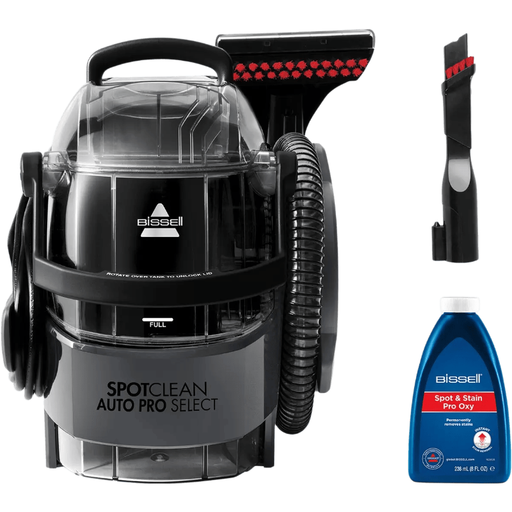
Why it suits this profile: If you regularly clean sofas, rugs, stairs and car interiors, this model offers 750 W of power, two large tanks and several attachments.
Separate clean and dirty water tanks help prevent you from working with contaminated water. The set includes a wide brush and a smaller brush for targeted stain removal.
750 W, a stated capacity of 2.8 litres and a weight of 5.8 kg, according to the product specifications.
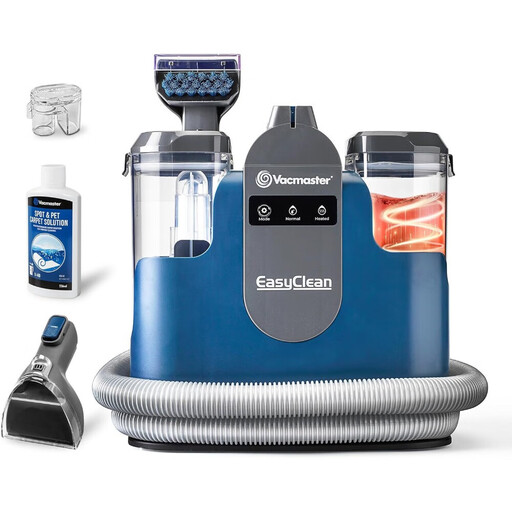
Why it suits this profile: This model is aimed at people who regularly tackle stubborn stains on carpets, sofas, stairs or car seats and want the choice of standard or heated cleaning.
The machine has two cleaning modes and a self-cleaning hose attachment. Check first, though, that the fabric can withstand heated cleaning.
500 W, a 1.6-litre clean water tank, a 0.95-litre dirty water tank and a 1.8-metre hose.
We’ve put together a full, up-to-date list of products that meet these strict selection criteria and the applicable European safety requirements.
Vacuum up loose dirt first, then test the machine on an inconspicuous area. Fill the clean water tank as instructed, spray on a small amount of liquid and slowly move the suction nozzle over the upholstery. Then empty the dirty water tank and let the sofa air thoroughly.
Remove any solid matter first and blot up excess moisture. Then use a suitable stain remover or carpet cleaner with a solution intended for the fabric in question. Treat the stain locally and take care not to spread it further. For delicate or non-water-resistant upholstery, professional cleaning is a better option.
The running costs mainly consist of electricity, water and, if needed, cleaning solution. A model with a dual tank can save time, while a larger machine may use more water per cleaning session. Clean the tanks, hose and spray nozzle after each use to help prevent odours and reduce the need for extra maintenance.
