
Vandaag of morgen in huis

Kwaliteit gegarandeerd

Welkomstaanbiedingen ontgrendelen: GRATIS bezorging | Tot 80% korting | Gratis 30 dagen JoyPlus-proefperiode
Download de app
Buying red dates might seem straightforward, until you start comparing different packs side by side. One bag contains Chinese dates for tea and cooking, while another holds soft Medjoul dates for eating straight away. Stones, added ingredients and pack size all make a difference to how you use them and what you pay.
This buying guide will show you what to look for before you order dried fruit. That way, you can avoid buying a large pack that doesn't suit your snacking habits, or picking a sweet date snack when you actually need stoned dates for recipes.
The terms Chinese dates, jujubes and red dates are often used interchangeably in online shops. In most cases, they refer to the dried fruit of the jujube tree. However, size, firmness, moisture content and processing can all vary.
A firm, dried jujube is practical for tea, soup or porridge. A softer variety is nicer when you want dates as a healthy snack or bite between meals. Medjoul dates are generally larger and softer in texture, whereas Chinese red dates are often more compact and have a different kind of sweetness.
A 500 g bag of dates or a pack weighing nearly 1 kg can look appealing, but first check how you'll use the product. For daily snacking, a large size can be handy. If you only make tea occasionally, a pack of 150 to 280 g may be more practical.
Also pay attention to the shelf life after opening. The product information usually states that you should seal the bag well and store it in a cool, dry place. A resealable pack or individual portions can help reduce waste.
With stoned dates or pitted jujubes, the stone has been removed mechanically. Still, check the usage instructions on the pack. With some products, the occasional stone fragment may remain. This is especially worth bearing in mind with children and when using them in baking.
Also look at the ingredients list. A product containing only jujube or dried red dates is clearly different from dates with walnuts, syrup, sugar or other additions.
Always start with the ingredients list. For a simple everyday snack, you can choose a product with 100% jujube or 100% dried dates, as stated on the label. If you'd prefer a mixed snack, there are varieties with walnut, maltose syrup or sugar.
With dates that contain walnuts, check the allergen information. Walnut is a nut and is therefore listed separately. If in doubt, always check the current packaging, because product compositions can change.
Decide in advance what you need the dates for:
Medjoul dates are not the same as small Chinese jujubes. The products differ in origin, size and texture, among other things. So don't just rely on the product photo; also check the net weight, description and ingredients.
Dried fruit naturally contains carbohydrates and sugars. The nutritional values vary by type and recipe. For example, Hao Xiang Ni Pitted Jujubes 500g states per 100 g: 300 kcal and 60 g sugar. Three Squirrels Red Dates 500g states 316 kcal and 57.5 g sugar per 100 g.
A snack with walnuts can contain more fat and energy than a bag of jujubes alone. The HaoXiangNi Peeled Jujube Kernel Pie 158g, for instance, lists red dates and walnut as ingredients, with 12.6 g of fat per 100 g. Use nutritional information to compare products objectively, rather than relying solely on terms like "natural" or "nourishing".
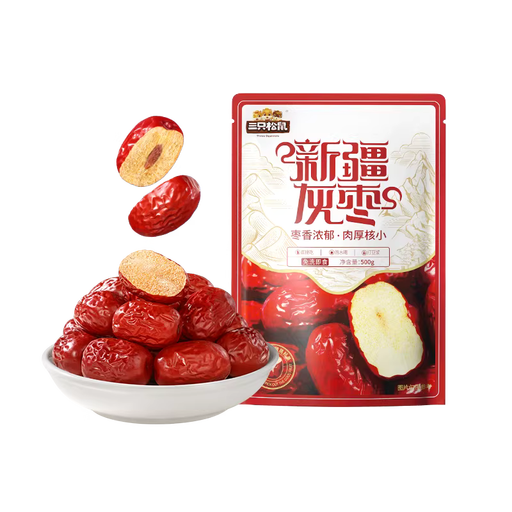
Why this fits the profile: A 500 g pack offers a practical quantity for snacking, tea and simple recipes.
The product information lists dried red dates as the only ingredient and clearly states the net weight of 500 g.
100% dried red dates according to the product description; suitable for eating straight away, tea, congee, soup and baking.
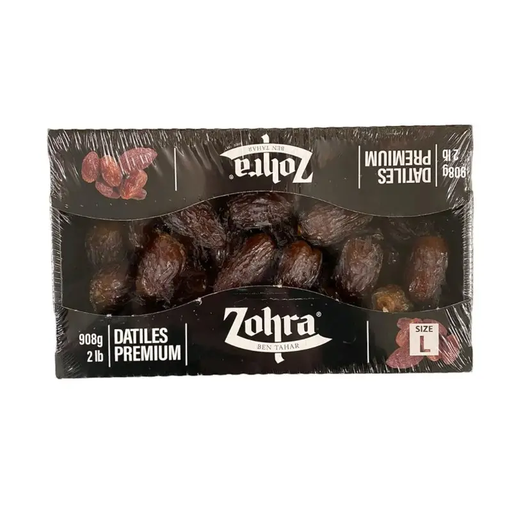
Why this fits the profile: If you're focused on size and a soft, creamy eating experience, a large Medjoul could be worth considering.
The product is described separately as Medjoul and large size, so you can compare the type and portion size with smaller jujubes.
908 g net weight; suitable for eating straight away, stuffing and using in breakfast, yoghurt or baking.

Why this fits the profile: Handy if you often cook, bake or use dates for tea and don't want to remove stones every time.
The product details list red dates as the only ingredient and a stoned version for cooking, baking, soup and tea.
500 g contents; according to the product information, ready to eat and suitable for multiple preparations.
For a compact snack, individually wrapped products such as the HaoXiangNi Peeled Jujube Kernel Pie 158g or Hao Xiang Ni Red Small Pie are worth a look. These combine red dates with walnuts. Always check the ingredients and allergens here.
If you're looking for a variety for tea and cooking, then HUASEED Golden Silk Jujube 454g and Changsi Dried Red Dates 500g are logical categories to compare. For smaller quantities, Sanpangdan Premium Jujubes 180g Can and Haoxiangni Grade 2 Fresh-Locked Pitted Red Dates 280g are practical options.
Store opened dates according to the label: cool, dry, out of direct sunlight and well sealed. Before eating, check the packaging, best-before date and any warnings.
We've put together a full, up-to-date list of products that fully meet these strict selection criteria and comply with current European safety regulations.
No. Chinese dates, also called jujubes, generally differ from Medjoul dates in type, size, origin and texture. Check the product name, ingredients list and description before you order.
The exact shelf life is stated on the packaging. After opening, product descriptions usually advise storing the dates well sealed in a cool, dry place and using them as soon as possible. Moisture, heat and direct sunlight can affect the quality.
Yes, stoned dates are practical for chopping, baking and using directly in tea or dishes. However, always check the packaging, because mechanically removed stones can occasionally leave fragments behind, according to some product warnings.
