
Someone cooking for one or two
You want to warm or simmer tinned beans in a small pan, rather than choosing a large family-sized appliance as your starting point.


For small portions of tinned white beans, a cooking pot with a suitable sauté or simmer function is often more practical than pressure-cooking: according to the Voedingscentrum, tinned pulses have already been heated sufficiently and only need warming through. Choose a pressure cooker if you also want to use its pressure function for other dishes, and follow the manual for the required amount of liquid and safe opening.
You want to warm or simmer tinned beans in a small pan, rather than choosing a large family-sized appliance as your starting point.
You mainly want control over warming already-cooked beans, so you’re comparing sautéing with pressure-cooking.
You sometimes make small portions of beans, but also want functions and capacity for other dishes.
Start by checking the pot size and its non-pressure cooking options. If you’re considering a pressure cooker, also check the instructions for the exact product version and its safety documentation.
| What to consider | What to look for when buying | Who is this important for? |
|---|---|---|
| Pot size | Compare the capacity with your usual portion size and check whether there is a minimum fill level. | I usually want to make one or two portions and don’t want to use a larger pot than necessary. That’s why around 36% of consumers prioritise a pot size that suits small portions. |
| Non-pressure cooking | Check whether the model has a sauté or simmer function. When pressure-cooking, follow the instructions for liquid: Instant Pot specifies a minimum of 250 ml to generate steam for the Duo series. | I want to be able to warm cooked beans gently without pressure-cooking them again. Around 29% of consumers prioritise control when preparing already-cooked beans. |
| Other meals | Consider which functions and capacity you’ll also use for other dishes; a larger pot isn’t automatically more convenient for one small portion. | I want to use the pot for other meals too, so I’m happy with extra capacity. Around 21% of consumers prioritise versatility. |
| Maintenance and aftercare | Check whether compatible parts, such as seals or valves, are available and who the seller is. Tefal lists these parts in its range; report any fault to the seller. | I want to know in advance how to replace a part and who to contact if something goes wrong. Around 14% of consumers focus mainly on maintenance and aftercare. |
According to the Voedingscentrum, tinned beans have already been heated sufficiently. So a bean or chilli programme doesn’t mean you need to pressure-cook them again for this dish.
Choose a pot based on its size and how you want to warm your beans. Only use the pressure function if your recipe and the manual for the exact model allow it.
Total capacity and minimum or usable capacity aren’t the same thing. Sage lists a 6 L pot for the Fast Slow GO, with a usable capacity of 4 L and a minimum volume of 1 L.
Compare the stated capacity and any minimum fill level with your recipe and the portions you usually make.
A manufacturer’s warranty or paid-for extra cover is separate from your statutory rights. According to the Rijksoverheid, the Netherlands has no fixed statutory warranty period.
Check who the seller is and read what any additional cover includes before paying for it.
The Duo Mini is a compact option if you cook small portions and want to use the pot for other types of cooking too.
The All-in-One CY505EF0 is a larger option for anyone who wants to use a multicooker for other meals too.
According to Sage, the Fast Slow GO combines functions including sautéing, simmering and pressure-cooking.
These Joybuy picks are suited to smaller quantities and include both a pressure cooker and electric cooking pots for non-pressure cooking. Check that the exact product version has the required CE marking and EU Declaration of Conformity. According to Ondernemersplein, electrical appliances must meet the applicable European requirements.
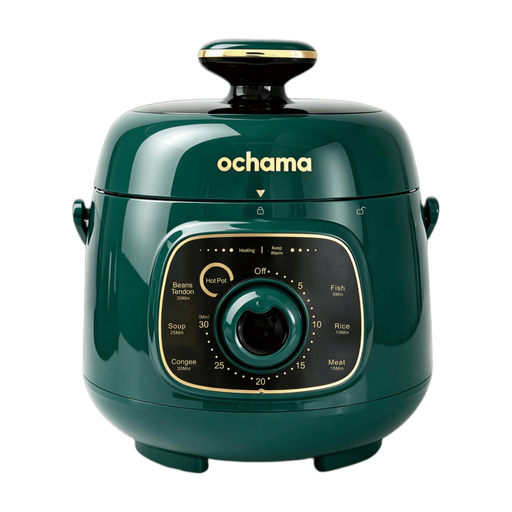 No image available
For anyone looking for a small pressure cooker for dishes such as stews.
The product name lists a capacity of 1.8 L, suitability for 1–3 people, a ceramic-coated inner pot and a pressure of 70 kPa. Allow the pressure to release fully before opening the cooker, and don’t touch the steam outlet while it’s in use.
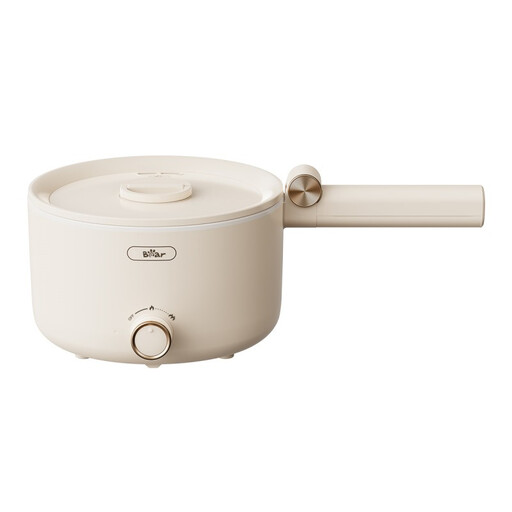 No image available
For anyone looking for a small cooking pot for boiling, simmering and steaming, without needing to pressure-cook this dish.
The product information lists a capacity of 1.6 L and two power settings.
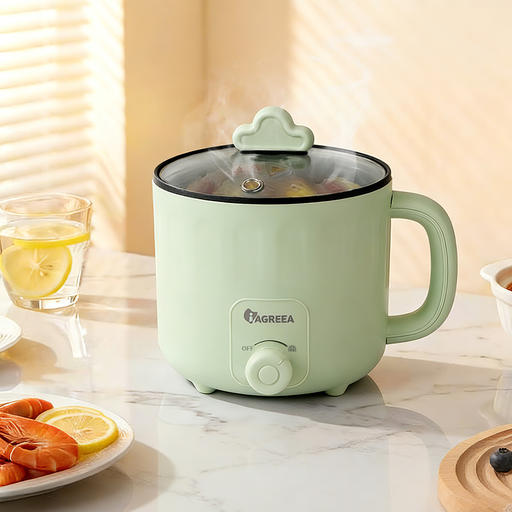 No image available
For anyone looking for an electric cooking pot for small quantities and non-pressure cooking.
The product information lists a capacity of 1.6 L, a non-stick coating and functions for simmering and braising.
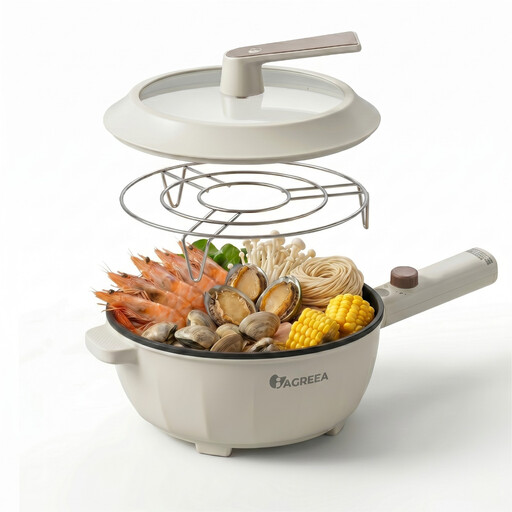 No image available
For anyone looking for a cooking pot with a sauté function that can also cook food slowly.
The product information lists a capacity of 2.3 L and a power rating of 1600 W; sautéing and slow cooking are among its listed functions.
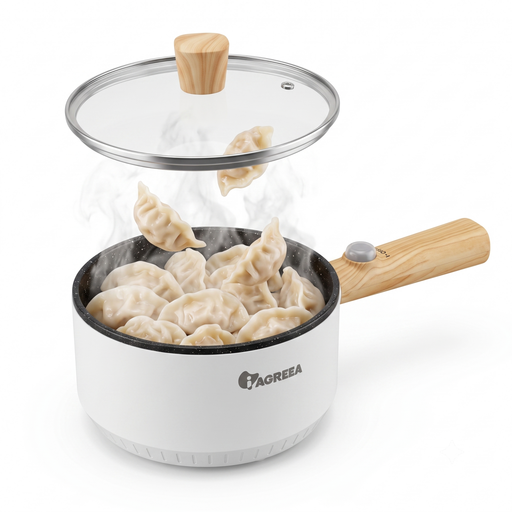 No image available
For anyone looking for a small electric pot for dishes such as stir-fries and other non-pressure cooking.
The product name lists a capacity of 1.2 L, a power rating of 1000 W and a non-stick coating.
No, not to cook them through: according to the Voedingscentrum, tinned pulses have already been heated sufficiently. Follow the pack instructions to warm them through; pressure-cooking is a separate option for a recipe.
For the Instant Pot Duo, the manufacturer specifies a minimum of 250 ml of liquid to generate steam. For other models, follow the manual and use a sauté function if you want to warm food without a sealed pressure cooker.
Follow the manual for the exact model and don’t force the lid open. The Duo and Sage manuals warn that you should only open the cooker once the pressure has been fully released; also check that the valves are clear.
Check the documentation for the exact product version. According to Ondernemersplein, an electrical appliance must meet the applicable European requirements. Once conformity has been established, the manufacturer applies the required CE marking and draws up an EU Declaration of Conformity.
Report the problem to the seller. According to the Rijksoverheid, the Netherlands has no fixed statutory warranty period; what you can expect from a product depends, among other things, on the product itself and normal use.