
The time-poor host
You want to heat cooked beans in time for your guests and are wondering whether you need an extra appliance. The Netherlands Nutrition Centre says that pulses from a tin only need to be heated through.


If you only need to heat tinned beans before your guests arrive, following the instructions on the tin and warming them in a saucepan is generally more practical than buying a slow cooker. If you also want to keep the beans warm for serving later, or use the pan for other dishes, compare the keep-warm and reheating functions and the capacity. Before buying, also check that the specific appliance carries the CE marking.
You want to heat cooked beans in time for your guests and are wondering whether you need an extra appliance. The Netherlands Nutrition Centre says that pulses from a tin only need to be heated through.
You want to serve the dish warm as friends arrive, so you’re looking for a separate keep-warm setting and guidance on how to use it. FoodSafety.gov describes keep-warm settings as being for food that is already hot.
You’re comparing capacity, ease of cleaning and cooking programmes because you want to use the appliance for other dishes too. Manufacturers such as Tomado, Tristar and Tefal describe different functions and model features.
Choose this if: you only want to heat the beans before your guests arrive; follow the instructions on the tin.
Bear in mind: if you want to serve them warm later, you’ll need to arrange a suitable way to keep them warm.
Choose this if: you also want to slow-cook other dishes and serve food that’s already hot later.
Bear in mind: a keep-warm setting is not a proven fast-reheat function for cold beans.
Choose this if: as well as slow cooking, you want a separate reheating programme and other cooking programmes.
Bear in mind: no measured reheating time for tinned beans is given for the Tefal CY505E.
FoodSafety.gov advises keeping hot food above 60 °C and describes a slow cooker’s keep-warm setting as being for food that is already hot. This is US food safety guidance, not an established Dutch legal threshold for home use; also follow your appliance’s manual.
| What to consider | What to check before buying | Who should pay extra attention? |
|---|---|---|
| Heating food in time | Follow the cooking instructions on the tin; don’t confuse keeping food warm with reheating it. | If I only want the beans hot before my guests arrive, I want to know whether I need an appliance at all. Around 36% of consumers say heating food in time is their top priority. |
| Serving food warm | Check whether there’s a separate keep-warm setting and what the manual says about using it. | If guests arrive at different times, I want to be able to serve the dish warm. Around 29% of consumers prioritise this need. |
| Suitable capacity | Compare the pan’s capacity with the amount you want to prepare at once. | If I want to heat several tins or extra ingredients at once, I want to know how much room the pan offers. Around 21% of consumers focus on suitable capacity. |
| Cleaning and versatility | Check whether the inner pot is removable and which functions you’ll use beyond this occasion. | If I want to use the appliance regularly, ease of cleaning and programmes I’ll actually need will influence my choice. Around 14% of consumers prioritise versatility and easy cleaning. |
Tinned beans are already cooked. A keep-warm setting is designed for food that is already hot and won’t necessarily replace a way to heat cold beans quickly.
First decide whether you want to heat the beans or serve them warm later. Then check which function the model actually has and follow the manual.
A Joybuy listing for the CrockPot CSC062X also mentions a Turbo Express multi-cooker in the product description. These names make it important to compare the model identity and functions carefully.
Before buying, compare the full model reference and key functions with the manufacturer’s information.
Your statutory rights with the seller are not automatically the same as the terms of a manufacturer’s warranty. The Netherlands Authority for Consumers and Markets explains that a seller must put things right if a product fails to meet reasonable expectations under normal use.
Keep your proof of purchase and contact the seller if a product is faulty.
Tomado describes the TSC3501B as a 3.5-litre slow cooker with LOW, HIGH and WARM settings, operated using a dial.
Tristar describes the VS-3915 as a 3.5-litre slow cooker with two cooking settings and a separate keep-warm setting.
Tefal describes the Dutch CY505E as a 6-litre multi-cooker with several cooking programmes, including a reheating programme.
These Joybuy product picks are slow cookers for anyone who wants to slow-cook food and serve it warm later; a keep-warm function is not a fast way to heat cold beans.
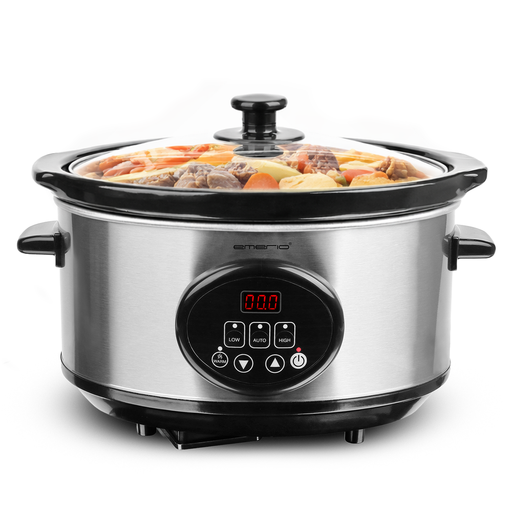 No image available
A good fit if you also want to slow-cook and serve food that’s already hot later; the keep-warm function is not a fast reheating method.
The product information lists a digital timer, three settings and a removable ceramic pot.
Before buying, check that the specific appliance carries the required CE marking.
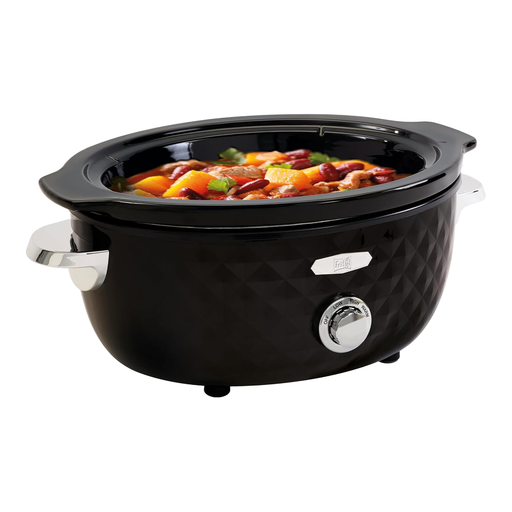 No image available
A good fit if you’re looking for a slow cooker for other slow-cooked dishes, with a separate keep-warm function for serving food later; don’t use it as a fast-reheat setting.
The product name lists 150 W, a ceramic pot and four heat settings, for 1 to 4 people.
Before buying, check that the specific appliance carries the required CE marking.
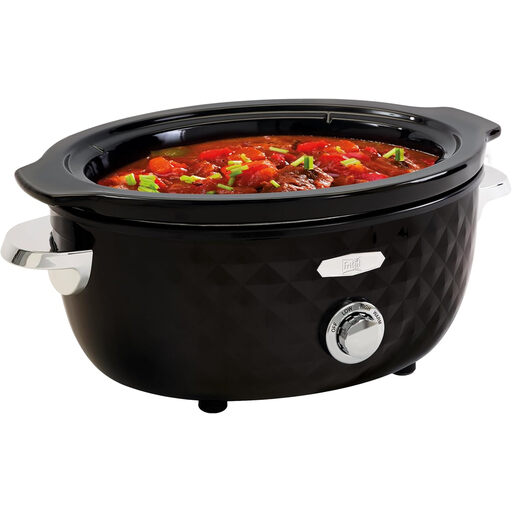 No image available
A good fit if you want to slow-cook a larger quantity and serve food that’s already hot later; the keep-warm setting is not a fast reheating method.
The product name lists 210 W, four settings and a ceramic pot, for 4 to 8 people.
Before buying, check that the specific appliance carries the required CE marking.
No. According to the Netherlands Nutrition Centre, pulses from a tin only need to be heated through; follow the cooking instructions on the specific tin.
Don’t use the keep-warm setting as a proven fast-reheating method. FoodSafety.gov describes a slow cooker’s keep-warm setting as being for food that is already hot and advises keeping hot food above 60 °C. This is US guidance, not an established Dutch legal threshold for home use. Also follow your model’s manual.
After opening, keep the beans chilled in a sealed container, not in the tin. For broad beans from a tin or jar, the Netherlands Nutrition Centre recommends keeping them in the fridge for two days after opening. For other products and dishes with extra ingredients, check the relevant storage advice.
The Netherlands Food and Consumer Product Safety Authority (NVWA) states that an electric slow cooker placed on the market in the Netherlands as an electrical consumer product must carry a CE marking; check the marking on the specific appliance. The Netherlands Authority for Consumers and Markets explains that your statutory warranty rights against the seller depend on what you could reasonably expect from the product under normal use.