
Cook of dried beans
You regularly cook black beans from dried and want to keep the cooking time down. A pressure-cooking function is important, but be sure to follow the instructions on soaking, cooking and the maximum fill level.


If you regularly cook dried black beans, look for a genuine pressure-cooking function and check the exact model’s fill limit for beans. A compact appliance may suit smaller portions, while a larger pot needs more worktop space. For tinned beans, a pressure-cooking function is less important. Also consider where you’ll position the appliance and how steam is released, and follow the cooking instructions for both the beans and the appliance.
You regularly cook black beans from dried and want to keep the cooking time down. A pressure-cooking function is important, but be sure to follow the instructions on soaking, cooking and the maximum fill level.
You may be looking for one appliance that can handle several cooking tasks, but you’ll also need to check the space available and allow room for steam to escape. The capacity in litres doesn’t tell you how much space the appliance itself takes up.
You want to prepare several meals at once, so you’re comparing the usable pot capacity with the space a larger appliance takes up. With dried beans, the permitted fill level may be lower than the stated capacity.
Best for: a small kitchen and smaller portions of dried beans, if you’re looking for a pressure-cooking function.
Trade-off: a lower stated capacity doesn’t mean you can fill the whole pot with beans; check the manual.
Best for: larger portions, if you also have room for a bigger appliance.
Trade-off: a higher stated capacity won’t solve a lack of space, and doesn’t on its own determine the permitted batch size for beans.
Best for: mainly reheating cooked beans or using other functions, such as cooking rice and stewing.
Trade-off: don’t assume it can pressure-cook dried beans if the exact model doesn’t list a pressure-cooking function.
| Buying consideration | What to look for | Which consumers |
|---|---|---|
| Cooking time | Check whether the exact model pressure-cooks, and follow the manual’s instructions for dried beans. | If I regularly cook dried black beans, I want to know whether the appliance has a pressure-cooking setting. Around 33% of consumers are most concerned about cooking time. |
| Positioning and steam release | Measure the space and check the dimensions and positioning instructions for the exact model. | In a small kitchen, I want to know whether the appliance can stand securely and where steam can escape safely. Around 27% of consumers are mainly concerned about the space available. |
| Usable capacity for beans | Compare the fill limit for beans with the amount of beans and liquid you’ll be cooking. | If I want to cook several portions in advance, the permitted fill level matters more than the number of litres on the box. Around 20% of consumers mainly want to cook a larger batch. |
| Cleaning and use | Check which parts are removable or dishwasher-safe, and follow the instructions for releasing pressure. | If I use the appliance regularly, I want to know in advance how to clean the pot and other parts, and how to operate it. Around 20% of consumers are mainly concerned about maintenance and ease of use. |
According to the Instant Pot Classic Mini manual, ingredients that expand, such as dried beans, must not go above the 1/2 mark. Don’t automatically apply this model-specific limit to other appliances. There is also general cooking advice for dried beans from food safety authorities; a short pressure-cooking time setting isn’t necessarily the same as the full cooking time.
Dried beans expand. The Instant Pot Classic Mini manual limits these ingredients to the 1/2 mark, so your preferred batch may not fit in a single cooking session.
Compare the amount of beans and liquid you use with the fill limit in the manual for the exact model.
If the amount you want to cook exceeds the fill limit, you may need to cook it in several batches.
Tefal lists a pressure-cooking programme for the Turbo Cuisine CY7548, while the RK8121 product description mentions cooking, stewing and slow cooking, among other functions. Don’t assume an appliance has a pressure-cooking function just because it’s called a multicooker.
Check the full model number to confirm the function before using pressure-cooking times for dried beans.
Without a pressure-cooking function, dried beans may take longer to cook than you expect.
The set cooking time isn’t the same as the total time for soaking, heating, building pressure and releasing pressure. EFSA and the Netherlands Nutrition Centre give general cooking advice for dried beans, which can’t automatically be equated with a pressure-cooking programme.
Follow the cooking instructions for the beans and the appliance, and don’t eat beans that haven’t been cooked thoroughly.
The 3.8-litre Classic Mini is a compact pressure-cooking option for smaller portions. This assessment applies to this model, not the whole brand.
The Turbo Cuisine CY7548 is a pressure-cooking multicooker; the RK8121 is a rice cooker and multicooker. Check the functions of each model.
The Philips 3000 Series HD2616/70 is a pressure-cooking multicooker with a stated capacity of 6 litres.
These models include pressure-cooking options for dried beans, as well as a rice cooker for anyone who wants to cook without a stated pressure-cooking function. Before buying, check that the exact model has the required CE marking and read its safety instructions.
 No image available
A pressure-cooking option to consider if you want to cook dried beans and larger portions.
The product information lists 14 cooking functions, a stainless steel inner pot and dimensions of 330 × 310 × 337 mm. For beans, follow the stated 1/2 mark fill limit, and take care around hot steam and pressure release.
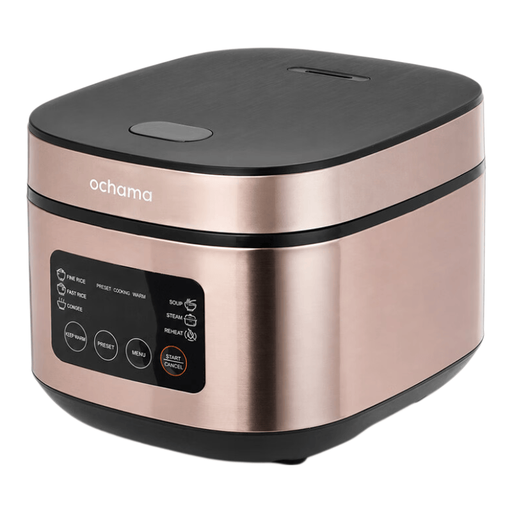 No image available
An option if you mainly want to cook rice, porridge or stews, and don’t need a pressure-cooking function.
The listed functions include cooking rice, making porridge and stewing. The product title mentions a ceramic inner pot with a PFOA-free coating, a timer, an LED display and six cooking functions. A rice spoon and steaming basket are also listed.
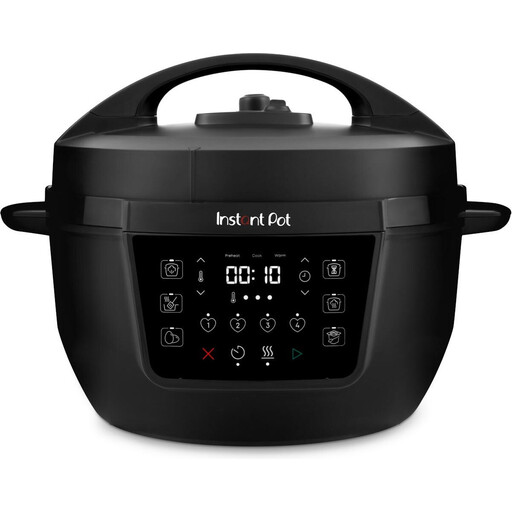 No image available
A larger pressure-cooking option to consider if you want a higher stated pot capacity and have enough room for the appliance.
The product information lists 7.1 litres, seven functions and a stainless steel inner pot. Check the manual for the model-specific fill limit for beans.
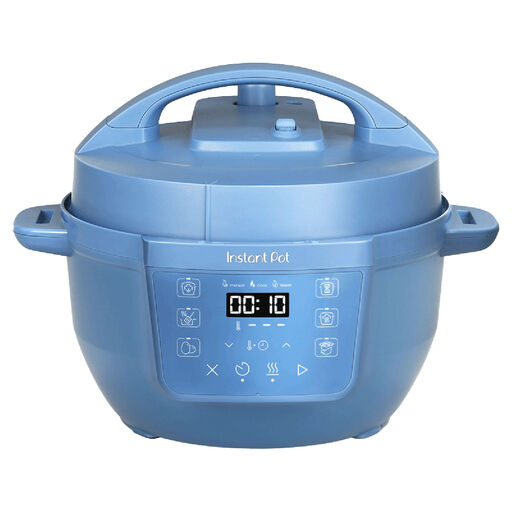 No image available
A compact pressure-cooking option to consider for smaller portions of dried beans and limited kitchen space.
The product information lists 3.8 litres, a stainless steel inner pot and seven functions. Don’t fill above the 1/2 mark when cooking beans, and follow the pressure release instructions. Only open the lid once the pressure indicator has dropped.
 No image available
A larger pressure-cooking option to consider if you want to cook dried beans and have room for a 7.6-litre pot.
The product information lists a Bean/Chili programme. For beans and other ingredients that expand, follow the stated 1/2 mark fill limit, and take care around hot steam and pressure release.
EFSA advises soaking beans for 6–12 hours, changing the soaking water and then cooking them at 100 °C for at least half an hour. The Netherlands Nutrition Centre recommends cooking dried pulses for at least 10 minutes after soaking. These general recommendations aren’t automatically interchangeable with short pressure-cooking programmes. Follow the instructions for the beans and the appliance, and don’t eat beans that haven’t been cooked thoroughly.
No. According to the Netherlands Nutrition Centre, pulses in tins, jars or pouches have already been heated sufficiently and only need reheating. A pressure-cooking time for dried beans isn’t intended for them.
Check the dimensions, make sure you have a stable place to position it, and read the steam release instructions for the exact model. The Instant Pot Classic Mini manual specifies a flat worktop and warns against placing it on a hob or blocking the ventilation openings, among other things.
According to the Dutch government, electrical appliances sold on the EU market must meet the relevant safety requirements and carry the required CE marking. Check the product information for the exact model before buying.
For distance purchases, you’re generally entitled to a 14-day cooling-off period, according to the Dutch government. You also have a legal guarantee: if there’s a problem with a product, the seller is your point of contact. An additional manufacturer’s or paid-for warranty doesn’t replace this legal right.