
Cook with limited worktop space
You want to make a bean dish now and then, but any extra appliance needs to fit on your worktop or in a cupboard. A 2-litre capacity tells you about the inner pot, not the appliance’s external dimensions.


If you simply want to heat an opened tin of butter beans, a saucepan or microwave is usually the more obvious choice: according to the Netherlands Nutrition Centre, tinned pulses have already been heated sufficiently, so you only need to warm them according to the instructions on the label. If you also want to slow-cook complete meals, compare a small slow cooker or cooking pot by its external dimensions, the portion size you need and its features. Don’t use a keep-warm setting to reheat chilled leftovers.
You want to make a bean dish now and then, but any extra appliance needs to fit on your worktop or in a cupboard. A 2-litre capacity tells you about the inner pot, not the appliance’s external dimensions.
You mainly want to heat a tin of butter beans to eat straight away. The first question is whether you also want to prepare slow-cooked dishes.
You want to make stews and other meals as well as beans, and are weighing up whether a larger inner pot or multiple cooking functions would suit the way you cook.
Choose this if: you mainly want to heat an opened tin of beans quickly and don’t make slow-cooked dishes.
Bear in mind: you won’t have a slow-cooking function, but you also won’t have an extra appliance to store. Follow the instructions on the label.
Choose this if: you want to slow-cook small stews as well as beans.
Bear in mind: the capacity in litres won’t tell you whether the appliance, including its lid and handles, will fit on your worktop.
Choose this if: you also want to prepare more portions or complete meals at once.
Bear in mind: a larger capacity won’t automatically solve limited worktop space or suit you if you just want to heat one tin quickly.
Choose this if: you want to use functions such as rice cooking or steaming as well as slow cooking.
Bear in mind: check that the extra functions and controls suit what you’ll actually cook.
| What to consider | What to look for when buying | Who is this important for? |
|---|---|---|
| Worktop and cupboard space | Compare the external dimensions of the exact model with the space you have and its placement instructions; don’t use the capacity to estimate its footprint. | If my kitchen is small, I want to know whether the whole appliance will fit, not just how much it holds. Around 33% of consumers give available space the highest priority. |
| Cooking method | Think about whether you’ll also be slow-cooking complete meals. Don’t slowly reheat chilled leftovers in a slow cooker. | If I mainly want to heat a tin of beans, I don’t want to buy an appliance for a function I won’t use. Around 33% of consumers prioritise quick heating. |
| Portion size | Compare the quantity of ingredients with the usable capacity and filling instructions for the exact model. | If I want to make more than a small portion at a time, I look at the pot’s capacity. Around 20% of consumers give the amount they want to cook at once the greatest weight. |
| Extra features and cleaning | Check which functions the exact model has and how its parts can be cleaned. | If I also want to cook rice or steam food, those functions need to fit the way I cook. Around 14% of consumers prioritise versatility and easy cleaning. |
Examples of stated capacities: Russell Hobbs lists 2 litres for the Dutch Compact Home 25570-56, while Tristar lists 3.5 litres for the VS-3915. These figures describe capacity, not how much worktop space you’ll need.
According to the Netherlands Nutrition Centre, pulses in tins have already been heated sufficiently. An extra appliance could therefore take up space when all you want is a quick way to heat them.
First decide whether you also want to slow-cook complete meals. For the beans, follow the instructions on the label.
Bear in mind how much space the appliance will take up on your worktop or in a cupboard.
Capacity describes the pot and doesn’t prove that the appliance will fit in a small kitchen.
Measure your worktop and storage space, then check the external dimensions and placement instructions for the exact model.
Keeping food warm isn’t the same as reheating leftovers. The Netherlands Nutrition Centre advises heating leftovers all the way through until steaming hot; the US food safety agency advises against reheating leftovers in a slow cooker.
Reheat previously cooked leftovers using a suitable method first, and don’t use a keep-warm setting as a reheating programme.
Russell Hobbs Netherlands describes the Compact Home 25570-56 as a traditional slow cooker with a capacity of 2 litres.
Tristar describes the VS-3915 as a traditional slow cooker with a 3.5-litre ceramic inner pot.
On its UK product page, Crock-Pot describes the CSC046X as a traditional 2.4-litre slow cooker for smaller meals.
A Dutch retailer describes a 2.8-litre rice cooker, slow cooker and steamer for anyone looking for several cooking functions.
This selection consists mainly of compact electric cooking pots; one model is sold as a slow cooker. Check each product’s features and dimensions to make sure they suit the way you’ll use it and the space in your kitchen.
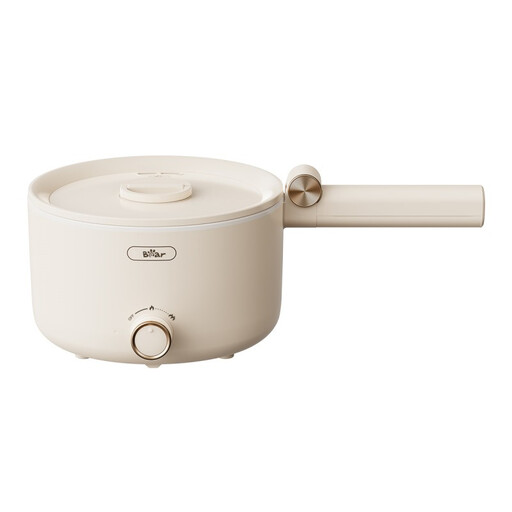 No image available
The stated 1.6-litre capacity and suitability for 1–2 people make this a good fit for small batches; it’s an electric cooking pot, not a traditional slow cooker.
The description lists dimensions of 34.2 × 21.1 × 13.2 cm, two power settings and automatic shut-off and boil-dry protection.
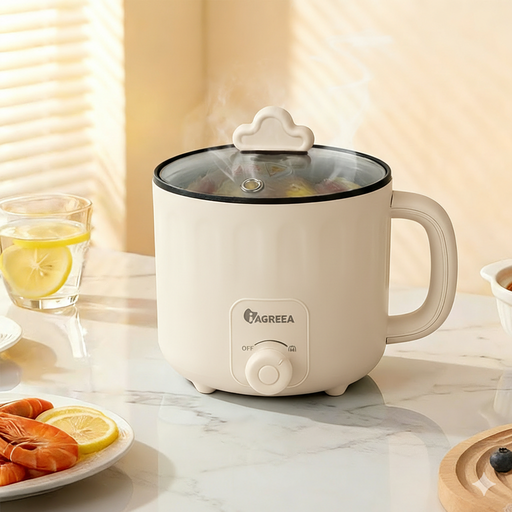 No image available
This electric cooking pot is described as suitable for small households and small batches; it’s not a traditional slow cooker.
The product information lists a 1.6-litre capacity, 600 W, a non-stick coating, automatic shut-off and overheat protection. The stated dimensions are 17 × 15 cm.
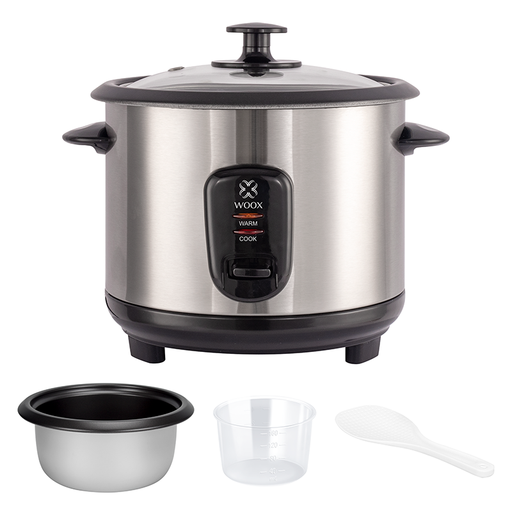 No image available
With a stated capacity of 1 litre, this electric cooking pot is designed for small batches; the product information says it can prepare food for one or two people.
The product name lists 400 W, a glass lid, a stainless steel exterior and a non-stick pot. It’s not a traditional slow cooker.
 No image available
The stated 2.6-litre capacity is designed for family meals or small gatherings, so it’s less suited to simply heating one tin of beans.
The product information lists 1000 W, three power settings, and cooking, steaming and stewing functions.
No. According to the Netherlands Nutrition Centre, pulses in tins, jars or pouches have already been heated sufficiently, so you only need to warm them according to the instructions on the label. Check the directions on the packaging.
Don’t use the keep-warm setting as a substitute for reheating. The Netherlands Nutrition Centre advises heating leftovers all the way through until steaming hot; the US food safety agency advises against reheating leftovers in a slow cooker. This advice is about leftovers, not a freshly opened tin of beans.
Measure the space available and compare it with the external dimensions and placement instructions for the exact model. Capacity in litres describes the inner pot, not how much space the appliance takes up.
According to the Netherlands Nutrition Centre, transfer any leftover beans to an airtight container and keep them chilled; don’t leave them in the opened tin. Check the label or the storage guide for the appropriate storage time.
Not necessarily: if you only want to heat them, following the instructions on the label is enough, while extra cooking functions are mainly useful if you’ll use them. Consider a multicooker if you also want to slow-cook, cook rice or steam food, for example, and check that the model will fit on your worktop.