
Livraison le jour même et le lendemain

Qualité garantie

Débloquez vos offres de bienvenue: Livraison GRATUITE | Jusqu'à -80 % | 30 jours d'essai gratuits à JoyPlus
Téléchargez l'application
A good set of stainless steel mixing bowls is the backbone of any kitchen. Whether you're whipping up cake batter, tossing a salad, or letting dough rise, you need a reliable bowl. However, the sheer number of options can be overwhelming, and there are hidden pitfalls. Many sets look great at first glance but prove to be impractical or low-quality in use. Before making a purchase, it's wise to know what to look for to avoid buyer's remorse.
As a Joybuy Product Recommendation Officer, I see a lot of products come and go. I'm here to help you cut through the marketing jargon and focus on what truly matters. These are the three most common pitfalls when buying a set of stainless steel mixing bowls.
To avoid the pitfalls mentioned above, there are a few key specifications that make all the difference. By paying attention to these details, you'll invest in a kitchen bowl set that you can enjoy for years to come.
The term "stainless steel" is broad. For kitchenware that comes into contact with food, 304 stainless steel is a widely used standard. This type of steel, also known as 18/8, contains a specific alloy of chromium and nickel that makes it highly resistant to rust and corrosion. It's food-safe, doesn't absorb odours or flavours, and is easy to clean. A set of stainless steel batter bowls made from this material is a durable choice.
A practical mixing bowl with a non-slip base, often made of silicone, stays firmly in place. This gives you the stability you need when vigorously whipping cream or kneading dough. Furthermore, storage space is often limited in modern kitchens. That's why you should opt for stackable mixing bowls. Well-designed sets nest seamlessly inside one another, taking up only the footprint of the largest bowl.
A set of stainless steel bowls with lids is multifunctional. You can use the bowls not only for prep work but also for storing leftovers in the refrigerator. Make sure the lids provide a tight seal and are preferably BPA-free. Some sets also include useful extras like a built-in grater or a colander, turning them into a complete salad bowl set. Assess whether these accessories are of decent quality and will actually add value to your routine.
Based on the criteria above, we have selected a few products that suit different user profiles.
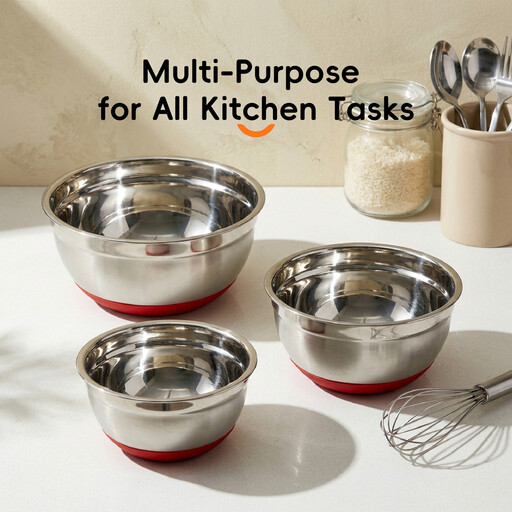
Why it fits this profile: This set offers the essential features without unnecessary extras. The three different sizes are perfect for the most common tasks, from beating eggs to tossing a salad. Ideal for anyone looking for a reliable starter set.
The red silicone base directly addresses the pitfall of unstable design. The bowl stays firmly in place, making mixing much easier and safer.
The non-slip base provides excellent stability. The set is made of food-grade stainless steel, and the bowls are stackable for compact storage.
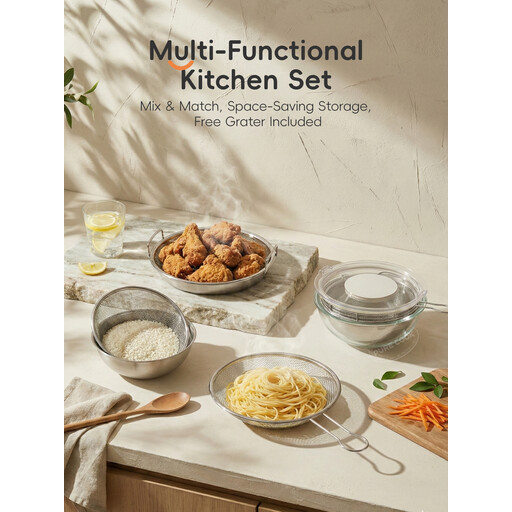
Why it fits this profile: This is an all-in-one solution for those who love to spend time in the kitchen. With various bowl sizes, lids, a colander, and a grater insert, you're prepared for almost any task, from prep to storage.
Unlike sets with useless extras, the accessories here are functional. The lids seal tightly, and the grater is integrated into a lid, which is practical for use.
A very complete set made of 304 stainless steel. The entire set is designed to nest together, which saves a tremendous amount of cabinet space.
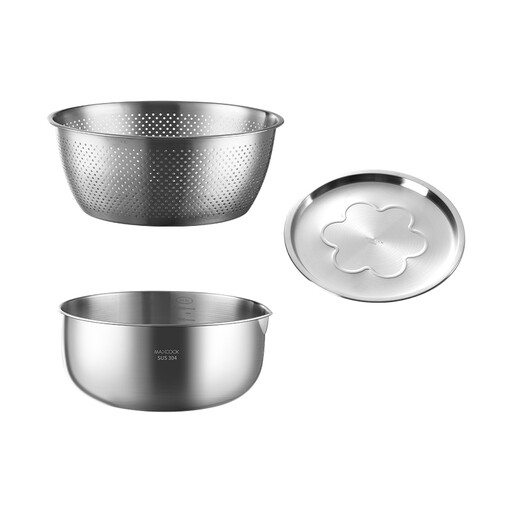
Why it fits this profile: This user isn't looking for a large set, but a few rock-solid bowls that will last for years. The focus is on material quality and a robust, seamless construction for maximum hygiene and durability.
This set tackles the "stainless steel" trap by explicitly using premium 304 stainless steel and a seamless construction, which minimises the risk of rust and dirt buildup.
Heavy-duty stainless steel with clear measurement markings on the inside. The seamless finish is hygienic, and the included colander is also of high quality.
We have compiled a complete, up-to-date list of products that meet these selection criteria and current regulations.
Yes, most stainless steel mixing bowls are dishwasher-safe, which makes them hygienic and easy to maintain. However, it's always wise to check the manufacturer's product information. Specific instructions may apply, especially if a bowl has a silicone non-slip base or plastic lids, to extend their lifespan.
304 stainless steel is a common type of stainless steel used for kitchenware. It contains a higher concentration of chromium and nickel, which makes it highly resistant to rust and corrosion, even when in contact with acidic ingredients like lemon juice or tomatoes. Cheaper variants, such as 201 stainless steel, are less resistant and can develop stains or rust spots over time.
Although stainless steel is a strong material, it is not completely scratch-proof. To minimise scratches, it's best to use utensils made of silicone, wood, or plastic. Avoid using metal whisks with excessive force and do not use abrasive sponges or scouring powders when cleaning. Minor signs of use and light scratches are normal and do not affect the functionality or food safety of the bowl.
