
Vandaag of morgen in huis

Kwaliteit gegarandeerd

Welkomstaanbiedingen ontgrendelen: GRATIS bezorging | Tot 80% korting | Gratis 30 dagen JoyPlus-proefperiode
Download de app
Fancy some Samyang Buldak ramen, but not sure which variant suits your taste or store cupboard? The differences aren't just about the colour of the packaging. The sauce, size, preparation method and allergens can vary considerably from one product to another.
A wrong choice can lead to a meal that's too spicy, a multipack you can't finish in time, or a product that doesn't meet your dietary needs. With this practical buying guide, you can compare Korean instant noodles on the points that really matter.
Words like "hot", "fire chicken" and "extra spicy noodles" give a clear clue, but they don't form a uniform scale. The perceived heat also depends on how much sauce you use. With Samyang Buldak Original, the product information explicitly warns that this variant is very spicy. Carbonara and cheese variants also contain chilli, even though the creamy powder creates a milder flavour impression.
A Samyang ramen multipack is practical if you eat noodles regularly. However, a box of 15 or 40 servings is less suitable if you only want an occasional snack. So always check the number of servings, the weight per pack and the best-before date on the product you receive.
Many variants contain wheat or gluten, soya and milk. Some products also list celery, sesame or possible cross-contamination. Ingredients can vary by version and origin. Always check the label on the packaging, especially if you have an allergy or intolerance. Product information on a web shop may be updated and does not replace the physical label.
Buldak noodles are typically stir-fry noodles: you boil the noodles, drain most of the water, and mix them with sauce and powder. This differs from Korean instant noodles with a large amount of broth. If you want less heat, you can start with part of the sauce sachet. That does change the final flavour and nutritional value.
The Original 5×140 g is designed for fans of a pronounced chilli and chicken-like flavour. Carbonara, Cheese and Quattro Cheese add milk and cheese powders. This creates a creamier profile, but these variants are not automatically mild.
A sachet of around 130 to 145 grams is usually a full portion. A cup variant, such as the Hot Chicken Cup Ramen Carbonara at 80 g, is more convenient for the office, a student room or on the go, because you don't need a pan. For home storage, multipacks of five, ten, fifteen or forty pieces make more sense.
Also pay attention to the preparation method. Sachets usually require boiling and draining. With cups, you typically add hot water and wait a few minutes. Always follow the instructions on the packaging; times and quantities can vary by variant.
With instant ramen containing cheese or carbonara, check especially for the presence of milk, mozzarella, butter powder and milk powder. Various Samyang products also list soya and wheat. Nutritional values vary, but several of the variants mentioned contain around 400 to 430 kcal per 100 grams. The salt content can also be significant.
The product data for the Carbonara variants, for example, lists 423 kcal and 2.6 grams of salt per 100 grams. The Quattro Cheese variant lists 407 kcal and 3.4 grams of salt per 100 grams. Use these figures to compare portions, but ultimately base your decision on the label of the specific pack.
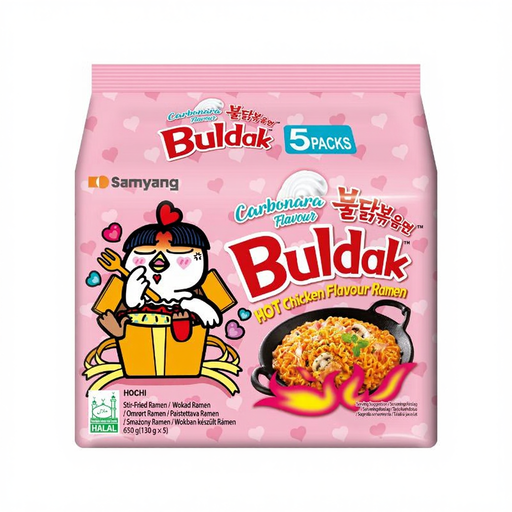
Why this fits the profile: A five-pack lets you try the well-known combination of spicy chicken-like sauce and creamy carbonara without committing to a large box straight away.
The size is more manageable than a large bulk pack. The product information clearly lists gluten, soya, milk and celery as allergens.
Five portions of 130 grams; combination of chilli, chicken-like flavour and carbonara powder.
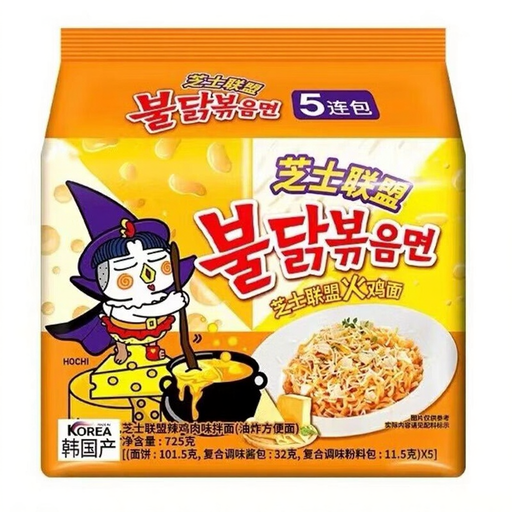
Why this fits the profile: Ideal for K-food fans who want a more generous portion and a pronounced cheese profile alongside the spicy sauce.
The specification lists 145 grams per portion and mentions gluten, soya, milk and celery. This allows you to check portion size and allergens in advance.
Five sachets; cheese sauce and mozzarella powder; hearty stir-fry noodles.
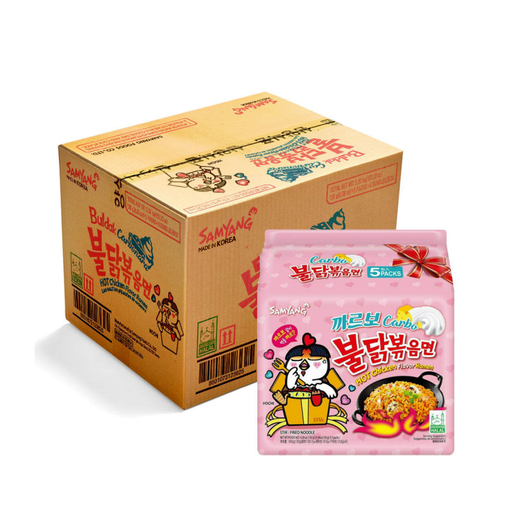
Why this fits the profile: A practical choice for student houses, shared cupboards, events or enthusiasts who eat Korean noodles regularly.
The large quantity makes the price per portion comparable, but it only makes sense with regular use. Check the origin and best-before date on the packaging.
Box of 40 individual portions of 130 grams; suitable for serving multiple people or building a stock.
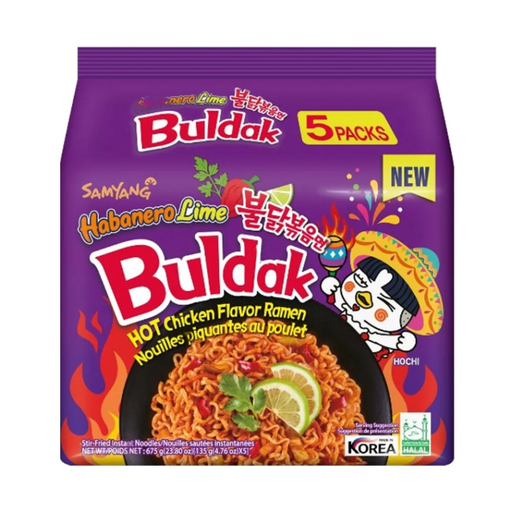
Why this fits the profile: For those who want a fresh lime note alongside the heat and find a five-pack a convenient storage format.
The product lists habanero and chilli in the ingredients. This makes it clear in advance that this is not a mild entry-level variant.
135 grams per sachet; five pieces; combination of chilli, chicken-like flavour, habanero and lime notes.
We've put together a full, up-to-date list of products that fully meet these strict selection criteria and comply with current European safety regulations.
With most sachets, you boil the noodles for a few minutes in water. Then drain most of the water, add the sauce and powder, and mix well. Some versions recommend a brief stir-fry. With a cup, use the indicated amount of hot water and wait the specified time.
Store unopened Korean instant noodles in a dry, cool place away from direct sunlight. Check the packaging, allergens and best-before date before use. Avoid using a damaged sachet or cup.
The creamy carbonara flavour can make the chilli seem less sharp, but the variant still contains chilli and spicy sauce. The perceived intensity depends on how much sauce you add.
This varies by product. The range includes five-packs, a pack of ten times 130 grams, a Party Pack with 15 pieces, and a box of 40 portions. Always check the product title and specifications.
That depends on the variant. Many products contain wheat, gluten, soya and sometimes milk, celery or sesame. Read the full label of the specific product before purchasing and preparing.
