
Vandaag of morgen in huis

Kwaliteit gegarandeerd

Welkomstaanbiedingen ontgrendelen: GRATIS bezorging | Tot 80% korting | Gratis 30 dagen JoyPlus-proefperiode
Download de app
A good kitchen knife is half the battle. Yet, the search for the right kitchen knives is often more difficult than you'd think. The market is flooded with sets that overpromise and underdeliver, and with marketing terms that say little about actual quality. Many home and hobby cooks fall into the same traps, resulting in a drawer full of dull knives. Let's take a look at how you can avoid this.
Before you make a choice, it's good to know where things often go wrong. Recognise these common marketing traps and avoid wasting money on knives that will be dull again after just a few months.
You don't need to be a metallurgist to make a good choice. By paying attention to a few key, objective characteristics, you can better assess the quality of a knife.
Almost all modern kitchen knives are made of stainless steel, but there are significant differences in quality. Pay attention to the following points:
Not every knife is suitable for every task. A good basic set for most home cooks consists of:
Depending on your cooking style, you can supplement this with a carving knife, cleaver, or a set of steak knives for the table.
To help you get started, we have highlighted a few products that suit different needs and budgets, based on their specifications.
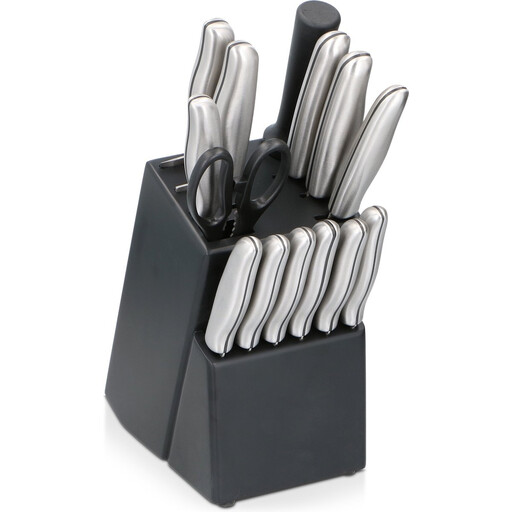
Why This Fits Their Persona: Ideal for someone setting up their first kitchen or looking for a complete basic set in one go. This set offers a solution for almost any cutting task, from chopping vegetables to slicing a steak at the table.
Instead of focusing on vague claims, this set provides a functional base of stainless steel. It's a pragmatic choice that avoids the 'too good to be true' pitfall by offering a fair price-to-quality ratio.
Complete 15-piece set: Includes a chef's knife, bread knife, santoku knife, steak knives, and more. Includes knife block: Keeps your knives safe and organised.
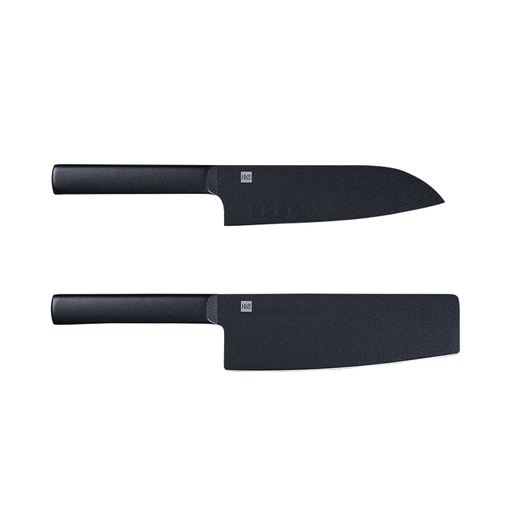
Why This Fits Their Persona: For the cook who spends a lot of time in the kitchen and values precision and durability. This knife is designed for performance, not just for show.
This knife avoids vague claims by specifying the steel type: 50Cr15MoV carbon steel. The focus is on objective benefits like edge retention and corrosion resistance, rather than on empty promises.
High-quality carbon steel: Offers excellent sharpness and durability, according to the manufacturer. Nano non-stick coating: Food is less likely to stick to the blade, and the knife is easier to clean.
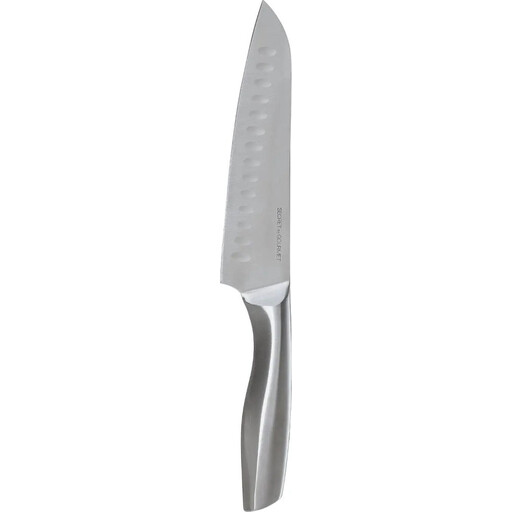
Why This Fits Their Persona: Perfect for the cook who knows exactly what they want: a reliable and versatile santoku knife. Ideal as an upgrade from an old knife or as the first serious addition to their collection.
Instead of investing in a mediocre set, you're choosing a single quality knife. This knife is fully forged from a single piece, which bypasses the pitfall of weak construction and poor balance.
Forged construction: Ensures excellent balance and durability. Dishwasher-safe: Practical and easy to maintain for daily use.
A good knife is a start, but a full cutlery set completes the dining experience. We have a current selection of products that meet strict quality criteria.
Below, we answer some frequently asked questions about purchasing and maintaining kitchen knives.
The main difference lies in the shape of the blade. A chef's knife has a more curved belly, making it ideal for a "rocking" cutting motion. A santoku knife has a straighter blade and a rounded tip, which makes it very suitable for quick, downward chopping motions and making fine slices. The choice is personal and depends on your preferred cutting technique.
Although many stainless steel knives are dishwasher-safe, hand washing is often better for maintaining sharpness. Aggressive dishwasher detergents and contact with other metal can dull the blade over time. Dry the knife immediately after washing. Use a honing steel regularly to keep the edge straight, and have the knife sharpened (or sharpen it yourself) when it becomes truly dull.
Not necessarily. A high price is no guarantee of quality. It is often wiser to invest in one or two high-quality, versatile knives (like a good chef's knife or santoku knife) than in a large, cheap knife set. Pay attention to specifications like steel type and construction, rather than just the price or the number of knives in the set.
