
Vandaag of morgen in huis

Kwaliteit gegarandeerd

Welkomstaanbiedingen ontgrendelen: GRATIS bezorging | Tot 80% korting | Gratis 30 dagen JoyPlus-proefperiode
Download de app
An ionic hairdryer can be useful if you want to dry your hair quickly while reducing static electricity and frizz. However, an impressive number on the packaging does not tell you everything. A high-wattage motor will not automatically dry your hair faster, and a large number of negative ions is difficult to verify at home.
As a Joybuy Product Recommendation Officer, I therefore focus mainly on measurable features: power, settings, weight, attachments, plug type and safety information. This helps you avoid paying for features you are unlikely to use.
A powerful 2,300-watt hairdryer can move a lot of air, but that does not automatically mean it is pleasant to use. Airflow, heat distribution, motor type and nozzle design also play a role. A high motor speed, such as 20,000 or 110,000 RPM, is not a direct guarantee of a shorter drying time either.
Use wattage as one point of comparison, but also look at:
A hairdryer with ionic technology is often marketed as a solution for frizzy hair, static electricity and hair that feels dry. According to product descriptions from various brands, negative ions may help reduce static charge and frizz. This is a product claim made by the brand, not a guaranteed result for every user.
Your drying technique matters too. Keep the hairdryer moving, avoid using the highest temperature continuously and partially dry long hair with a towel first. This helps limit unnecessary exposure to heat.
A concentrator is useful for targeted blow-drying and smoother styling. A diffuser distributes the air more evenly and is practical for curls or extra volume. Always check that the accessories are actually included; “suitable for diffuser” does not always mean that a diffuser comes in the box.
A removable filter is practical too. Hair and dust can block the air inlet, causing the hairdryer to become hotter or move less air. Clean the filter regularly according to the instructions.
For everyday home use, the stated power of many models is between approximately 1,600 and 2,400 watts. A fast hairdryer needs more than a high wattage: it also needs useful airflow. Several speeds are helpful for long or thick hair, allowing you to start on a lower setting and increase the power as you dry.
At a minimum, look for:
Before buying, check that the appliance is suitable for Dutch sockets. The models mentioned are generally specified for 220–240 V, but always read the specific product label and instructions.
According to the brand’s product information, a hairdryer with negative ions may help reduce static electricity and create a smoother appearance. Its effectiveness can vary depending on your hair type and styling routine. Think of ionic technology as an additional feature, not a substitute for a suitable temperature setting or hair-care product.
For a professional hairdryer, the cable, weight, controls and motor durability are also important. Someone who dries several heads of hair every day will have different requirements from someone who uses a hairdryer at home a few times a week.
A lightweight hairdryer weighing around 330 to 480 grams is more comfortable when you need to dry your hair for a long time. A heavier model, on the other hand, may have a larger motor or a more robust construction. Sound claims should be interpreted carefully: a stated decibel level is only truly comparable when the measurement method is the same.
For travelling, a folding handle, compact dimensions and, where necessary, dual voltage are useful. A travel hairdryer designed exclusively for 220–240 V is not automatically suitable for countries with a different voltage.
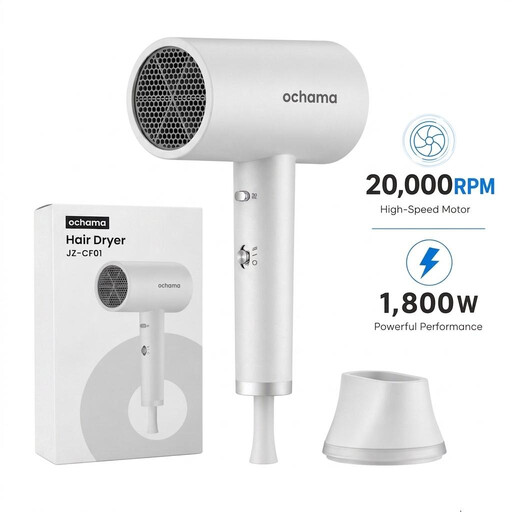
Why it suits this profile: This model combines a stated power output of 1,600–1,800 watts with a weight of approximately 480 grams. This makes it suitable for everyday use at home or in student accommodation.
The product information mentions ionic technology and an included precision nozzle, so you do not have to rely on wattage alone.
Approximately 480 grams, 20,000 RPM according to the product listing and a nozzle for targeted styling.
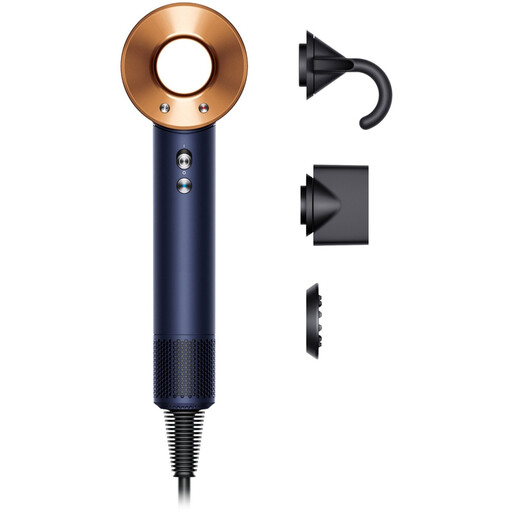
Why it suits this profile: For anyone who values precise heat control and targeted styling. The product description lists three speeds, four temperatures and a styling concentrator.
The choice is not based solely on motor power: temperature control, speeds and the nozzle are all described clearly.
Four temperature settings, three speeds, a cool-air setting and a stated warranty period of two years.
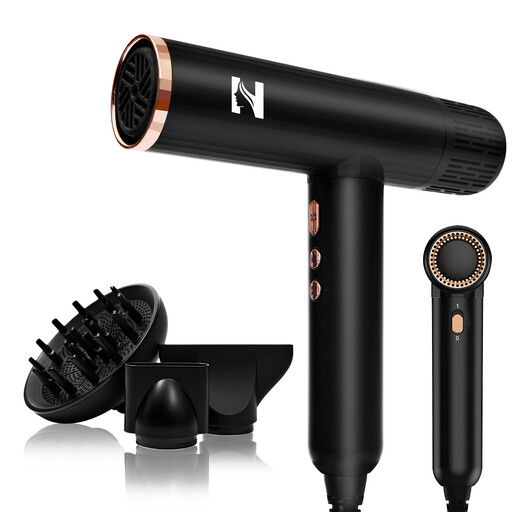
Why it suits this profile: This model is aimed at users with long, thick or curly hair who want to use different airflow settings and attachments.
The product listing mentions three speeds, four temperature settings and a diffuser. When ordering, check the current box contents.
1,900 watts, a stated weight of 0.57 kg, a diffuser and two concentrator nozzles according to the product description.
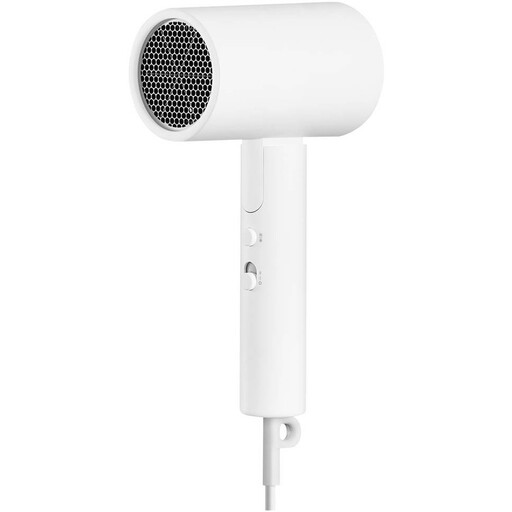
Why it suits this profile: Its compact, folding design and stated weight of 433 grams make this a practical hairdryer for travelling and occasional use at home.
Alongside ionic technology, the product information lists two speeds, two temperatures and a concentrator nozzle.
1,600 watts, 20,000 RPM according to the product listing, folding design and overheating and overvoltage protection.
We have put together a complete, up-to-date list of products that fully meet these strict selection criteria and the applicable European safety regulations.
An ionic hairdryer mainly uses energy through its heating element. A higher wattage may require more electricity during prolonged use, but a shorter drying time can partly offset this. Actual consumption depends on the selected setting and how long you use the appliance.
Keep the following points in mind when using it:
It can be, particularly when a hairdryer for curly hair has a diffuser and several low-temperature and low-speed settings. A diffuser stops the airflow from blowing directly onto one area. The result varies depending on your curl type, products used and drying technique.
Its lifespan depends on the motor, frequency of use, maintenance and heat exposure. There is no fixed period that applies to every model. Keep the filter clean, do not block the air inlet and follow the safety instructions. Also check the statutory guarantee and any additional manufacturer’s warranty before buying.
Not necessarily. Consider the power output, drying time and how often you use the appliance. A 1,600-watt model may use less energy per minute than a 2,400-watt model, but a longer drying time affects the total. Compare the power output with the settings and airflow, as well as your own hair type.
