
Vandaag of morgen in huis

Kwaliteit gegarandeerd

Welkomstaanbiedingen ontgrendelen: GRATIS bezorging | Tot 80% korting | Gratis 30 dagen JoyPlus-proefperiode
Download de app
Choosing a new hairdryer might seem straightforward. But there are significant differences in drying time, heat control, weight and attachments. A high wattage, for example, doesn’t automatically mean your hair will dry faster. Terms such as ‘ionic’, ‘plasma’ and ‘professional’ only tell you so much unless you look at the actual settings and included attachments.
Look out for these three common pitfalls:
Power is measured in watts. Models rated at around 1,600 to 1,800 watts are often practical for everyday use. A professional hairdryer will often have a rating of 2,200 watts or more, but this also means higher energy consumption if you use it for a long time.
So, as well as wattage, look at:
A fast hairdryer should move enough air without making the highest heat setting the only useful option. A more powerful model may be convenient for thick hair. For fine hair, several lower settings and good heat control are often more important.
A hairdryer with temperature settings gives you more control while drying. Use a lower temperature for fine or fragile hair, and keep the hairdryer moving. A cool shot button can help you finish your style.
With an ionic hairdryer, ions are used to reduce static electricity, according to the product description. Philips, for example, says its Mineral-ion technology releases up to 80 million ions per drying session. This is a Philips product specification, not a guarantee that every user will get the same results.
Claims about ‘plasma’, ‘shine’ or ‘hair care’ should also be treated as information from the brand or retailer. Focus on what you can check: settings, power, weight, attachments and warranty.
A lightweight hairdryer is handy if you spend a long time drying your hair or use a brush a lot. For travel, a compact hairdryer with a folding handle is more convenient than a large salon model.
Also look out for the following:
Also check that the model has an EU plug and is suitable for 220–240 volts for use in the Netherlands.
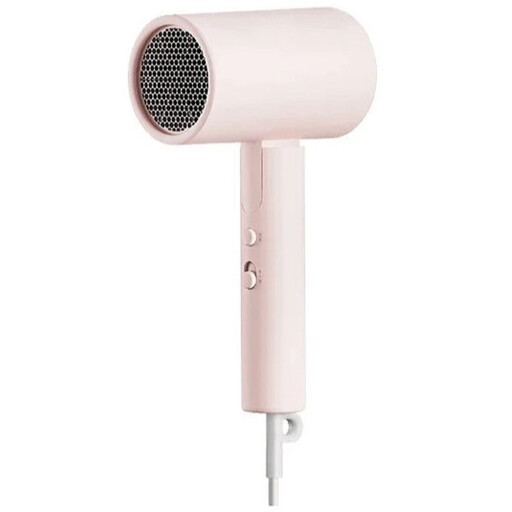
Why it suits this profile: This folding model is designed for everyday use, students and shoppers looking for a compact hairdryer with simple controls.
The specifications list 1,600 watts, two speeds, two temperature settings and a 360° rotating concentrator. You can see which essential features are included before you buy.
Folding design, 433 grams, ionic function, overheat and overvoltage protection, and an EU voltage of 220–240 volts.
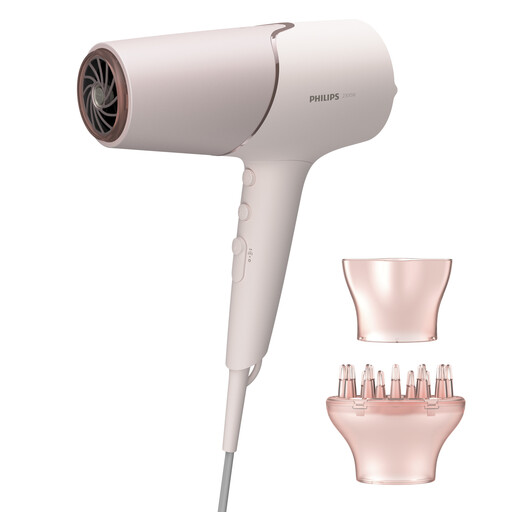
Why it suits this profile: A versatile choice for households looking for one hairdryer to style straight hair, add volume and dry curls.
Rather than relying on high power alone, this model offers six heat and speed settings, a cool shot button and ThermoShield technology, according to Philips.
2,300 watts, two narrow concentrator nozzles measuring 9 and 11 mm, a diffuser, ionic function and an EU plug.
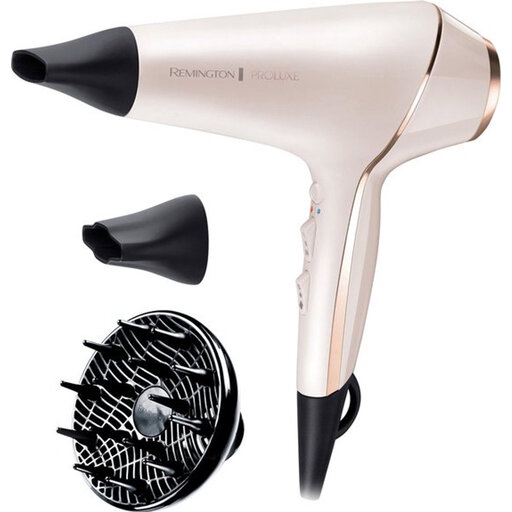
Why it suits this profile: This model is a good fit for people who dry their hair often and want to style it precisely with a professional hairdryer and several heat settings.
Three heat settings, two speeds, a Style Shot function and a cool shot button give you more control than a model with just high and low settings.
2,400 watts, AC motor, ionic technology, OPTIheat technology according to Remington, and a 1.80-metre cord.
We’ve put together a complete, up-to-date list of products that meet these strict selection criteria and the applicable European safety regulations.
Never use a hairdryer in or right next to water. Keep the air inlet and outlet clear of hair, dust and towels. Let the appliance cool down after use before putting it away, and unplug it.
Clean the filter regularly, following the instructions in the manual. A blocked filter can reduce airflow and cause the appliance to heat up. Check the cord and plug too. Stop using the hairdryer if you notice visible damage, smoke, a burning smell or unusual noises.
According to brands’ product information, ions are designed to reduce static electricity. This may help your hair look smoother, but the effect varies depending on your hair type and how you use the hairdryer. Good technique, the right temperature and a concentrator nozzle are just as important.
Its lifespan depends on the motor, how often you use it, how well you maintain it and how you store it. Clean the filter, keep the air inlet clear and avoid running the hairdryer on its highest setting for longer than necessary. Also check the statutory guarantee when you buy. In the European Union, many consumer products come with a minimum two-year statutory guarantee, in addition to any extra terms offered by the retailer or manufacturer.
Energy use depends on the wattage and how long you use the hairdryer. A 2,400-watt model uses more power per minute than a 1,600-watt model. Faster drying may reduce the total time you use it, so compare wattage alongside airflow, temperature control and drying technique.
