
Vandaag of morgen in huis

Kwaliteit gegarandeerd

Welkomstaanbiedingen ontgrendelen: GRATIS bezorging | Tot 80% korting | Gratis 30 dagen JoyPlus-proefperiode
Download de app
A new induction hob may seem easy to choose on paper. However, incorrect connection ratings, an unsuitable pan or an inconvenient size can lead to extra costs. This applies to both built-in hobs and portable induction hobs.
As a Joybuy Product Recommendation Officer, I filter product information for practical details: dimensions, power, controls, safety and compatibility. This makes it easier to see which features are relevant to your kitchen and which marketing claims you should check first.
A 60 cm induction hob is not automatically suitable for every kitchen. Always check the cut-out dimensions, not just the external measurements. A hob measuring around 58 or 59 cm may require a cut-out of, for example, 56 × 49 cm. Measure the existing cut-out before ordering.
A freestanding model works differently. You place it on a stable worktop and connect it according to the instructions. This type of hob is flexible, but it does require sufficient space around the ventilation openings.
Four cooking zones with a high combined power rating can draw a considerable amount of electricity. So check:
A built-in model often needs to be connected by a qualified electrician. A product with a plug is not automatically suitable for every socket when its power rating is high.
Induction works with magnetic pans. Aluminium without a magnetic base, glass and some types of stainless steel are not always detected. Test an existing pan with a magnet on the underside: if the magnet stays firmly attached, the pan is often suitable. Always check the product information as well.
Also look for a flat base. A warped or rough pan may heat less evenly and cause scratches on the glass surface.
For a household, four cooking zones are practical when you want to use a saucepan, frying pan and cooking pot at the same time. A 4-zone induction hob generally takes up more space than a two-zone model. A two-zone hob may be a better fit for a compact kitchen, studio flat or as an additional cooking surface.
Also consider the diameter of the zones. A large induction pan should be placed on a suitably sized zone. Some models have a bridge function, allowing two zones to work together for an elongated roasting dish.
An induction hob with touchscreen controls usually uses touch buttons instead of rotary knobs. This creates a sleek surface that is easy to wipe clean, but the controls may respond less directly when your fingers are wet or greasy. An induction hob with timer can switch off each zone after a set period. Check whether the timer merely gives an alert or actually stops the heating.
Useful features include:
These features do not replace supervision. The glass surface may still be hot after cooking, and a pan of oil should never be left unattended.
An induction hob with extractor combines cooking and vapour extraction in one appliance. For this type of model, check the extraction method, filter maintenance, noise level and required cabinet dimensions. According to the product information, the AEG CCE84543CB has an extraction capacity of 630 m³/h, a noise level of 48 dB and requires a three-phase connection. Have it installed in accordance with the instructions.
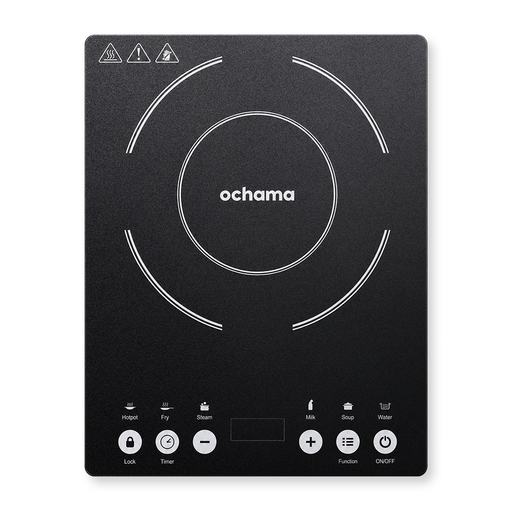
Why it suits this profile: This portable model is ideal if you need an additional cooking zone, have a small kitchen or want a flexible appliance. It has a power rating of 2000W and 10 heat settings.
Its compact design means you do not immediately need a fixed cut-out or a high-power electrical connection. However, only use magnetic cookware and keep the ventilation clear.
2000W, 10 heat settings, touchscreen controls, six cooking functions and child lock.
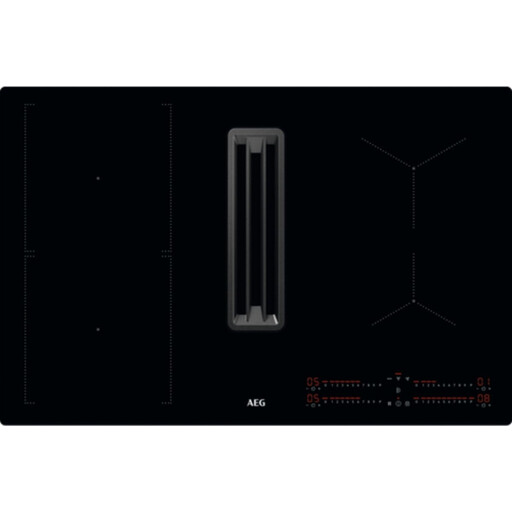
Why it suits this profile: This 80 cm-wide built-in induction hob combines four zones with an integrated extractor. It is well suited to a spacious kitchen where a separate extractor hood is not wanted.
The product information clearly states the zone sizes, timer, child lock and required three-phase connection. Check the kitchen cut-out dimensions and have the appliance professionally connected.
Four cooking zones, bridge function, touchscreen controls, timer, child lock and integrated extraction with a stated capacity of 630 m³/h.
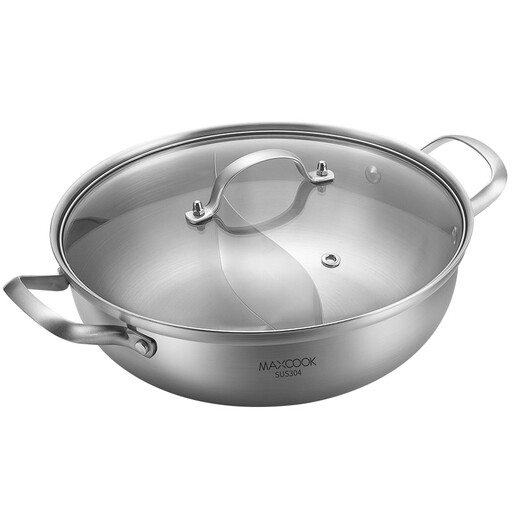
Why it suits this profile: A divided induction hotpot is practical for hotpot meals with two broths at the same time. The pan has a divided interior and a multi-layer base.
The product information states that it is compatible with induction, gas, electric and ceramic hobs. Before use, check that the base sits flat on your zone.
304 stainless steel, divided pan, 26 cm diameter and suitable for multiple heat sources.
We have put together a complete, up-to-date list of products that fully meet these strict selection criteria and the applicable European safety regulations.
An induction hob is of little use if your pans are not detected. When buying new induction cookware, choose a magnetic base and a diameter that matches the cooking zone. A stainless steel induction pan may be suitable, but check this for each model.
A pan set is useful when you need several sizes. The Tefal Ingenio So Light 16-piece pan set includes pans measuring 18, 20, 22, 24 and 28 cm, as well as a lid and removable handle. According to the product information, the set is suitable for induction. When using it, check the handle’s maximum load and follow the care instructions for the non-stick coating.
For smaller, more targeted cooking, a four-hole omelette pan could be a good option. According to the product description, the PURECOOK pan is suitable for induction, gas and ceramic hobs. However, the wooden handle and non-stick coating require careful use: hand-washing and soft kitchen tools will help protect the coating.
No. The base must be magnetic. Hold a magnet against the underside and also check the packaging or manual. A pan with a magnetic base will usually work, but a warped or undersized base can still cause problems.
It depends on the model. A 2000W portable hob generally uses a different connection from a powerful four-zone built-in model. Check the number of phases, connected load and fuse. Have a built-in induction hob connected by a qualified electrician in accordance with the instructions.
Switch off the hob and wait until the residual heat indicator shows that the surface has cooled sufficiently. Use a soft, damp cloth and a suitable cleaning product. Avoid scouring pads, metal objects and spraying the controls or ventilation openings directly.
