
Vandaag of morgen in huis

Kwaliteit gegarandeerd

Welkomstaanbiedingen ontgrendelen: GRATIS bezorging | Tot 80% korting | Gratis 30 dagen JoyPlus-proefperiode
Download de app
Choosing a new induction hob might seem straightforward at first. However, unclear connection requirements, the wrong size or features that offer little practical benefit can easily lead to a disappointing purchase. If you’re renovating, moving home or fitting out a small kitchen, it’s particularly important to decide in advance how much cooking space you need and whether your electrical connection is suitable.
This buying guide will help you compare a built-in induction hob, a ceramic hob and a portable model.
A hob with 4 zones isn’t automatically suitable for every household. Check the size of the cooking zones, the total power and the space available on your worktop, too. A 2-zone hob may be more practical for a student or a small household than a wide model with 4 zones.
For a 60 cm induction hob, make sure you also check the exact cut-out dimensions. For example, a product with external dimensions of around 59 cm might need a cut-out of 56 × 49 cm.
A model rated at 2,000 to 3,000 watts may be suitable for use with the right connection in some situations, but powerful hobs rated at 7,000 watts or more often require an appropriate fixed connection. For example, the Bosch PKC845FP1D has a stated power rating of 9,300 watts and requires a 3-phase connection. The Wiggo WH EF614G is rated at 7,200 watts at 220–240 volts.
Have a qualified electrician connect a built-in model. Before you buy, check the manual, your consumer unit and local installation regulations. Don’t rely on terms such as “plug and play” alone; the technical specifications are what matter.
Touch controls, a timer and automatic pan detection are useful, but they won’t solve problems caused by using the wrong pan size or having insufficient ventilation. Induction hobs also require pans with a magnetic base. Test yours with a magnet before reusing your existing pans.
Non-magnetic pans also work on a ceramic hob, but the cooking zone itself may stay hot for longer. A residual heat indicator is therefore an important safety feature.
An induction hob heats a suitable pan using a magnetic field. This usually means the heat responds quickly and the surrounding glass stays cooler for longer, although the pan can still make the surface warm.
A ceramic hob uses electric heating elements beneath ceramic glass. These models are often easy to use and work with different types of pans, but the cooking zone can continue to give off heat for some time after being switched off.
A portable electric hob is particularly handy as a temporary solution, an extra cooking zone or an appliance you can take with you. Check its power rating, stability and the ventilation space around the appliance.
Don’t just look at the total power. Check the power per zone, too, and whether the hob distributes power when several zones are in use at the same time.
Clear touch controls with separate zone selection mean you won’t have to hunt around the panel. A timer with automatic switch-off can turn off a cooking zone after a set time.
For families, a child lock, automatic switch-off and overheat protection are useful features. A residual heat indicator shows which zone is still giving off heat. With induction, automatic pan detection is handy: the zone only heats when suitable cookware is placed on it. According to product information from various brands, the precise operation can vary by model, so check the manual.
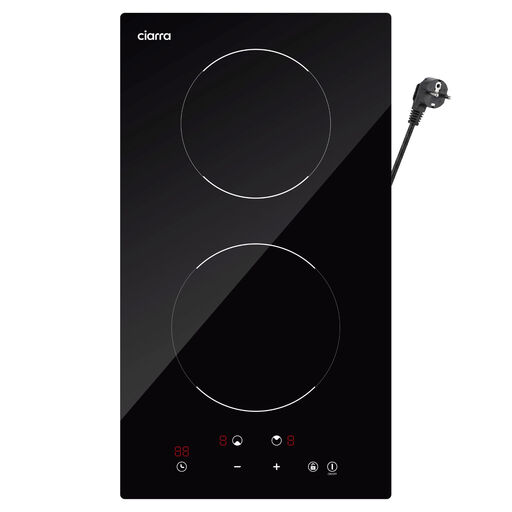
Why it suits this type of user: This built-in model has 2 zones and a total power rating of 3,000 watts. It’s a good fit for small households and kitchens with limited worktop space.
The specifications list a cut-out size of 270 × 490 mm, 9 power settings and an individual timer of up to 99 minutes. Check the dimensions and connection requirements before installation.
2 cooking zones, touch controls, automatic pan detection, child lock and residual heat indicator.
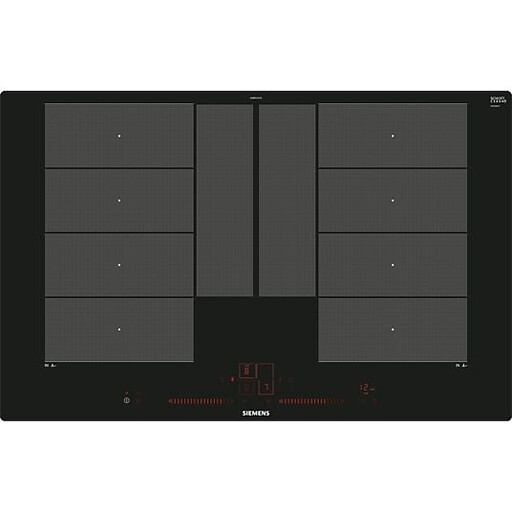
Why it suits this type of user: This 4-zone hob offers flexibility for home cooks who use different pans and need a larger cooking area.
The product information mentions flexInduction Plus for pans up to 30 cm, a timer with switch-off and several temperature functions. Check the cut-out and connection requirements.
4 cooking zones, flexible zone layout, touchSlider controls, fryingSensor according to the product description, and PowerBoost.
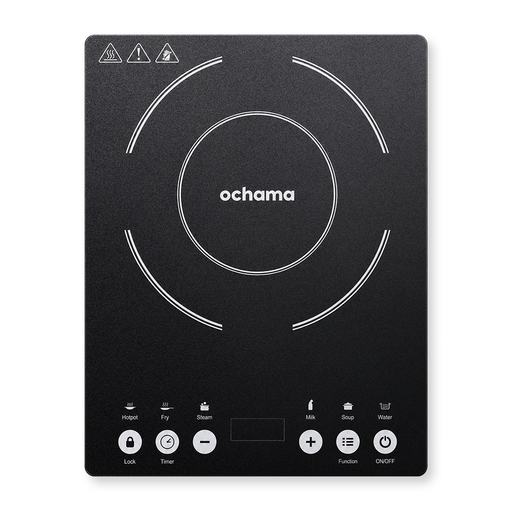
Why it suits this type of user: This portable model is designed for small kitchens, student rooms, temporary use or as an extra cooking zone.
It has a stated power rating of 2,000 watts and 10 settings. This makes it easier to assess than models that only make general claims about heating.
Portable design, touch controls, 6 pre-set functions, child lock and boil-dry protection according to the product information.
We’ve put together a complete, up-to-date list of products that meet these strict selection criteria and the applicable European safety regulations.
Measure the cut-out before ordering and check the minimum worktop thickness. Keep ventilation openings clear, and don’t install a hob above an oven or heat source unless the manual allows it. Use a pan with a flat base and a diameter that matches the cooking zone.
Wait until the glass surface has cooled sufficiently before cleaning it. Use a soft cloth and a suitable cleaning product. If the appliance is cracked or damaged, switch it off and stop using it.
No. The pan must have a magnetic base. A simple magnet test will give you an initial indication. Also check that the pan’s diameter and base are suitable for the cooking zone.
The cost depends on the power rating, cooking time, electricity tariff and the way you cook. A higher wattage doesn’t automatically mean higher energy use per meal; the actual time in use and the power setting you choose also make a difference. Check the stated power rating and any energy information for the specific model.
Lifespan varies depending on the brand, model, how often it’s used and how well it’s maintained. Correct installation, clear ventilation, suitable pans and careful cleaning can help reduce unnecessary wear. Before you buy, also check the warranty and your statutory rights relating to product conformity.
