
Vandaag of morgen in huis

Kwaliteit gegarandeerd

Welkomstaanbiedingen ontgrendelen: GRATIS bezorging | Tot 80% korting | Gratis 30 dagen JoyPlus-proefperiode
Download de app
A successful hot pot night starts with the right meat. But the search for the perfect, thinly sliced beef can be unnecessarily complicated. You stand in front of the freezer aisle, seeing terms like "premium," "hot pot special," or "restaurant-quality," but what do they really mean?
Before you fill your cart, it's wise to understand the common pitfalls. Many people choose based on attractive packaging or a vague promise, only to end up with tough, disappointing meat in their broth.
To avoid a bad purchase, focus on a few objective characteristics. These specifications determine the flavour and texture of the meat in your hot pot, shabu-shabu, or sukiyaki.
The ideal thickness for hot pot meat and shabu-shabu meat is between 1 mm and 2 mm. Within this range, the meat is thin enough to cook in seconds, keeping it tender and juicy. Meat intended for sukiyaki can be slightly thicker (around 2 mm), as it's often prepared in a pan with sauce and can have a slightly firmer bite. Always check the product information for the exact thickness.
The choice of cut is crucial for flavour. Popular cuts for thinly sliced beef include:
Slicing fresh meat thinly at home is a difficult task. That's why frozen hot pot meat is a practical and high-quality solution. The meat is professionally sliced to the correct thickness and immediately frozen (often via IQF - Individually Quick Frozen), which optimally preserves its freshness and texture. This makes buying beef slices online a reliable option for hassle-free preparation.
Based on these criteria, we have selected a number of products that suit different needs and preferences.
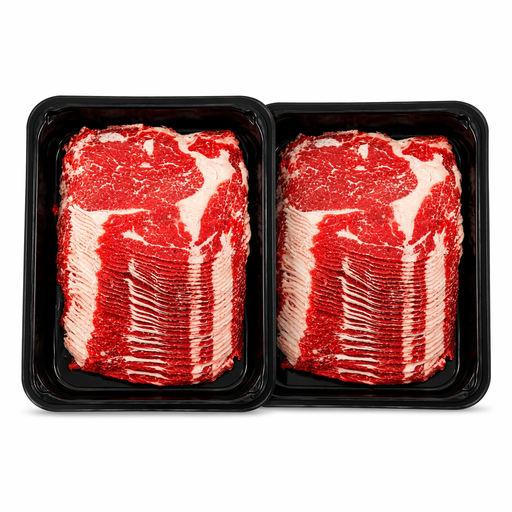
Why This Fits Their Persona: This twin-pack of rib-eye offers an excellent balance of quality and quantity. Rib-eye is naturally tender and flavourful, making it a popular choice that will please most guests. Ideal for a dinner with family or friends.
With a precise thickness of 1.2 mm, this meat is ideal for hot pot; it won't get tough and cooks in seconds. You're buying a specific cut (rib-eye) instead of a generic 'hot pot meat'.
Large pack (1 kg total) ideal for groups. Consistent quality due to the choice of a well-known and popular cut of meat.
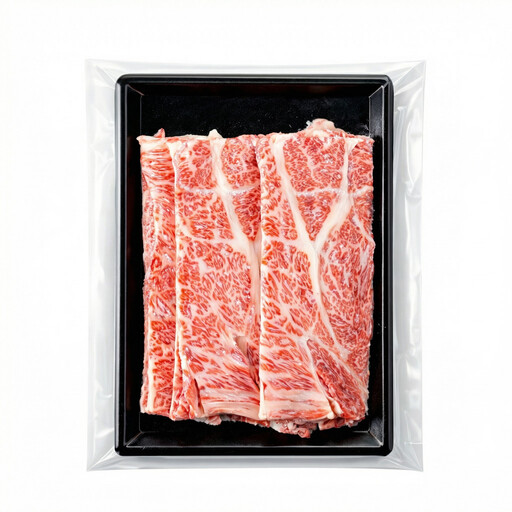
Why This Fits Their Persona: For those who want to create an authentic, high-end restaurant experience at home. The intense marbling of A5 Wagyu provides unparalleled tenderness and a rich, buttery flavour that transforms an ordinary meal.
No vague labels here. A5 Wagyu is an official Japanese quality standard. You know exactly what you're getting: the highest level of marbling and quality, perfect for a special occasion.
Exceptional flavour and texture due to the high degree of marbling. Thinly sliced, especially for shabu shabu and hot pot.
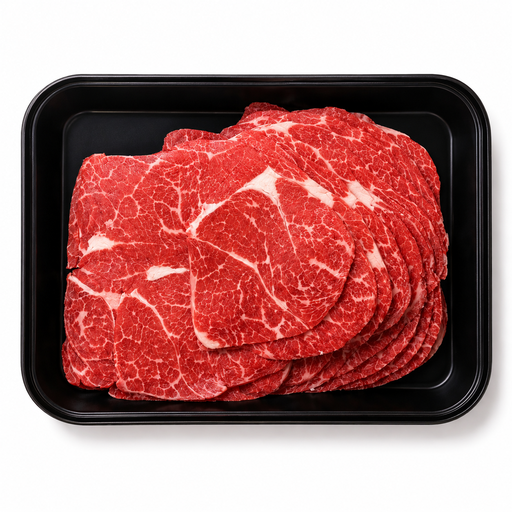
Why This Fits Their Persona: Uses thinly sliced meat not just for hot pot, but also for Japanese sukiyaki or quick stir-fry dishes. Beef neck offers a firmer texture and deep meat flavour, making it highly suitable for various preparations.
This product clearly specifies the cut (beef neck) and thickness (2 mm), making it a deliberate choice for specific dishes. The slightly thicker slice is perfect for sukiyaki or stir-frying.
Versatile enough for hot pot, sukiyaki, and stir-fry dishes. Offers a deep, authentic beef flavour.
Plan for about 150 to 200 grams of meat per person as part of a larger meal with vegetables, tofu, and noodles. If meat is the main feature, you can aim for around 250 grams per person.
No, it's usually not necessary and is often discouraged. You can cook the frozen slices directly in the hot broth. They will thaw and cook in seconds. This also helps to keep the slices intact. For certainty, always consult the instructions on the packaging.
The differences are subtle and lie mainly in the thickness and preparation method. Hot pot meat (Chinese style) and shabu-shabu meat (Japanese style) are often very thin (1-1.5 mm) for quick cooking in broth. Sukiyaki meat is sometimes slightly thicker (around 2 mm) because it is simmered in a shallow pan with sauce and can have a firmer bite. In practice, many thinly sliced meats are suitable for all three applications.
