
Vandaag of morgen in huis

Kwaliteit gegarandeerd

Welkomstaanbiedingen ontgrendelen: GRATIS bezorging | Tot 80% korting | Gratis 30 dagen JoyPlus-proefperiode
Download de app
High-protein granola might seem straightforward to compare at first glance. The front of the pack often boasts a big protein percentage, a claim like “no added sugar” or a mention of nuts and seeds. Yet two bags of granola can differ quite a bit in protein, fibre, carbohydrates, allergens and serving size.
For athletes, busy families and anyone looking to make their breakfast more practical, the choice isn’t just about taste. Make sure you check the label and see whether the composition fits your diet.
Granola with no added sugar can still contain naturally occurring sugars, for example from dates or other fruit. So a product with 0% added sugar isn’t automatically sugar-free granola in the literal sense.
Always compare the “of which sugars” per 100g line instead. TastyBasics Granola Nuts & Seeds, for instance, lists 6.5g of sugars per 100g, while Holie’s Crunchy Muesli Protein Nuts shows 2.1 to 2.3g according to the product information, depending on the nutrition table displayed.
A high protein content doesn’t tell you everything. Also check the amount of fibre, fats, saturated fats and carbohydrates. A protein muesli with lots of nuts and seeds can be relatively high in calories, for example. That’s not necessarily a problem, but it is relevant if you’re carefully measuring your portions.
Also check the serving size. Bolletje states around 10g of protein per serving, whereas the nutritional values on packaging are usually given per 100g. Those two figures aren’t directly comparable.
High-protein granola often contains soya, milk, peanuts, gluten, nuts or wheat protein. Even a product labelled as gluten-free granola on the front may carry a warning about possible traces of other allergens.
So read both the ingredients list and the allergen information. If you have an allergy or coeliac disease, the information on the actual pack is what counts. Also check the best-before date and seal the pack properly after opening.
For a practical comparison, use the protein content per 100g. The values in the range vary:
The exact nutritional value can differ per pack or product variant. So use the current product page and the label as your check.
If you’re looking for granola with no added sugar, high-fibre granola or low-carb granola, you need to compare several lines side by side. TastyBasics states 17g of carbohydrates and 22g of fibre per 100g according to its own product information. The claim of 70% fewer carbohydrates is a comparison the brand makes with regular crispy breakfast cereals; treat this as a brand claim, not a general standard for all granola.
Holie’s Crunchy Muesli Protein Nuts lists 36 to 38g of carbohydrates and 19 to 21g of fibre per 100g. The Almond Speculaas variant contains 28g of carbohydrates, 14g of fibre and 3.4g of sugars per 100g according to the label.
A granola with nuts and seeds can consist of oats, sunflower seeds, pumpkin seeds, almonds and hazelnuts, among other things. Pay attention to the order: ingredients are usually listed in descending order by weight.
If you avoid gluten, you could look at Holie’s Granola Glutenfree Peanut Chocolate. The product information mentions gluten-free whole-grain oats, buckwheat and peanuts. At the same time, it states that the product may contain traces of nuts and soya, among others. “Gluten-free” doesn’t automatically mean the product is suitable for every allergy.
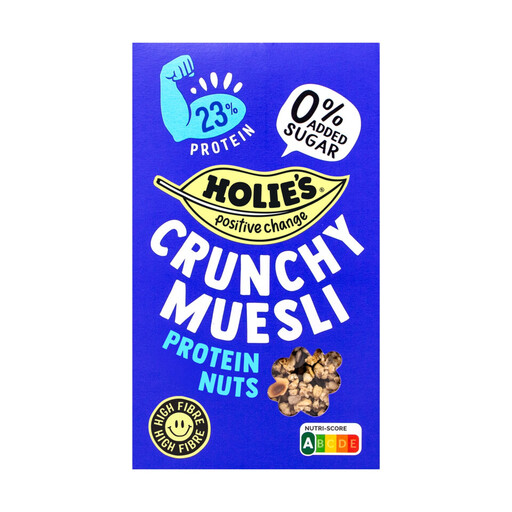
Why this fits the profile: A straightforward 400g bag for anyone wanting to try high-protein granola with nuts and seeds for the first time.
The product information states the protein, sugar and fibre content per 100g. This means you can check the nutritional value rather than just relying on the front of the pack.
22 to 23g of protein, 19 to 21g of fibre and a mix including almonds, hazelnuts and seeds.
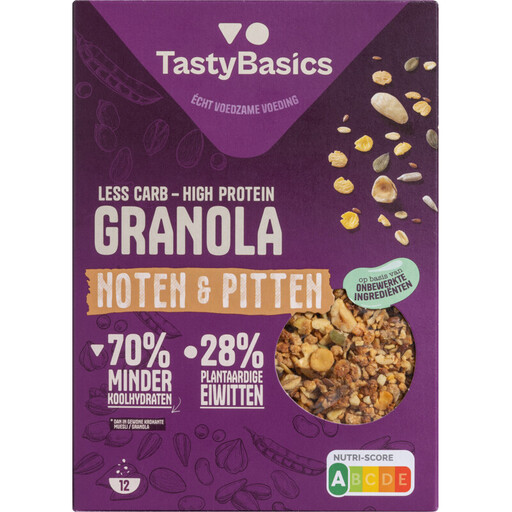
Why this fits the profile: Ideal for anyone who wants to compare protein, fibre and carbohydrates side by side, and uses a 30g serving.
The brand claim about 70% fewer carbohydrates is linked to a comparison with regular crispies. The pack also states the concrete value of 17g of carbohydrates per 100g.
28g of protein and 22g of fibre per 100g; ingredients include soya, sunflower seeds, oats, linseed and nuts.
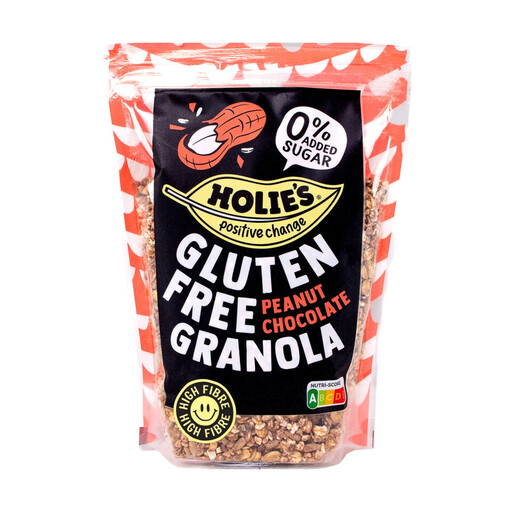
Why this fits the profile: A targeted choice for anyone looking for gluten-free granola with peanut and chocolate, and who carefully checks the allergen information.
The variant mentions gluten-free oats but also notes possible traces. This makes it clear why the full allergen list remains important.
15g of protein, 14g of fibre and 4g of sugars per 100g; with peanut, cocoa mass and cocoa powder.
We’ve put together a full, up-to-date list of products that fully meet these strict selection criteria and comply with current European safety regulations.
That depends on your overall meal and portion size. Combine granola with yoghurt, quark or a plant-based alternative and some fruit, for example. Check the nutritional values and adjust the amount to suit your own diet.
The products in this selection contain around 15 to 28g of protein per 100g. Always check the actual pack, because variants can differ. A serving is usually smaller than 100g, so the actual amount of protein per bowl is lower.
Store crunchy muesli in a dry, cool place away from direct sunlight. Seal the bag well after use to keep it crunchy. Check the best-before date when you buy it and use the pack as a guide for storage instructions.
