
Vandaag of morgen in huis

Kwaliteit gegarandeerd

Welkomstaanbiedingen ontgrendelen: GRATIS bezorging | Tot 80% korting | Gratis 30 dagen JoyPlus-proefperiode
Download de app
At first glance, buying protein granola seems straightforward: pick a flavour, choose a pack size, and add yoghurt or milk. Yet products vary significantly in protein content, carbohydrates, fibre, portion size and allergens. A flashy front with claims like “no added sugar” or “protein” doesn’t tell the whole story.
If you’re trying to eat mindfully, you’ll mainly come up against three pitfalls:
So use the nutrition table and ingredients list as your main source of purchase information.
First, compare the protein content per 100g. This makes different packs comparable with one another. In the range, values vary from 13g for Holie's Granola Nuts & Seeds to 23g for Holie's Crunchy Loops Cinnamon and Cookies & Cream.
Then look at your actual serving. A 40g serving of a product with 23g of protein per 100g provides roughly 9.2g of protein. A larger bowl can also contain more calories and carbohydrates. If you’re specifically looking for extra protein, you can combine protein granola with yoghurt, quark or a plant-based alternative. Also check the nutritional value of that addition.
The term granola without added sugar refers to the ingredients, not the total sugar content. So check both lines in the table:
According to the product information, Holie's Granola Low Carb Crunch contains 18g carbohydrates, 3.2g sugars, 16g fibre and 22g protein per 100g. The manufacturer states 65% fewer carbohydrates and 0% added sugar. This is a comparison from the brand’s product communication; always check the current packaging.
Ingredients are listed in descending order by weight. If, for example, oats, soya or peanuts appear near the top, they form a significant part of the recipe. Look out for terms such as:
A gluten-free granola can still contain peanuts or traces of nuts. If you have an allergy, the current packaging is the deciding factor; if in doubt, contact the manufacturer.
A 350g or 400g bag is handy for trying a flavour first. Multipacks of six or eight portions are more practical if you eat granola daily, but they require more storage space and commit you to one variety. Store an opened bag in a dry, well-sealed container to keep the crunchy texture for longer. Always check the label for the best-before date and storage advice.
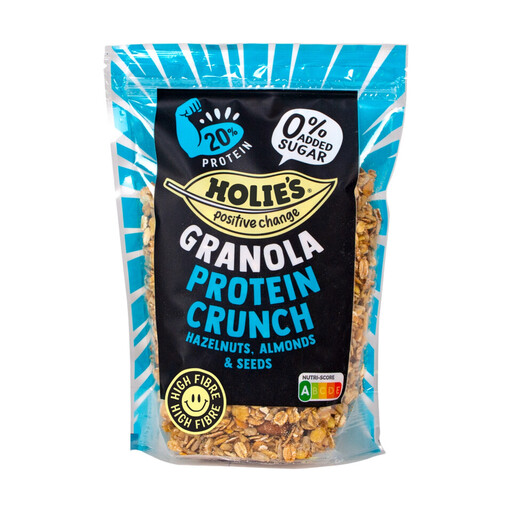
Why it fits the profile: A single 350g pack is ideal for trying a high-protein granola without committing to a multipack.
The product information states 20g protein, 30g carbohydrates and 2.8g sugars per 100g. This lets you compare the 0% added sugar claim against concrete figures.
350g; 20g protein and 15g fibre per 100g according to the label; blend of oats, barley, spelt, soya, almond and hazelnut.
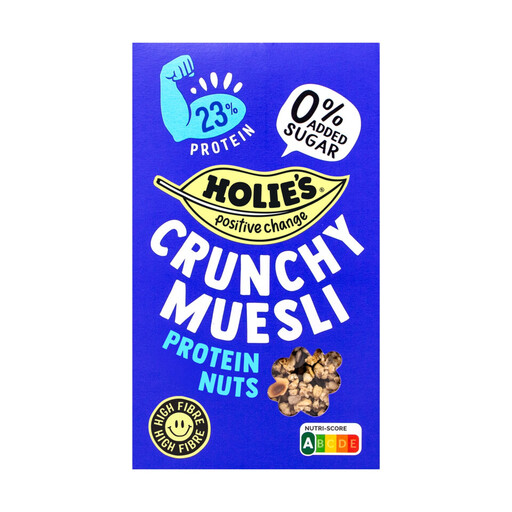
Why it fits the profile: For those looking for a crunchy muesli with grains, seeds and nuts, and who want to compare nutritional values carefully.
The product information states 22g protein, 21g fibre, 38g carbohydrates and 2.1g sugars per 100g. The ingredients list includes oats, wheat protein, sunflower seeds and pumpkin seeds.
400g; nuts and seeds in the blend; 0% added sugar according to the product information. Contains almond, oats, hazelnut and wheat.
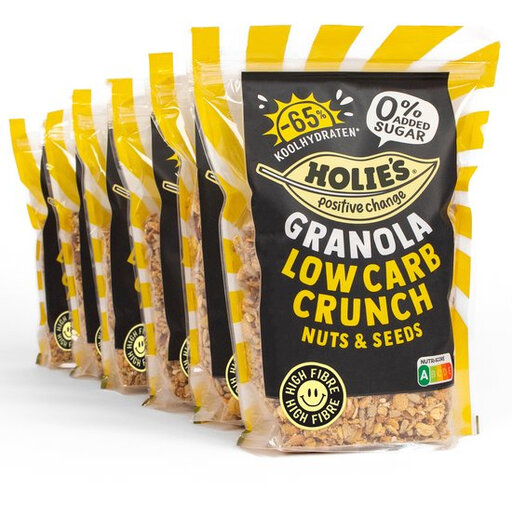
Why it fits the profile: A multipack suits daily users who are mindful of their carbohydrate intake and want a stock for several breakfasts.
The claim about fewer carbohydrates sits alongside concrete nutritional values: 18g carbohydrates, 3.2g sugars and 22g protein per 100g. The pack does contain soya, peanuts, almond and gluten-containing grains.
Six 350g packs; 16g fibre and 0.01g salt per 100g according to the product information; blend of seeds and grains.
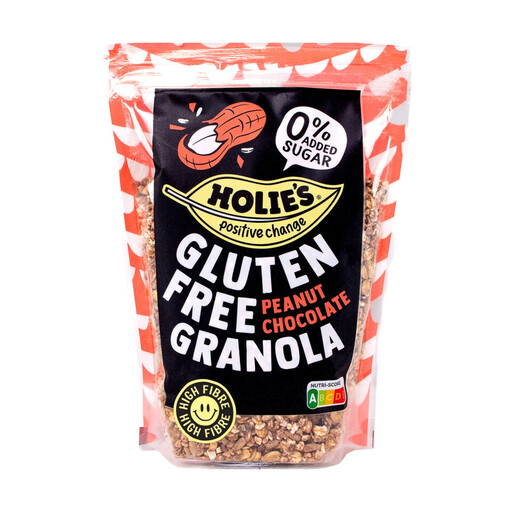
Why it fits the profile: For those looking for a gluten-free granola with cocoa and peanuts, and who are willing to factor in the lower protein content when comparing.
The product information explicitly mentions gluten-free wholegrain oats. At the same time, it clearly states that peanuts are present and that traces of almond, cashew, hazelnut, pecan and soya are possible.
330g; 15g protein and 14g fibre per 100g; cocoa and 100% peanut butter according to the ingredients list.
We’ve put together a full, up-to-date list of products that fully meet these strict selection criteria and comply with current European safety regulations.
That depends on your overall meal and personal nutritional goals. Look at the portion size, calories, protein, fibre and sugars. Adding yoghurt, quark, fruit or a plant-based drink makes it a more substantial breakfast. The product name alone doesn’t determine whether a breakfast is right for you.
Seal the pack well after use and store it in a dry place, out of direct sunlight and away from heat and moisture. Use the best-before information on the pack. A multipack is only practical if you use the bags within the stated time.
No. Many varieties contain oats, wheat, barley, spelt or wheat gluten. Products can also contain traces of gluten. Only choose a product that clearly states gluten-free, and re-check the allergen information with every purchase.
