
Cooking for a larger gathering
You want to make enough herb oil for several guests, so you compare the jug’s usable capacity with the quantity you plan to prepare. The Consumentenbond says blenders are suitable for larger quantities.


For a generous amount of liquid herb oil, a jug blender is a sensible option if its usable capacity suits your recipe. For small or varying quantities, a hand blender with a tall beaker is often more practical. The texture you want, cleaning and the user manual all matter too: none of the models mentioned has been specifically tested for herb oil. Don’t store homemade oil with fresh herbs at room temperature for long periods.
You want to make enough herb oil for several guests, so you compare the jug’s usable capacity with the quantity you plan to prepare. The Consumentenbond says blenders are suitable for larger quantities.
You want to finely blend the herbs or strain them out after blending, depending on how you’ll serve the oil. Recipes from Albert Heijn Allerhande and Harold Kookt show different preparation methods.
You also want to be able to make a small amount outside of mealtimes without having to use a large jug every time. The Consumentenbond says hand blenders are suitable for small portions.
Start by choosing a blender that suits the quantity you want to mix. Then consider the texture you’re after and how you’ll clean it after use.
| Consideration | What to look for | Who it matters to |
|---|---|---|
| Batch size | Compare the recipe quantity with the usable capacity and the maximum fill level allowed in the manual. | If I’m making herb oil for several guests, I want to know whether the quantity I’m planning will fit in one batch. Around 33% of consumers give batch size their highest priority. |
| Texture | Decide whether you want to keep pieces of herb in the oil or strain it after blending; speed settings don’t guarantee a particular final texture. | I want to decide in advance whether I’m after finely blended herbs or strained oil, so the preparation suits the way I plan to serve it. Around 27% of consumers prioritise their preferred oil texture. |
| Small quantities | Check that the beaker suits the quantity you want to make and follow the fill instructions for your specific model. | When I’m making small or varying quantities too, I don’t want to use a large jug unnecessarily. Around 20% of consumers say small portions are their main buying concern. |
| Cleaning and storage | Check which parts can be detached and which are dishwasher-safe according to the manual. The Voedingscentrum advises keeping homemade herbs in oil for no more than 4 days at 4 °C. | After the meal, I want the parts to be easy to clean and the oil to be stored safely. Around 20% of consumers give easy cleaning and manageable preparation their highest priority. |
Philips lists a maximum capacity of 1.9 l and a usable capacity of 1 l for the Philips HR2041/00. These figures aren’t interchangeable when you’re planning a batch.
Compare the usable capacity and fill instructions with the quantity in your recipe.
The Consumentenbond warns that wattage doesn’t tell the whole story. General specifications or claims about smooth results aren’t the same as a comparative test using your herbs and oil.
First choose the type of appliance based on your portion size and method. Then decide whether you want to strain the oil.
The Voedingscentrum warns of the risk of botulism in homemade products stored in oil, especially if they’re kept out of the fridge for a long time.
Keep homemade oil with fresh herbs refrigerated and follow the Voedingscentrum’s advice for homemade herbs in oil: no more than 4 days at 4 °C.
The HR2041/00 is a jug blender worth comparing if you want to mix a larger quantity in one batch.
The MultiQuick 7 MQ7000X is a hand blender option for mixing in a separate beaker.
The Original 600 NB603DG is a compact blender option for making smaller quantities.
The Quickchef+ HB67MB is a hand blender option worth comparing if you want to make use of the included accessories.
The ErgoMixx MS61A4110 is a hand blender to compare if you don’t need extra chopping accessories.
This selection includes jug blenders and a hand blender for mixing herb oil. Compare the capacity, controls and included beaker with the quantity you want to prepare.
 Image unavailable
A jug blender to compare if you’re preparing a liquid blend for several guests.
The product name lists 1300 W, a 1.5 l jug, two speeds and a pulse function. Check the manual for the maximum fill level allowed for your recipe.
 Image unavailable
A jug blender to consider if you want to make liquid herb oil for several guests.
The product name lists a 1.5 l jug and two speeds. Compare the recipe quantity with the maximum fill level allowed in the manual.
 Image unavailable
This blender has several listed containers to compare if you’d like a separate chopping cup as well as a mixing jug.
The product details list a 1,500 ml mixing jug, a 600 ml travel bottle and a 300 ml chopping cup. Two speeds and a pulse function are also listed. Check the instructions and maximum fill level for each attachment.
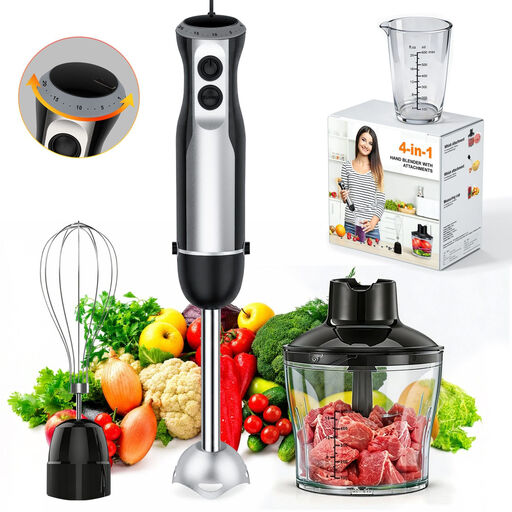 Image unavailable
A hand blender option for mixing in a separate beaker, suited to a method using a hand blender and a tall beaker.
The product details list 20 speeds, a turbo function and a 600 ml measuring beaker. Check whether the beaker is large enough for the quantity you plan to make.
 Image unavailable
A jug blender to compare if you want to mix herb oil as a liquid preparation for several guests.
The product name lists 600 W, a 1.5 l jug and three speeds. Check the user manual to see what fill level is allowed for your recipe.
Yes. Albert Heijn Allerhande’s recipe for 33 portions uses 30 g of herbs and 500 ml of oil, and mentions both a blender and a hand blender used in a tall beaker. Check that your appliance’s beaker and mixing instructions suit that quantity; the recipe isn’t an appliance test.
Only if you want to serve the oil without the pieces of herb. Harold Kookt describes straining after blending as a recipe step; it isn’t a function of the blender itself.
Follow the manual for your exact model and clean the parts after use. For the nutribullet NB603DG, the manufacturer says to rinse the blade with soap and water and put the cup on the top rack of the dishwasher; this guidance doesn’t automatically apply to other models.
No. Don’t treat homemade oil with fresh herbs like an ordinary bottle of shelf-stable oil. The Voedingscentrum warns of the risk of botulism in homemade products stored in oil and advises keeping homemade herbs in oil for no more than 4 days at 4 °C. Keep the oil refrigerated until you use it.
The NVWA sets out separate requirements for food sold to consumers from home, including working hygienically and informing customers about allergens. Whether these rules apply depends on how the event is organised; holding a community meal doesn’t in itself mean that food is being sold.