Who is this for?

Cook with an already-full kitchen cupboard

You want to make herb oil without having to store a large extra appliance. Compare its external dimensions with the cupboard space available, and see whether an attachment for an appliance you already own could be a suitable option.

Small-batch herb oil maker

You want to process herbs and oil together, so look at the mixing function, the quantity per batch and the instructions for liquids. KitchenAid and Tefal describe mixing or adding liquid features on specific models.

Versatile home cook

You want to use the same appliance for chopping, slicing or grating too. The Consumers’ Association lists slicing, grating and chopping among the uses of a food processor, so consider whether those extra functions are worth the cupboard space.

What should you look for when buying?

What to consider What should you check? Who is this important to?
Will the appliance fit in the cupboard? Measure the available width, depth and height, then compare them with the appliance and the parts you want to store. If my cupboard is already full, I want to know in advance whether the separate parts will fit too. Around 36% of consumers put storage space first.
Is it suitable for the quantity in my recipe? Compare the quantity with the instructions and any separate limits for liquids or semi-liquid mixtures. I want to process my usual quantity of herbs and oil without awkwardly splitting it across several batches. Around 29% of consumers prioritise finding the right batch size.
Can it mix herbs and oil? Look for an explicit mixing or puréeing function, and check the instructions for processing liquids. If I want to process herbs and oil together, a chopping function alone isn’t enough. Around 21% of consumers put mixing first.
What about cleaning and other uses? Check the cleaning instructions for each part and consider whether you’ll use slicing or grating functions regularly. I want to know which parts are dishwasher-safe and whether I’ll use the appliance for other recipes too. Around 14% of consumers prioritise maintenance and versatility.

Common buying mistakes

  • Focusing only on the bowl capacity

    The bowl capacity doesn’t necessarily tell you how much the appliance can process at a time. For example, Philips distinguishes between a 0.7-litre bowl capacity and a 0.5-litre chopping capacity for the HR1393 series.

    Compare the quantity in your recipe with the instructions for ingredients and liquids, rather than relying only on the largest capacity figure on the packaging.

  • Assuming a herb chopper can blend oil

    A herb-chopping function doesn’t prove that an appliance can mix or purée herbs and oil together. For the manual K1330404, Tefal describes chopping herbs; for the electric MQ80E838, it also mentions mixing and semi-liquid mixtures up to 500 ml.

    Choose based on the task you need the appliance to perform, and check whether the manufacturer describes processing the liquid you want to use.

  • Buying an attachment without a compatible hand blender

    Braun states that the MQ20BK is designed for MQ3–MQ5 hand blenders with a wavy connection.

    Before buying, check the full model number and connection type of your hand blender. Without a compatible motor unit, you won’t be able to use the attachment this way.

  • Storing herb oil as if it were ordinary oil

    For home-preserved herbs in oil, the Netherlands Nutrition Centre advises keeping them in the fridge at 4 °C for no more than 4 days because of the risk of botulism.

    Make only as much as you’ll use in time, and follow this storage advice for home-preserved herbs in oil.

Brands to compare

KitchenAid

The 5KFC3516ECU is a compact mini chopper worth comparing if you want to process herbs and oil in one bowl.

  • KitchenAid lists an 830 ml bowl, two speeds, a pulse setting and an opening for adding liquid drop by drop while processing.
  • The bowl capacity alone doesn’t tell you whether it will process a small batch well, so check the instructions for your quantity.

Tefal

Tefal describes the electric MQ80E838 for chopping and mixing, as well as the manual K1330404 for chopping herbs.

  • For the MQ80E838, Tefal lists a 0.5-litre bowl and capacity for semi-liquid mixtures of up to 500 ml.
  • For the K1330404, the product information confirms that it can chop herbs, but not that it can purée herb oil until smooth. The bowl and blades are dishwasher-safe, but the lid isn’t.

Braun

The MQ20BK is a compact chopper attachment to consider if you already own a compatible Braun hand blender.

  • Braun states that it can chop herbs and is compatible with MQ3–MQ5 hand blenders with a wavy connection.
  • It’s an attachment, not a standalone electric appliance; the stated chopping function doesn’t confirm that it will purée every herb oil until smooth.

Bosch

The MMR08A1 is a standalone chopper to include when comparing dimensions and controls.

  • Bosch specifies dimensions of 250 × 195 × 195 mm, a power rating of 400 W, one speed and dishwasher-safe parts.
  • The specifications listed don’t confirm a separate liquid limit or the result for herb oil, so check the instructions.

Joybuy products

These product picks are suited to mixing or puréeing herbs and oil, and to anyone who wants to use a kitchen appliance for other recipes too.
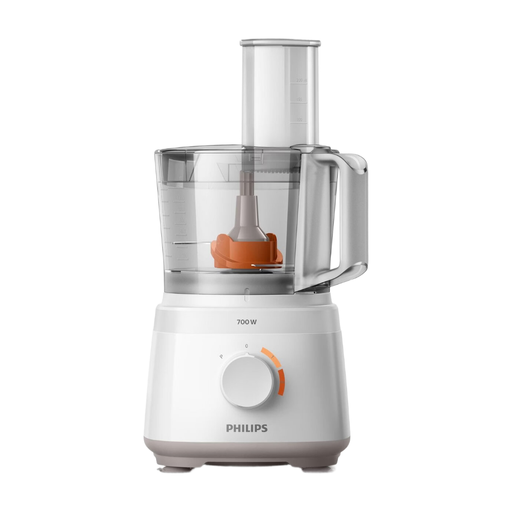
Philips Daily Collection HR7320/00 food processor

Philips Daily Collection HR7320/00 food processor

A food processor to consider if you want to make herb oil and are also looking for a more versatile kitchen appliance.

1.5 litres; 700 W; 19 functions, as stated in the product name. Do not process boiling liquids.

Joybuy
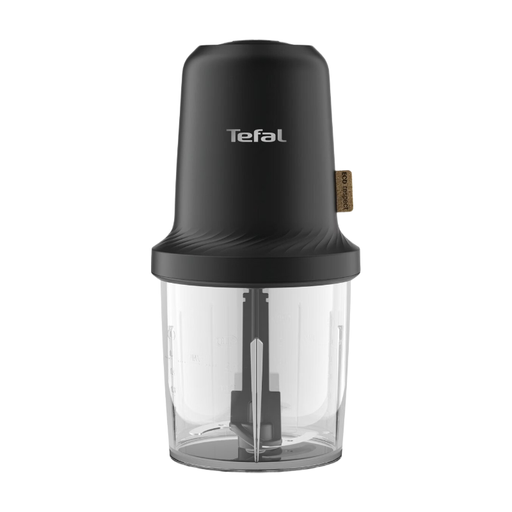
Tefal MQ80E838 Eco Respect electric chopper

Tefal MQ80E838 Eco Respect chopper

A good fit if you want to process herbs and oil together using a compact electric chopper.

0.5-litre bowl; according to Tefal, suitable for semi-liquid mixtures of up to 500 ml. The manufacturer warns against pouring boiling liquids into the bowl.

Joybuy
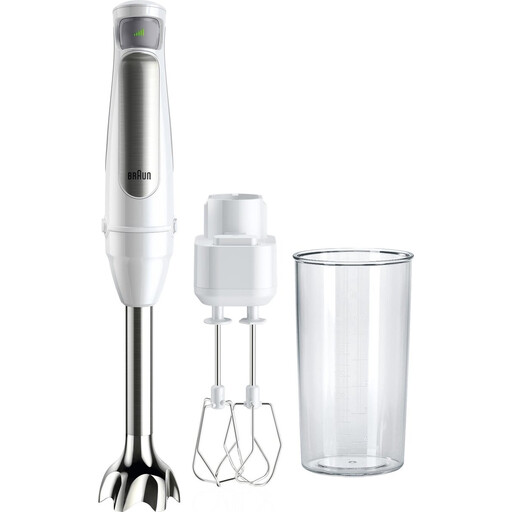
Braun MultiQuick 7 MQ7005BWH hand blender

Braun MultiQuick 7 MQ7005BWH hand blender

A hand blender to compare if you want to make herb oil using a hand blender and a tall beaker.

Check the instructions for the ingredients and quantity you want to use.

Joybuy
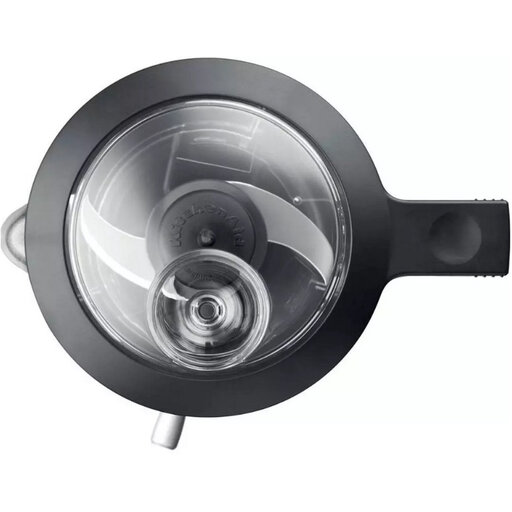
KitchenAid 5KFC3516ECU mini chopper

KitchenAid 5KFC3516ECU mini chopper

A good fit if you want to process herbs and oil in one bowl and add liquid while processing.

KitchenAid lists an 830 ml bowl, two speeds, a pulse setting and an opening for adding liquid drop by drop. Check the instructions for your batch size.

Joybuy
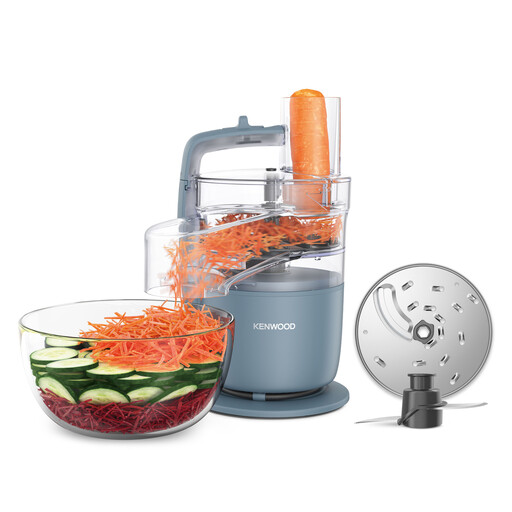
Kenwood MultiPro Go FDP22 food processor

Kenwood MultiPro Go FDP22 food processor

A food processor to consider if you want to do more than chop herbs, including slicing and grating.

Check the bowl size and the instructions for processing liquids with your recipe.

Joybuy

Frequently asked questions

Can I make herb oil with a chopper?

It depends on the function and the quantity. Choose an appliance whose manufacturer describes mixing or puréeing and processing the liquid you plan to use; being able to chop herbs alone doesn’t confirm this. Using a hand blender in a tall beaker is also a described method for making herb oil.

How do I clean a chopper after using it with oil?

Follow the cleaning instructions for each part, and unplug an electric appliance before taking it apart. Don’t assume that every part is dishwasher-safe: for the manual Tefal K1330404, the bowl and blades can go in the dishwasher, but the lid can’t.

How long can I keep homemade herb oil?

For home-preserved herbs in oil, the Netherlands Nutrition Centre advises keeping them in the fridge at 4 °C for no more than 4 days because of the risk of botulism. This food-safety advice applies to that preparation method.

What are the safety and warranty rules for an electric chopper in the Netherlands?

Business.gov.nl outlines the applicable safety requirements for electrical equipment placed on the market in the Netherlands. After the required conformity assessment, the manufacturer must affix the CE mark and draw up an EU Declaration of Conformity. The Dutch government states that there is no fixed statutory warranty period in the Netherlands; if a product is faulty, the seller must offer an appropriate solution. Check the information for the specific product and seller.
