
Small-batch cook
Makes herb oil for each meal and wants the ingredients to reach the blades without having to fill a large jug.


If you usually make small batches of herb oil, start by comparing a hand blender with a suitable beaker or chopper. A personal blender may be a better fit if you also regularly make larger, liquid batches. A beaker’s capacity doesn’t tell you whether it will handle a very small amount effectively, so check the instructions and accessories for the exact model. Keep shared equipment clean and don’t store homemade herb oil outside the fridge for long periods: the Voedingscentrum warns of the risk of botulism in homemade products stored in oil.
Makes herb oil for each meal and wants the ingredients to reach the blades without having to fill a large jug.
Wants to clean the parts thoroughly after use and keep raw ingredients separate from cooked food.
Weighs up a hand blender or cordless chopper that can be put away against a blender with a motor base and jug.
A good fit if: you want to blend herbs and oil in a suitable beaker and also use the appliance for sauces.
Bear in mind: chopping the herbs first may make things easier; check which beaker and blending foot come with the model.
A good fit if: you want to chop herbs before blending them with oil or other ingredients.
Bear in mind: extra attachments take up storage space and mean more washing up. Consumentenbond reports differences in chopping consistency between tested hand blenders with choppers.
A good fit if: you don’t want to use a plug socket and chopped herbs or a dressing will do; Tefal recommends moist ingredients and dressings for the Chop & Shaker K1644344.
Bear in mind: chopping or shaking doesn’t show that it can blend a smooth oil.
A good fit if: you regularly make drinks or larger liquid batches as well as herb oil.
Bear in mind: according to the manufacturer, the nutribullet Pro NB904CP we looked at has a 700 ml cup; that capacity doesn’t tell you whether it blends a small batch effectively.
| Consideration | What to look for | Who is this important for? |
|---|---|---|
| Small batches | Check the beaker and the recommended working quantity for the exact model; maximum capacity isn’t the minimum quantity. | If I usually make a small batch, I don’t want to prepare more than I need. Around 36% of consumers say small batches are their main priority. |
| Cleaning | Read the cleaning instructions for each part; don’t assume the lid and motor can go in the dishwasher. The Voedingscentrum recommends using clean equipment and keeping raw and cooked food separate. | In a shared kitchen, I want to be able to clean food-contact parts thoroughly and keep raw ingredients separate from cooked food. Around 29% of consumers prioritise this. |
| Desired texture | Decide whether you want chopped herbs or a blended, smoother mixture; check that the model you choose is designed for the preparation you have in mind. | If I sometimes want pieces of herb and sometimes a blended dressing, I want to choose an appliance that gives me the texture I’m after. Around 21% of consumers say texture and versatility are their main priorities. |
| Space and power | Compare the complete set and how much storage space it needs. A manual chopper doesn’t need a plug socket, but it won’t necessarily blend ingredients in the same way. | If I have limited cupboard space or no convenient plug socket, I want to know what I’ll need to put away after use. Around 14% of consumers base their choice on storage space or access to power. |
The stated capacity doesn’t tell you whether a small amount of herb oil will reach the blades. If a model isn’t suitable for this, you may end up using more ingredients than you need.
Check the instructions and blade position for the exact cup, then compare these with the batch size you usually make.
Chopping herbs and blending a smooth oil are different tasks. Chopping consistency also varies between tested hand blenders with choppers, as Consumentenbond explains.
First decide whether you want pieces of herb or a smooth blend, then choose an appliance suited to the texture you’re after.
The Voedingscentrum identifies homemade herb oil as a potential botulism risk, particularly when it’s stored outside the fridge for a long time.
Make an appropriate amount, refrigerate leftovers in line with specific food-safety advice, and don’t treat herb oil like ordinary oil with a long shelf life.
These examples cover different types of appliances and configurations. Their inclusion isn’t an endorsement of the entire brand and says nothing about availability.
According to Braun, the MultiQuick 7 MQ7020WH combines a hand blender with a 350 ml chopper and a beaker.
Bosch sells the ErgoMixx MSM66120 with a blending foot, chopper and measuring beaker.
Tefal describes the manual Chop & Shaker K1644344 as a cordless option for herbs and moist mixtures.
The Pro NB904CP is a personal blender; the manufacturer lists a 700 ml cup.
The HR2683/00R1 we looked at is a refurbished model; Philips lists a 0.5-litre chopper.
These Joybuy products include hand blenders and a compact blender to compare for chopping or blending herbs and oil. Check which attachments come with each model and whether they suit your batch size and cleaning routine.
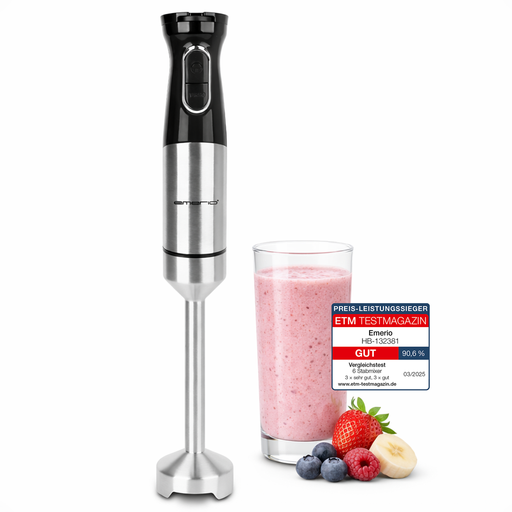 No image available
An option if you want to blend herbs and oil in a suitable beaker of your own; check that your usual batch reaches the blending shaft.
The product name lists 1000 W and variable speed.
 No image available
An option to compare if you make other liquid preparations as well as herb oil; capacity alone doesn’t show whether it blends a small batch effectively.
The product name lists a capacity of 0.6 litres and a power rating of 350 W.
 No image available
An option if you want to chop and blend; check which attachments are included with this model and how each part should be cleaned.
 No image available
An option to compare if you want to chop and blend with separate attachments; bear in mind the usage limit for this model.
The product name lists a speed of 15000 rpm, a 700 ml measuring beaker and a 500 ml chopper. The stated operating cycle is a maximum of 1 minute, followed by 1 minute of rest.
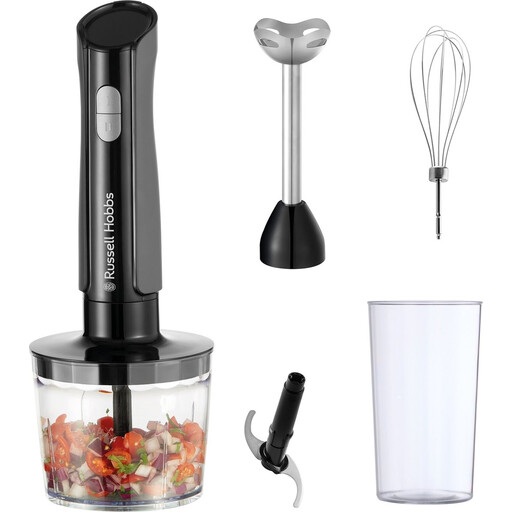 No image available
An option if you’re looking for one appliance for different preparations; check that the included parts suit your batch sizes and cleaning routine.
Use clean parts and keep raw food separate from cooked food. Wash shared equipment thoroughly between uses and follow the instructions for the parts of your exact appliance.
Don’t treat homemade herb oil like ordinary oil that can be stored outside the fridge for a long time. The Voedingscentrum identifies herb oil as a potential botulism risk, particularly when it’s stored outside the fridge for a long time. Make an appropriate amount and follow specific food-safety advice for leftovers.
Don’t assume so: it depends on the model and the part. Tefal says the bowl and blades of the Chop & Shaker K1644344 are dishwasher-safe; for suitable parts of the MQ7020WH, Braun refers users to the instructions. Check the guidance for the lid and motor separately.
For a consumer purchase in the Netherlands, the seller must provide a solution if the product is faulty. According to the Rijksoverheid, the Netherlands has no fixed statutory guarantee period; depending on the problem, repair, replacement or a refund may be appropriate. An additional guarantee doesn’t replace these rights.
The NVWA states that items intended to come into contact with food in the Netherlands must comply with the Warenwetbesluit verpakkingen- en gebruiksartikelen. This concerns materials that come into contact with food; it isn’t a separate permit for someone making herb oil at home. The regulations alone don’t tell you whether a specific model on sale complies with them.