
Raita fan who likes a bit of texture
You want the cucumber to remain recognisable. Grate or chop it and stir it into the yoghurt; there’s no need to purée it with a hand blender.


You don’t need a hand blender to make cucumber raita with recognisable pieces of cucumber: Swasthi’s Recipes describes grated or chopped cucumber stirred into yoghurt. A hand blender is most useful if you also want to make smooth sauces or yoghurt bases; a set with a chopper is a better fit if you regularly chop herbs or other ingredients. For a family meal, compare the capacity of the supplied beaker with your recipe and check which parts need cleaning after use.
You want the cucumber to remain recognisable. Grate or chop it and stir it into the yoghurt; there’s no need to purée it with a hand blender.
You want to chop herbs as well as blend. Check whether the chopper is included with the version you’ve chosen and whether its capacity suits the amount you want to prepare.
You use the blender for small mixing jobs and look for a detachable blending foot and fewer parts to clean afterwards.
First decide whether you want to grate, chop or purée the cucumber. Then choose the blender functions and accessories you need for other dishes.
| What to consider | What to look for | Who is this important for? |
|---|---|---|
| Keeping some texture | Decide whether you want to purée the cucumber; grate or chop it if you want to keep some pieces. | I want the cucumber to remain recognisable, so I’d rather stir it into the yoghurt than blend everything until smooth. Around 36% of consumers prioritise keeping some texture. |
| Chopping herbs | Check whether a chopper is included and look at its capacity in millilitres. | If I also want to chop herbs for a family meal, I want to know which accessories are in the box and whether I might need to work in batches. Around 29% of consumers focus mainly on chopping and the space required. |
| Cleaning | Check whether the blending foot is detachable and read the cleaning instructions for each part. | After a small mixing job, I don’t want to wash more parts than necessary. Around 21% of consumers focus mainly on cleaning after use. |
| Features you won’t use | Compare the included accessories with the tasks you actually want to do besides making raita. | If I mainly make cucumber raita, I don’t want to choose features I’m unlikely to use. Around 14% of consumers prioritise avoiding features they won’t use. |
You can grate or chop the cucumber for raita and stir it into the yoghurt. Swasthi’s Recipes describes this method; you don’t need a hand blender.
First choose the texture and preparation method you want. Only compare the power rating if you also plan to use the blender for other dishes.
Braun lists a 350 ml chopper for the MQ10.201MWH, while Tefal lists a 500 ml chopper for the Quickchef HB659838. These capacities don’t tell you how much raita you can prepare for the whole family.
Use the chopper for the ingredients you want to chop, and compare the mixing or serving bowl with the quantity in your own recipe.
For larger quantities, you may need to chop in batches or use a separate serving bowl.
Accessories vary between versions. A chopper or whisk included with another version won’t necessarily be in the pack you’re looking at.
Check the full model number and the list of included parts before counting on particular accessories.
The MultiQuick 1 MQ10.201MWH is a simple option to consider if you want to chop herbs as well as blend.
The ErgoMixx MSM64110 is a straightforward hand blender to compare if blending and easy cleaning matter more to you than having an extensive set.
The Quickchef HB659838 comes with a blending foot and chopper, making it worth comparing if you also want to chop herbs.
These Joybuy products are suited to anyone who wants to make a smooth yoghurt base or other blended mixtures. Some versions also include a chopper; to keep recognisable pieces of cucumber, grate or chop it separately.
 No image available
A good fit if you want to blend a smooth yoghurt base and also chop herbs.
The description lists stepless speed control, a 700 ml blending beaker and a 500 ml chopper. It can be used for up to 1 minute at a time, followed by a 1-minute rest.
 No image available
A good fit if you want to blend a smooth yoghurt base and chop herbs for other dishes.
The description lists variable speeds, a chopper and a whisk. Check the cleaning information for each part.
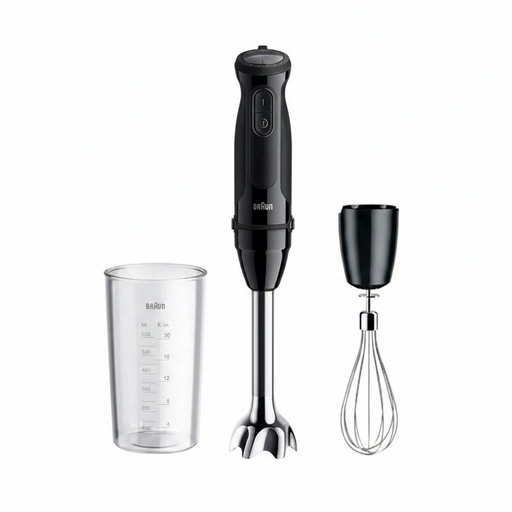 No image available
A good fit if you want to blend a smooth yoghurt base and use a whisk too.
The product information lists 1000 W, 21 speeds and a whisk. The motor unit must not be immersed in water.
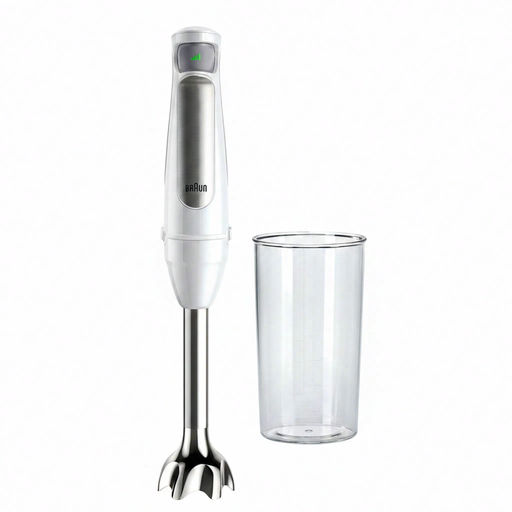 No image available
A good fit if you want to make a smooth base and use a whisk as well.
The product information lists a 1000 W motor, pressure-sensitive control and a double whisk. Clean the motor unit with a damp cloth; don’t immerse it in water.
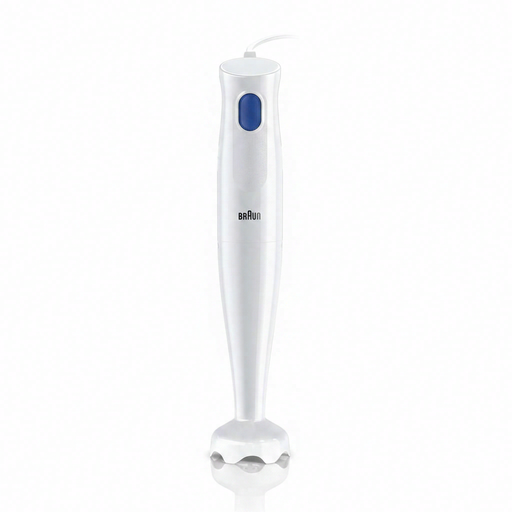 No image available
A good fit if you’re looking for a simple blender with a measuring beaker for smooth mixtures.
The product information lists one speed, a detachable blending foot and a 600 ml measuring beaker.
No, you don’t need to purée the cucumber to make cucumber raita. Swasthi’s Recipes describes grated or chopped cucumber mixed with yoghurt, so you can keep some pieces intact.
If you’ve grated the cucumber, gently squeeze out any excess liquid before adding it. Sandhya’s Kitchen recommends adding salt just before serving, as cucumber releases liquid.
Don’t assume so: cleaning instructions can vary between parts. For the MQ10.201MWH, Braun advises checking the instruction manual to see which parts are dishwasher-safe.
For a typical online purchase, you’ll generally have a statutory cooling-off period of up to 14 days after delivery; check whether any exceptions apply. If a product is faulty, you’re entitled to a product that works as it should, and the retailer is your point of contact. ACM ConsuWijzer explains the cooling-off period, while the Dutch government states that the Netherlands has no fixed statutory guarantee period.
CE marking is compulsory for electrical products covered by the relevant rules. Parts intended to come into contact with food are covered by Regulation (EC) No 1935/2004. The Netherlands Food and Consumer Product Safety Authority and the European Commission describe these general requirements; this does not in itself confirm that a particular model on sale meets them.