
Soup maker with limited cupboard space
You mainly want to blend cold tomato soup and would rather not store attachments you don’t use. The Dutch Consumers’ Association also distinguishes between models with and without a chopper or whisk.


If you’re making cold tomato soup and short on cupboard space, a simple hand blender without attachments you won’t use is a sensible place to start. The Netherlands Nutrition Centre uses a hand blender to make gazpacho, while the Dutch Consumers’ Association distinguishes between models designed for blending alone and those with extras. Choose multiple speeds if you want more control as you blend, or a chopper if you’ll use it for other recipes too. Always check the accessories and cleaning instructions for the exact version.
You mainly want to blend cold tomato soup and would rather not store attachments you don’t use. The Dutch Consumers’ Association also distinguishes between models with and without a chopper or whisk.
You want to adjust the speed as you blend, and pay attention to the beaker, splashing and how the ingredients turn out. The Dutch Consumers’ Association lists speed as one factor to consider.
You make more than soup and have space for attachments you’ll actually use, such as a chopper.
First, work out how much storage space you have and what else you’ll genuinely use the blender for. Then compare the controls, what’s included in the set and the cleaning instructions.
Choose this option: if you mainly want to blend chopped tomatoes and other soft ingredients for soup, and keep as few parts as possible.
Bear in mind: a single speed gives you less control as you blend; you’ll need another tool for chopping.
Choose this option: if you want more control over the texture as you blend, but don’t need a chopper.
Bear in mind: check the speed settings and what’s included with the exact version; the stated power rating alone doesn’t guarantee a particular soup result.
Choose this option: if you regularly want to chop ingredients separately as well as make soup, and have space to store the attachment.
Bear in mind: extra attachments take up space and need to be stored and cleaned.
| What to consider | What should you check? | Who is this important for? |
|---|---|---|
| Worktop and storage space | Check which parts are included with the version on offer, and where you can store the motor unit, blending foot and any beaker. | If you have limited cupboard space and mainly blend soup, you won’t want to store unused attachments. Around 36% of consumers give limited space top priority. |
| Controlling texture | Check how many speeds the exact model has and whether you can blend in a suitable beaker or bowl. | If you want to adjust the blender as you go to achieve the texture you’re after, the controls matter. Around 29% of consumers put this first. |
| Cleaning | Check which parts are detachable and which cleaning instructions apply to your version. | After blending, you’ll want to clean the hand blender without unnecessary effort. Around 21% of consumers make ease of cleaning their main priority. |
| Extra features | Check whether a chopper is actually included with the version you’re considering and whether you’ll use it often enough to justify storing the extra parts. | If you make other dishes too and want to chop ingredients separately, extra attachments may be useful. Around 14% of consumers prioritise these uses. |
For blending alone, the Dutch Consumers’ Association distinguishes between models with and without a chopper or whisk. Attachments you don’t use still take up storage space and need cleaning.
Choose a set based on the tasks you actually do; extra parts also mean more storage and cleaning.
Base your choice on the recipes you make regularly, not on how many parts come in the box.
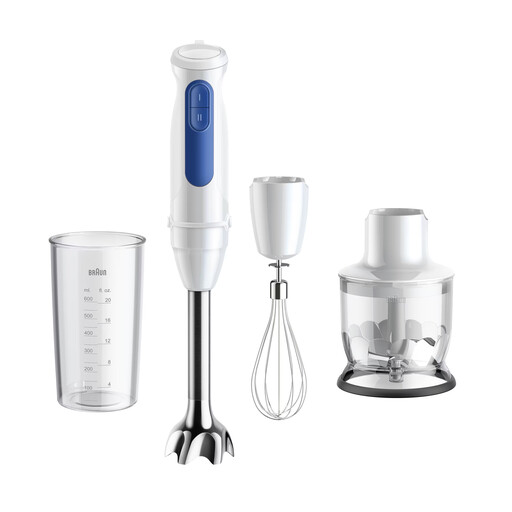
For the Braun MultiQuick 1 MQ10.001MWH, Braun lists a measuring beaker and metal blending foot, while the Joybuy listing also mentions a whisk and chopper.
Before buying, confirm which accessories are included with the version on offer; don’t rely on the model name alone.
Manufacturers list wattage, but the controls, ingredients and texture you’re after all play a part too. The product specifications listed here aren’t a direct comparison of soup-making performance.
Start with your ingredients and the controls you want, then compare the specifications of the exact version.
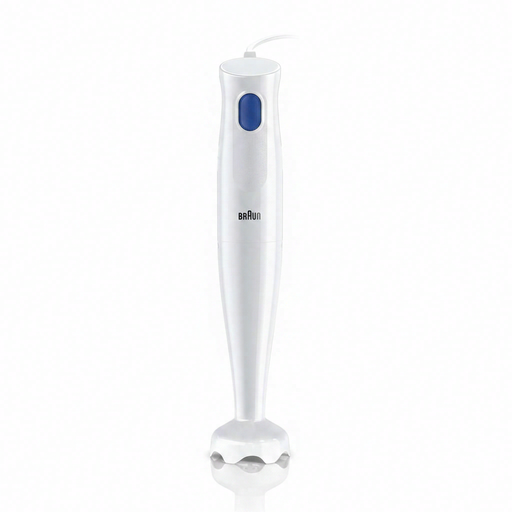
The MultiQuick 1 MQ10.001MWH is a simple option if you mainly want to blend.
The ErgoMixx MSM64110 is an option if you’re looking for two speeds and a detachable blending foot.
The Quickchef HB659838 is designed for those who use a chopper as well as blending.
The refurbished Daily Collection ProMix HR2543/90R1 is a specific version with speed settings and a compact chopper.
Here are hand blenders from Joybuy for making soup, from simple models to versions with extra speed settings or attachments.
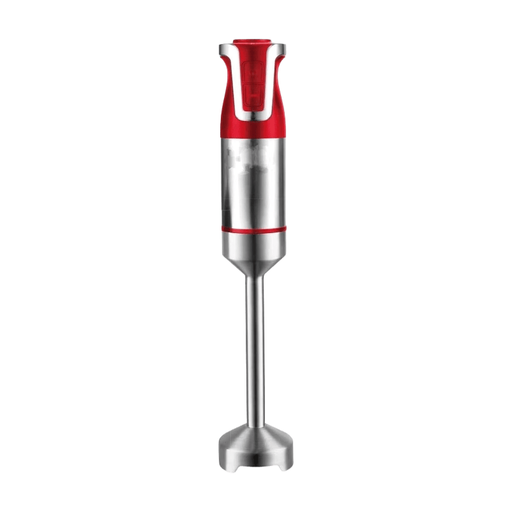 No image available
An option if you want to adjust the speed as you blend.
The product title lists 800 W, 20 speeds and a turbo function.
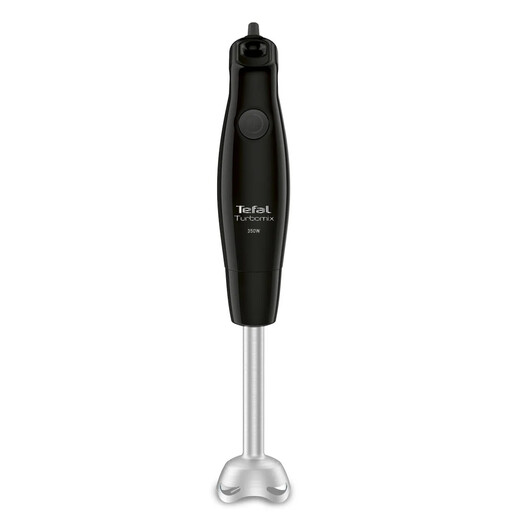 No image available
A hand blender for blending ingredients for soup; check which parts are included with this version.
 No image available
An option if you want to blend soup and adjust the speed as you mix.
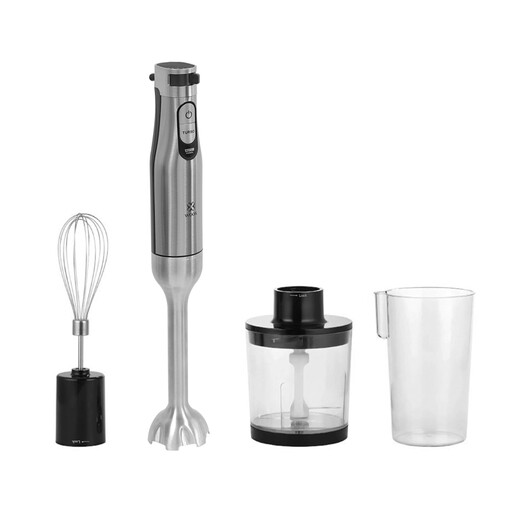 No image available
Suitable if you want to use attachments for other recipes as well as blending soup.
The product title lists variable speed, a chopper, whisk and milk frother; bear in mind that you’ll need to store the extra parts.
 No image available
A simple option if you mainly want to blend soup and are happy with one fixed speed.
You can’t adjust the speed on this version, so check that it suits the texture you want to achieve.
No, a suitable bowl or beaker may be all you need. In its gazpacho recipe, the Netherlands Nutrition Centre uses a hand blender or food processor to blend chopped tomatoes and other ingredients until smooth. Choose a container that’s suitable for the portion size.
A detachable blending foot can make cleaning easier. Check the instructions for the exact version before putting any removable parts in the dishwasher, and keep the motor unit, cord and plug away from water.
Cover leftovers and put them in the fridge within 2 hours of preparing the soup; the Netherlands Nutrition Centre recommends a fridge temperature of 4 °C. For clear tomato soup, it recommends keeping it in the fridge for 2 days. Check suitable storage advice if your ingredients or preparation method are different.
In the Netherlands, the seller must offer a solution if a product isn’t as it should be; there is no fixed statutory guarantee period of two years, according to the Dutch government. CE marking is only required for products covered by the relevant harmonised EU rules. For a specific model, check the product information and safety instructions.