
Vandaag of morgen in huis

Kwaliteit gegarandeerd

Welkomstaanbiedingen ontgrendelen: GRATIS bezorging | Tot 80% korting | Gratis 30 dagen JoyPlus-proefperiode
Download de app
A quick bowl of noodle soup, ramen or a dry Mi Goreng is handy for students, busy households and fans of Asian flavours. Yet not every packet with an Asian look is automatically right for your needs. When you want to buy halal instant noodles online, you need to look beyond just the flavour on the front.
The main pitfalls to watch out for are:
A product title may say “halal”, but it's best to also check the product image and the current packaging. Look for a halal logo or certification information. For products without clear certification, you can ask the seller for clarification.
Also read the ingredients list. Many Asian instant noodles contain wheat, soya, sesame, celery or flavourings of animal origin. With chicken noodles, it's important to check whether “chicken” only indicates a flavouring or whether chicken parts have also been added.
According to the product information for the Bai Xiang Homestyle Chicken Soup Noodles, this product contains wheat and egg, with possible traces of soya, sesame, milk, shellfish, fish and peanuts. That makes it unsuitable for every allergy or intolerance.
A standard sachet often weighs between 70 and 100 grams. Some large cups contain around 168 to 187 grams. This affects how filling they are, the price per portion and the storage space needed.
Pay attention to the preparation method:
Also check the best-before date on the packaging. Store instant noodles in a cool, dry place, out of direct sunlight and away from moisture.
Instant noodles are intended as a quick meal or snack, not automatically as a complete meal. Nutritional values vary significantly between products. In the product information, values range, for example, from around 297 to 500 kcal per 100 grams. The salt content can also vary widely.
So compare:
The mention “non-fried noodles” means the noodles are not fried according to the product description. That alone does not mean the product is light, low in salt or suitable for a particular diet.
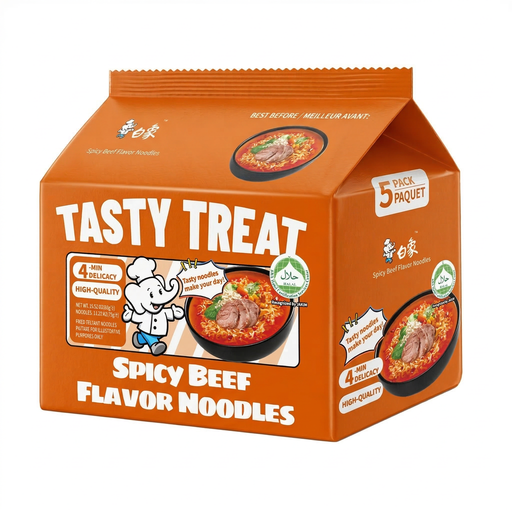
Why this fits the profile: This multipack gives you five portions with a spicy beef flavour and a preparation time of around 3 to 4 minutes. According to the product information, it is halal-certified.
The contents are clearly stated as 5 x 88 g. Do check the current halal logo and allergen information on the packaging; the product contains wheat, soya, sesame and celery.
Five individual portions, 500 ml of water per preparation and a clear spicy beef flavour.
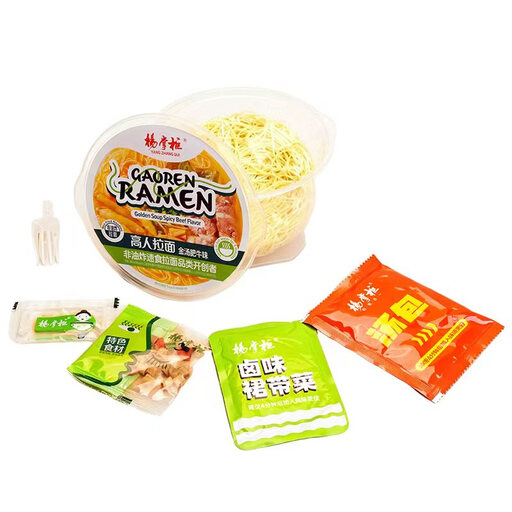
Why this fits the profile: The product description mentions non-fried noodles, a sour and spicy beef soup and separate sachets with vegetables, tofu skin and vinegar.
The composition is clearly divided across several sachets. Check the halal information on the packaging before purchase and look out for wheat, soya and barley.
187 g per cup, steep for 3 to 5 minutes and extra texture from vegetables and tofu skin.
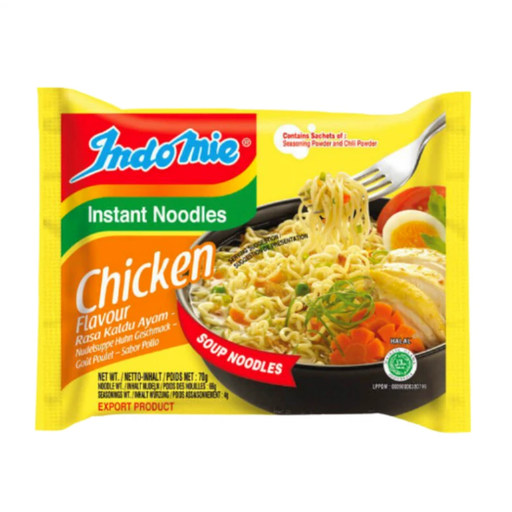
Why this fits the profile: Ideal for anyone who wants to regularly top up a small stock with a familiar chicken noodle. According to the product information, this variant is halal-certified.
The 70 g size makes portion control easy. Check the current label, as product information and packaging can change.
Chicken, ginger and chilli flavour; easy to prepare as a quick meal or snack. Contains wheat.
We've put together a full, up-to-date list of products that fully meet these strict selection criteria and comply with current European safety regulations.
Not every variant should be considered halal without checking. Some product listings indicate that a specific Indomie variant is halal-certified, while others mainly describe ingredients and flavour. So always check the halal logo, the ingredients list and the current packaging. Also look out for allergens such as wheat, soya, celery, sesame or shellfish in prawn noodles.
Check the best-before date on the outer packaging and, for multipacks, on the individual sachets. Store the noodles in a dry, cool place out of direct sunlight. Ideally, prepare an opened pack straight away. Do not use any product where the packaging is damaged, swollen or leaking.
You calculate the price per portion by dividing the total price by the number of sachets or cups. A box of 40 sachets can be more economical if you use them regularly, but it requires more storage space. So compare not only the price of the pack, but also the net weight, the number of portions and the contents per portion.
