
Vandaag of morgen in huis

Kwaliteit gegarandeerd

Welkomstaanbiedingen ontgrendelen: GRATIS bezorging | Tot 80% korting | Gratis 30 dagen JoyPlus-proefperiode
Download de app
Choosing a new hairdryer seems simple until you start comparing drying time, hair type, attachments and noise levels. A powerful hairdryer isn’t automatically right for fine hair, while a compact travel hairdryer may not provide enough airflow for thick or long hair.
Pay attention to marketing claims, too. Terms such as “billions of ions”, “five times faster” or “healthy hair” sound convincing, but they only mean something when the specifications behind them are clear. According to brands’ own product information, ionic systems can help reduce static or frizz, but results vary depending on your hair and how you use the product.
A 2,400-watt hairdryer may seem more powerful than a 1,600-watt model. But motor type, airflow, nozzle and heat distribution also affect how quickly your hair dries. According to the product description, a modern brushless motor can provide strong airflow at a lower stated wattage.
So use wattage as a guide, not as your only buying criterion. Check the motor type, speed settings and whether the manufacturer specifies an airflow speed.
According to the manufacturer’s product information, an ionic hairdryer can help reduce static electricity. This can be useful for dry, long or frizzy hair. It doesn’t guarantee a smooth finish: the distance from your hair, temperature, brushing technique and condition of your hair all still matter.
Ceramic or evenly distributed heat may also be more practical than a high ion count that isn’t explained.
A diffuser is useful for curls and waves, while a narrow concentrator is suited to directing airflow when styling with a brush. Check that the attachments are included and fit securely.
Also consider the weight, cord length and controls. A hairdryer weighing almost one kilogram can become tiring to use on long hair. A lightweight model weighing around half a kilogram is often more comfortable if you need to style your hair for longer.
A hairdryer with several heat settings gives you more control than a model with just warm and hot settings. For fine or fragile hair, a low or medium temperature is often more practical. Thick or wet hair may need stronger airflow, but keep the hairdryer moving and hold it at a safe distance.
A hairdryer with a cool-air function is useful at the end of your styling routine. The cool air can help set your chosen style. Check whether it has a separate button or just a fixed cool setting.
An AC motor is often used in a professional hairdryer and may be designed for prolonged use, according to the product description. A DC motor is generally lighter. Brushless motors are a different category and are often paired with compact designs and high rotational speeds.
Compare claims about a “fast hairdryer” with specific details:
A high rotational speed doesn’t necessarily mean a comfortable airflow. For curly hair, an even diffuser may matter more than maximum power.
Before buying, check that the model has an EU plug, is suitable for the mains voltage in the Netherlands and comes with clear safety information. Look for overheat protection, an unobstructed air inlet and a removable filter. Hair and dust can restrict airflow.
A hairdryer is an electrical appliance: don’t use it near water, don’t block the air vents, and unplug it after use. According to their product information, the models mentioned generally come with a minimum of two years’ statutory guarantee within the EU. Your exact rights depend on your purchase and the applicable legislation.
Why it suits this profile: According to the product information, this model has 2 speed settings, 3 heat settings, a cool-air button, plus a concentrator and diffuser. That gives you the essential features for everyday drying and simple styling.
You don’t have to rely on wattage alone: the settings and included attachments are clearly listed. However, check the latest product specifications, as the information provided lists different wattages.
Ionic function, diffuser, concentrator, cool-air button and overheat protection, according to the product description.
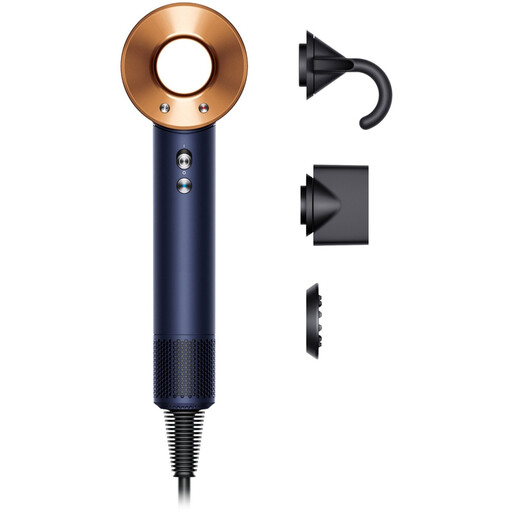
Why it suits this profile: A good choice if temperature control and precise styling matter to you. According to Dyson, this model has 3 speed settings, 4 temperature settings and a digital V9 motor.
Heat performance isn’t judged on wattage alone. The product description mentions temperature measurements and multiple settings; check the packaging to see which attachments are included with this version.
3 speed settings, 4 temperature settings, a cool-air function and a digital motor, according to Dyson’s product information.
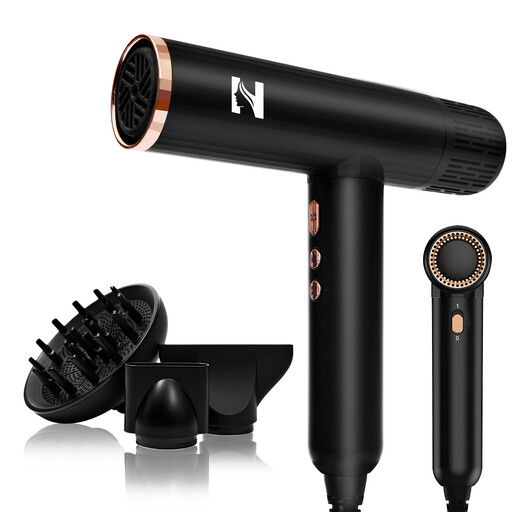
Why it suits this profile: A practical choice for long, thick or curly hair, and for anyone who wants to style at home and on the go. According to the product information, the model weighs 0,57 kg and has 3 speed settings, 4 temperature settings and a diffuser.
You get more than just a high stated motor speed: the product information also gives specific details about weight, noise level and attachments. The claim about reduced drying time comes from Nicebay’s own product information.
Brushless motor, ionic function, diffuser, two concentrators, 2 metre cord and a stated noise level of less than 65 dB.
We’ve put together a complete, up-to-date list of products that meet these strict selection criteria and the applicable European safety regulations.
First, towel-dry your hair and gently comb it through. Divide long or thick hair into sections. Hold the hairdryer about 15 to 20 centimetres from your hair and keep it moving. Use the concentrator for a straight style and the diffuser on a low or medium setting for curls.
Clean the filter regularly and let the appliance cool completely before putting it away. If you travel often, consider a travel hairdryer with a folding handle and dual voltage. Check that it has the right voltage setting for your destination.
For everyday use at home, hairdryers often range from around 1,600 to 2,400 watts. Also consider airflow, heat settings and motor type. A higher wattage doesn’t automatically mean your hair will dry faster or more evenly.
It can be, depending on your hair and styling routine. For a hairdryer for curly hair, a diffuser is usually more important than the ionic function alone. According to manufacturers’ own product information, ionic technology can help reduce static and frizz; this isn’t a medical claim or a guaranteed result.
Consumption depends on the wattage and how long you use it. A 2,000-watt model running for ten minutes uses around 0,33 kWh in theory. The actual cost depends on your electricity tariff. Efficient drying, a lower setting and a regularly cleaned filter can help reduce energy use.
