
Vandaag of morgen in huis

Kwaliteit gegarandeerd

Welkomstaanbiedingen ontgrendelen: GRATIS bezorging | Tot 80% korting | Gratis 30 dagen JoyPlus-proefperiode
Download de app
Buying a hairdryer seems simple, until you have to choose between an ionic hairdryer, a fast-drying hairdryer, a travel hairdryer or a model with a diffuser. Manufacturers often highlight high motor speeds, high wattage and terms such as ‘professional’ to show how models differ. But those figures don’t tell the whole story.
Look out for these common pitfalls:
A power rating of around 1,600 to 2,400 watts is common for household models. Higher wattage can help you dry your hair faster, but it’s also worth checking the motor and stated airflow. Models with a brushless motor are often marketed as durable and efficient. Some brands claim in their product descriptions that a high motor speed can shorten drying time, but this is a brand claim, not a guarantee that applies to every model.
For everyday use, a combination of good airflow and several settings is more practical than high wattage alone. A professional hairdryer often has an AC motor, several heat settings and a separate cool-shot button. Weight matters, too: a lightweight hairdryer weighing around 330 to 570 grams is more comfortable to use when you’re styling your hair for a long time.
A hairdryer with temperature settings gives you more control. At least two speeds and two heat settings are useful for basic styling. Three heat settings, several speeds and a cool shot give you more options for blow-drying, adding volume and setting your style.
Don’t use a high temperature on one area for too long. Keep the hairdryer moving and hold the air outlet away from your scalp and face. Temperature control won’t automatically prevent heat damage to your hair, so how you use the hairdryer still matters.
A hairdryer with a concentrator nozzle directs the airflow onto a smaller section of hair and is suitable for straightening as you dry. A hairdryer for curly hair usually needs a diffuser to support your natural curl pattern without blowing the curls apart.
For travel, a folding handle, low weight and the correct voltage are all worth considering. The Remington D1500, for example, specifies a universal voltage of 120–240 volts. When buying a travel hairdryer, always check whether you’ll need a suitable plug adapter at your destination.
Keep all hairdryers away from water. Don’t cover the air inlet or outlet, allow the appliance to cool after use and unplug it from the socket. Clean a removable filter regularly to help prevent dust from building up.
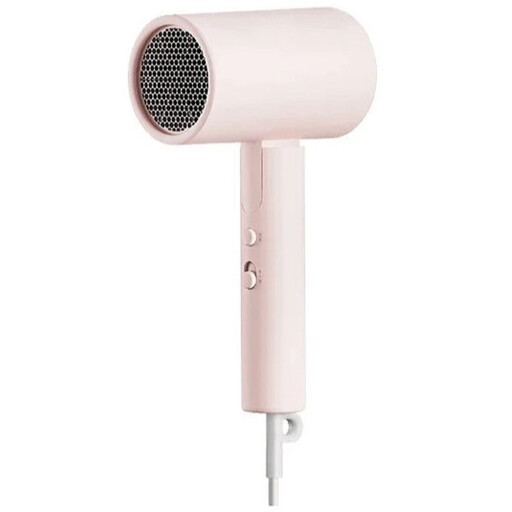
Why it suits this profile: This compact model is a good choice if you want a simple hairdryer for everyday use and short trips. The folding handle takes up less space in your bag.
The specifications are straightforward: 1,600 watts, two speeds and two heat settings. You won’t be paying for a long list of features you may never use.
Weighs 433 grams, folding design, ionic technology according to the product description, and a 360° rotating concentrator nozzle.
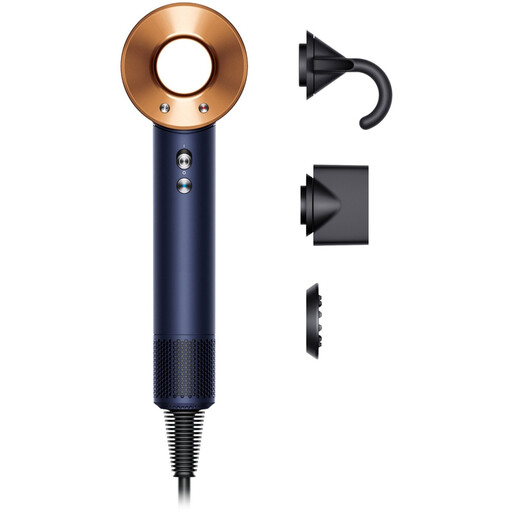
Why it suits this profile: This model is designed for people who value a choice of styling settings and precisely directed airflow.
Rather than focusing on wattage alone, you get three speeds, four heat settings and a styling concentrator.
According to the product description, the model has a digital V9 motor, intelligent temperature control and a separate cool-shot setting.
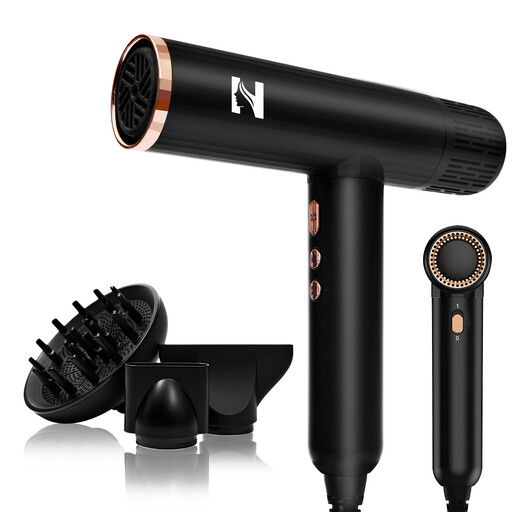
Why it suits this profile: This model is aimed at people with long, thick or curly hair, and those who regularly use different styling techniques.
It’s not just about power: you get three speeds, four heat settings and a diffuser for curls.
According to the product description: 1,900 watts, a 110,000 rpm brushless motor, a weight of 0.57 kg and a stated noise level of less than 65 dB.
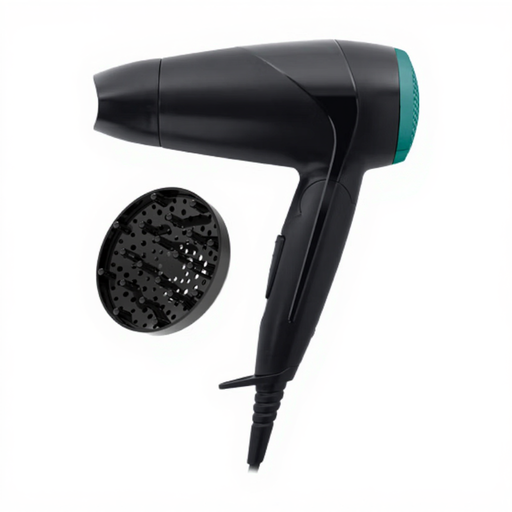
Why it suits this profile: The folding handle and universal voltage make this a practical travel hairdryer for suitcases, gym bags and smaller storage spaces.
There’s no need to buy a separate diffuser or concentrator nozzle: according to the product information, both accessories are included.
2,000 watts, two speeds, two heat settings, weighs 510 grams and has a 1.8-metre cord.
We’ve put together a complete, up-to-date list of products that meet these strict selection criteria and the applicable European safety requirements.
An ionic hairdryer releases negative ions. According to product descriptions, these can help reduce static. The effect varies from one hair type to another. You should also use a suitable temperature, keep the hairdryer moving and choose a concentrator nozzle for precise styling.
Its lifespan depends on the motor, how often you use it, how well you maintain it and how you store it. Clean the filter, don’t block the air inlet and let the appliance cool down before putting it away. Brands often associate brushless motors with a longer working life, but always check the warranty and care instructions for the specific model.
Energy use depends on the wattage and how long you use the hairdryer. A 2,000-watt model would theoretically use 2 kWh in one hour, although hairdryers are usually switched on for much less time. Faster drying can reduce the total time you use the appliance, but don’t look at wattage alone: efficient airflow and choosing a suitable setting matter, too.
