
Vandaag of morgen in huis

Kwaliteit gegarandeerd

Welkomstaanbiedingen ontgrendelen: GRATIS bezorging | Tot 80% korting | Gratis 30 dagen JoyPlus-proefperiode
Download de app
Buying a hairdryer sounds simple, until you have to choose between a fast hairdryer, an ionic hairdryer, a hairdryer with a diffuser or a complete multi-styler. Marketing copy often highlights high speeds, millions of ions and professional results. These figures are only useful if they suit your hair, routine and styling method.
The right choice therefore starts not with the colour or number of accessories, but with three practical questions: how quickly do you want to dry your hair, how much control do you have over the heat and airflow, and which attachments will you actually use?
Higher wattage does not automatically mean that your hair will dry faster. The airflow, motor and shape of the nozzle are at least as important. In practice, a 1,800-watt hairdryer may be more pleasant to use than a heavy 2,300-watt model if its airflow is better directed.
Treat wattage as one technical detail, not the final verdict. Also look at the speed settings, temperature settings and any information about airflow volume.
According to the product description, an ionic hairdryer can help reduce static and frizz. That does not mean heat has no effect. Blow-drying for a long time on the highest setting, holding the dryer too close to your hair and keeping it still can still place considerable stress on your hair.
Look out for a cold-air setting, several heat settings and a design that regulates the temperature. Claims about ion counts come from brands and should be read as product specifications, not as a guarantee of a particular result.
A hairdryer with styling attachments can be useful, but only if you use them. A diffuser is relevant for curls and waves. A concentrator is useful for focused blow-drying and smoother styling. A smoothing brush or automatic curling attachments are particularly interesting if you want to create several different looks with one device.
More accessories often also mean more storage space, extra weight and a higher purchase price. Choose based on your regular routine.
For a hairdryer without excessive heat damage, control and distance are more important than a striking marketing figure. Ideally, look for:
According to the product information, the Philips 7000 Series BHD723/10 measures the ambient temperature and adjusts the drying temperature accordingly. Philips also states that the temperature is adjusted regularly during a session. These are brand claims about how the device works; the practical benefit is primarily that you have more control while drying your hair.
A fast hairdryer does not depend on wattage alone. Strong, directed airflow can shorten drying time, particularly for thick hair. For fine hair, a lower setting is often more comfortable, as it stops the hair from being blown in every direction.
Also check the weight and balance of the handle. A device that feels heavy after a few minutes is less suitable for everyday use. For travelling, a foldable design, dual voltage and a compact storage bag may be more important than maximum power.
A diffuser does not automatically make hair curly. The attachment mainly changes the way air reaches your hair. Your technique, the moisture level of your hair and the setting you choose remain decisive.
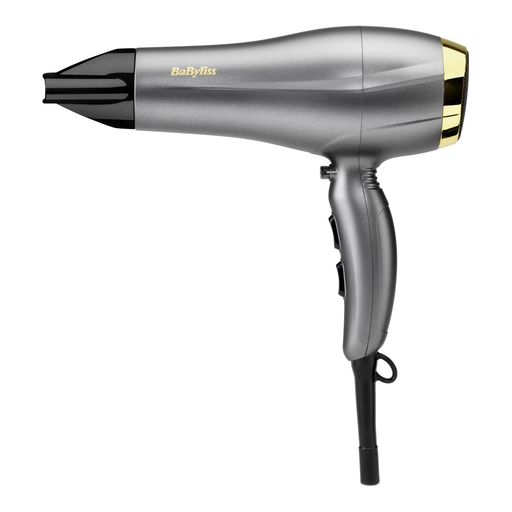
Why it suits this profile: This model combines 2300 W with a diffuser, concentrator and ionic function. That gives you straightforward options for drying, smooth styling and creating curls.
You are not paying solely for isolated marketing features: each of the two attachments mentioned has a clear purpose. The removable filter is practical for maintenance.
2300 W, tourmaline ionic technology, diffuser, concentrator and EU plug.
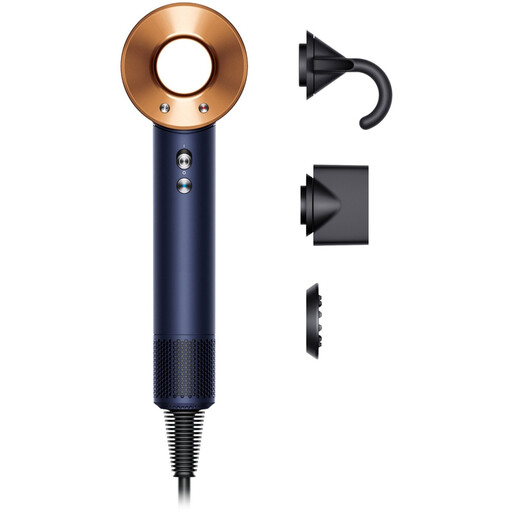
Why it suits this profile: If you often dry straight or wavy hair and value precise styling, you get a digital motor, three speeds, four heat settings and a styling concentrator.
Temperature control and the cold shot give you more control than a powerful heat setting alone. According to Dyson, the temperature is measured 40 times per second; this remains a specification provided by the brand.
V9 motor, three speeds, four temperatures, precision concentrator and 28 °C cold shot according to the product information.
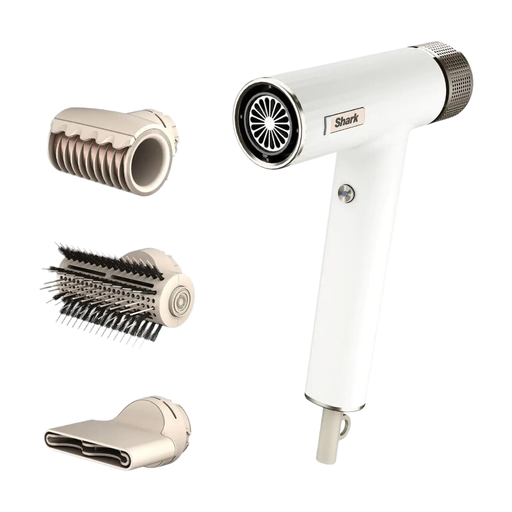
Why it suits this profile: This is a practical choice for users who switch between smooth, wavy and diffuser styling. The set includes a styling nozzle, diffuser and smoothing brush.
The attachments are designed for different tasks, so you are not reliant on one universal nozzle. The manufacturer mentions ionic technology and drying without excessive heat; treat this as brand information.
Three attachments, suitable for all hair types according to the product specification, lightweight ergonomic design and ionic technology.
We have put together a complete, up-to-date list of products that fully meet these strict selection criteria and the applicable European safety regulations.
A hairdryer will generally last longer if you clean the air filter regularly. Dust and hair restrict the airflow and can cause overheating. Keep the inlet and outlet clear, and do not wrap the cord tightly around the housing.
Start with towel-dried hair rather than soaking-wet hair. Divide thick hair into sections and keep the hairdryer moving at a distance of around 15 to 20 centimetres. For curls, use a low speed and a diffuser. Allow attachments to cool down before changing or storing them.
Choose a hairdryer for curls with a diffuser, several speeds and a low-temperature setting. A diffuser spreads the air and can help preserve the natural shape of waves or curls. An automatic curling styler is a different category and works primarily on towel-dried hair.
Not automatically. Energy consumption mainly depends on power, usage time and the setting selected. A device that dries hair faster may run for less time per session, but always check the product specifications. According to the manufacturer, the Philips BHD723/10 uses less energy than previous models; this is a brand claim and not a general rule for ionic hairdryers.
Its lifespan depends on usage, maintenance and the quality of the motor, cord and filter. Clean the filter according to the instructions, keep the device away from moisture and only store it once it has cooled down completely. A statutory minimum two-year guarantee applies to many of these products under the applicable EU consumer rules, in addition to any further rights under Dutch law.
