
Vandaag of morgen in huis

Kwaliteit gegarandeerd

Welkomstaanbiedingen ontgrendelen: GRATIS bezorging | Tot 80% korting | Gratis 30 dagen JoyPlus-proefperiode
Download de app
A new hair dryer might seem simple to choose: look at the wattage, pick a well-known technology and compare the price. Yet marketing claims can give a misleading impression. A motor with a high RPM doesn’t automatically dry faster, an ionic function won’t smooth every hair type, and a compact design can come at the expense of adjustability.
With this practical buying guide, you can compare hair dryers by looking at the features that really make a difference in daily use: drying time, temperature control, weight, noise level, attachments and safety.
A high power rating, such as 1,800 or 2,300 watts, tells you about electrical consumption and the heat available, but does not, on its own, tell you about the airflow. Even a motor running at 110,000 RPM is no guarantee that your hair will dry five times faster. You should treat such speed claims as brand assertions. Always check whether the product page also provides information on airflow speed, temperature settings and usage time.
An ionic hair dryer or one with negative ions can, according to the product description, help reduce static electricity and frizz. However, the result varies depending on your hair structure, humidity and styling method. Ionic technology does not replace using a low temperature, keeping a sufficient distance or moving the dryer evenly while drying.
A diffuser is useful for curls and volume, while a concentrator is suitable for targeted styling. If you have straight hair and only blow-dry after showering, multiple accessories may just take up extra space. Also check whether a diffuser is actually included in the box and not just shown in a product photo.
For everyday home use, many models have a power rating between 1,600 and 1,800 watts. A higher wattage can be practical for thick or long hair, but it usually increases energy consumption. A fast hair dryer with an efficient motor can still deliver strong airflow at a lower wattage.
Look out for these points:
A good hair dryer with temperature control offers more than just hot and cold. Multiple heat settings help you adjust the air for fine, normal or thick hair. A constant temperature control or NTC sensor can, according to the product information, monitor the temperature. That doesn’t mean overheating is impossible: keep the dryer moving and don’t block the air intake.
Use the dryer at a distance of about 10 to 20 centimetres and start at the roots. For fragile or fine hair, a lower setting is usually more practical than prolonged drying on maximum heat.
A lightweight hair dryer weighing around 500 grams or less is comfortable when you dry your hair for a long time or regularly use a brush. For travel, a foldable model, such as a compact hair dryer or travel dryer, is easier to store. Do check the voltage: a model designed for 220-240 V is suitable for UK sockets, but not automatically for every country.
For curls, choose a hair dryer with a diffuser. A diffuser spreads the air over a larger area and can help disturb curls less while drying. A concentrator, on the other hand, focuses the air for smoother or more targeted styling.
A quiet hair dryer is often indicated by a decibel rating. Only compare models where the measurement conditions are clear; “quiet” or “low noise” without a dB specification is difficult to assess objectively.
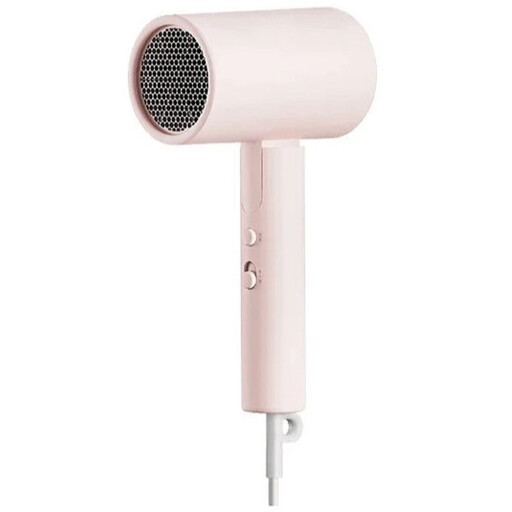
Why this fits the profile: This compact model has a foldable design, weighs 433 grams according to the product information and offers two speed and two temperature settings. That makes it straightforward for daily use and short trips.
The key settings and weight are clearly stated. According to Xiaomi, the model features ionic technology; check at the time of purchase which accessories are actually included in the box.
1,600 watts, 20,000 RPM, foldable handle and a 360° rotating concentrator according to the product data.
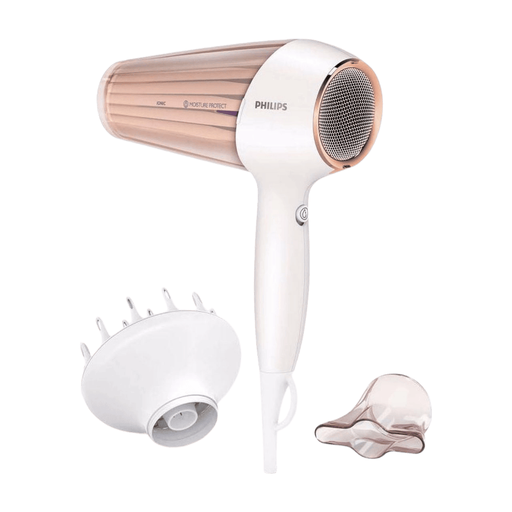
Why this fits the profile: If you style your hair often, you get multiple temperature and speed combinations, a cool shot and a diffuser for volume or curls, according to the product specifications.
The product information specifically mentions 2 speeds, 6 heat settings, ionic technology and a diffuser, rather than just general styling claims.
2,300 watts, MoistureProtect and ThermoProtect functions according to Philips, plus a 2.5-metre cord and a diffuser.
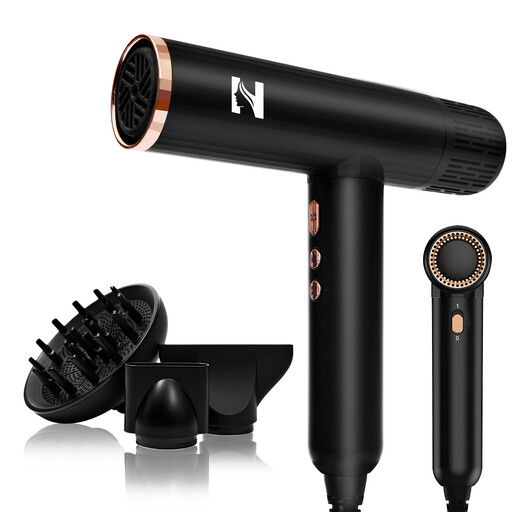
Why this fits the profile: This model is designed for frequent use at home, on the go or in a salon environment, and comes with two concentrators and a diffuser for different hairstyles.
Alongside the claim about a brushless motor, the product information lists concrete values: 1,900 watts, 23 m/s airflow, 4 temperatures and 3 speeds.
According to the product description: 110,000 RPM, approximately 570 grams, less than 65 dB and three magnetic attachments, including a diffuser.
We’ve put together a full, up-to-date list of products that fully meet these strict selection criteria and comply with current European safety regulations.
Before buying, check that the appliance is suitable for 220-240 V and has the correct plug. A CE mark indicates that the manufacturer declares compliance with relevant European requirements; it is not a quality ranking. Do not use a hair dryer near a bath, shower or filled basin.
Clean the filter regularly and keep the air intake free from dust and hair. If the appliance switches off due to overheating, unplug it and let it cool down completely. A damaged cord, casing or plug is a reason to stop using the appliance.
For home use, 1,600 to 1,800 watts is often sufficient. Long or thick hair may benefit from a more powerful airflow, but look beyond wattage at temperature settings, airflow speed and weight as well.
The lifespan depends on the motor, frequency of use, maintenance and storage. A brushless motor may be designed for long-term use according to manufacturer information, but always check the warranty terms. Keep the filter clean and avoid covering the air vents.
Consumption mainly depends on the wattage and how long you use it. A 1,800-watt model running for ten minutes theoretically uses about 0.3 kWh. You can calculate the actual cost using your current energy tariff. Faster drying can reduce total usage time, but compare this against the stated power rating.
