
Vandaag of morgen in huis

Kwaliteit gegarandeerd

Welkomstaanbiedingen ontgrendelen: GRATIS bezorging | Tot 80% korting | Gratis 30 dagen JoyPlus-proefperiode
Download de app
A new frying pan may seem like a simple purchase, until you have to choose between aluminium, stainless steel, ceramic, different coatings and sizes. Marketing terms such as “extra strong” or “super non-stick” also do not always tell you how the pan will perform in your kitchen.
The most important choice depends on three things: your hob, the types of dishes you prepare and how you want to look after the pan. By checking the details beforehand, you can avoid buying a pan that is too small for your household, does not work properly on induction or becomes damaged quickly through incorrect use.
A 24 cm pan does not always have a cooking surface measuring exactly 24 cm. The diameter is generally measured at the top rim, while the base may be smaller. So also check whether the base is suitable for your cooking zone. A large 28 cm frying pan can be practical for preparing several portions, but it takes up more space and does not always fit efficiently on a smaller induction zone.
A non-stick frying pan will not automatically remain in the same condition for years. High temperatures, metal utensils, abrasive sponges and sudden cooling can put strain on the coating. Even a pan described as dishwasher-safe in the product information may last longer if you wash it by hand and dry it carefully.
An aluminium pan does not automatically work on induction. It needs a magnetic base or a suitable composite base. Look for an explicit statement such as “suitable for induction” and, if in doubt, check the information for the specific model. This also applies to a grill pan, egg pan or sauté pan.
Do not just look at the top diameter. Also consider the base diameter, the weight and the length of the handle. A heavy pan can retain heat steadily, but is less comfortable if you often need to toss the contents.
An aluminium frying pan generally heats up quickly and is relatively light. This makes aluminium appealing for everyday use. However, heat distribution depends on the construction of the base and the thickness of the material.
A ceramic frying pan has a ceramic non-stick coating. The product information for some models explicitly states that the coating is PFAS-free. Always check that this description actually applies to the model you have selected. “Ceramic” does not automatically mean that every component or coating has the same composition.
A stainless steel frying pan is suitable for high temperatures and searing. Without a non-stick coating, stainless steel requires more attention to preheating, oil and timing. Some models combine stainless steel with a coating, such as a pan with a honeycomb structure.
Pay attention to these checks:
Brand information about performance, scratch resistance or lifespan should be read as a claim made by the brand. According to Brabantia’s product information, the Onyx and Dusk pans have a two-layer PFAS-free ceramic coating. According to WMF’s product information, the Durado pan is PFAS-free and has a ceramic coating. This information is model-specific, so check the latest product specifications before ordering.
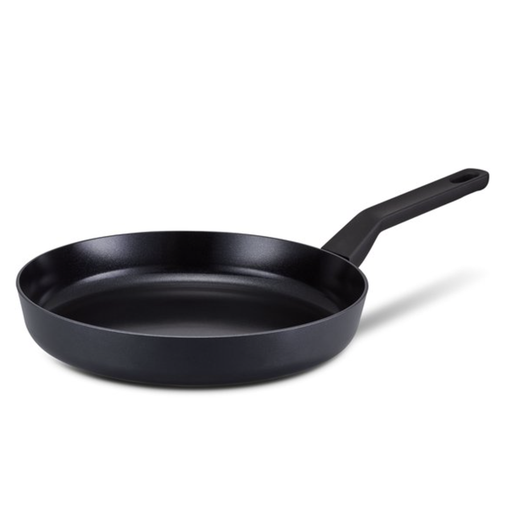
Why it suits this profile: The compact size is practical for small portions, eggs and omelettes. According to Brabantia, the pan is suitable for induction, gas, electric, ceramic and halogen hobs.
The product information explicitly states the size, the PFAS-free ceramic coating and its suitability for induction. This means you do not have to rely on assumptions.
20 cm diameter; 100% recycled aluminium according to the product information; ceramic coating; dishwasher-safe, although hand washing is recommended.
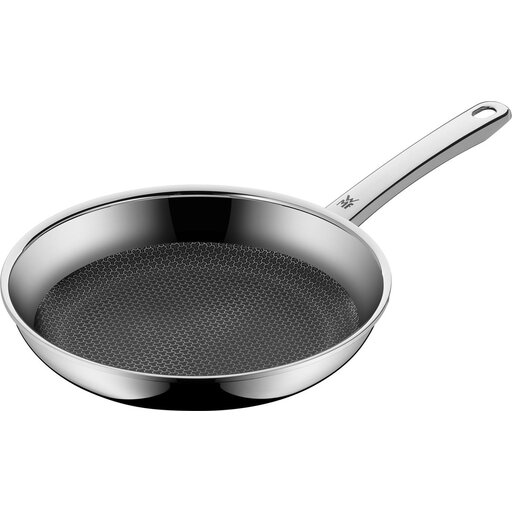
Why it suits this profile: This large pan is aimed at home cooks who often sear food and prepare several portions. According to WMF, the three layers consist of stainless steel, aluminium and a chrome outer layer.
The product specifications state the base construction, induction compatibility, maximum temperature of 260 °C and the recommendation to wash it by hand.
28 cm diameter; aluminium core; suitable for all heat sources, including induction; 5-year guarantee according to the product information.
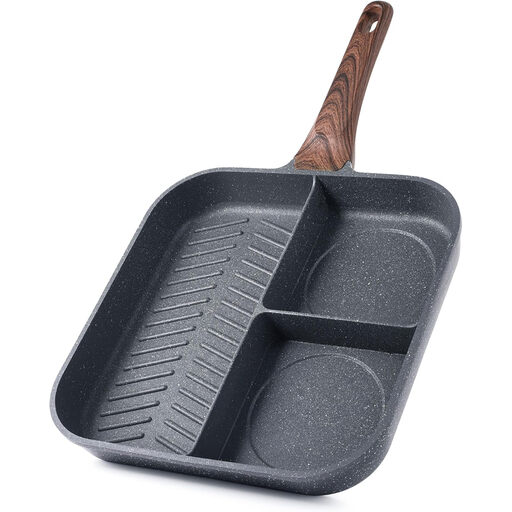
Why it suits this profile: The three separate sections are designed for breakfasts, burgers, bacon, pancakes and grilled ingredients, without everything immediately mixing together.
The specifications mention a magnetic stainless steel base for induction and other hobs. They also clearly state that the pan is not oven-safe or dishwasher-safe.
Three cooking sections; aluminium construction; induction-compatible; according to the product information, free from PFOA, PFOS, APEO, lead and cadmium.
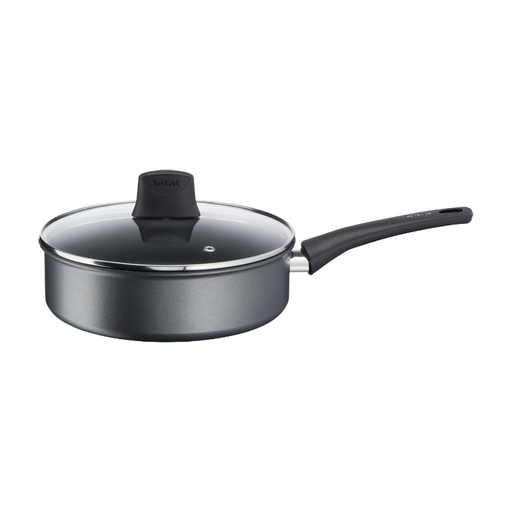
Why it suits this profile: The size is suitable for everyday cooking, while the glass lid makes simmering and finishing dishes simple. According to Tefal, the pan is suitable for all hobs.
The product information states the diameter, base size, oven limit of 175 °C and the recommendation to wash it by hand. This makes the practical limits clear.
24 cm diameter; glass lid; titanium-reinforced non-stick coating according to Tefal; suitable for induction and oven use up to 175 °C.
We have put together a complete, up-to-date list of products that fully meet these strict selection criteria and the applicable European safety regulations.
For a pan with a coating, wooden, silicone or plastic utensils are preferable. Allow the pan to cool down before washing it and avoid sudden changes in temperature. A soft sponge and mild washing-up liquid are usually sufficient. Check regularly for signs of damage to the coating or a loose handle. If the coating starts to flake or the handle becomes loose, replacing the pan is safer than continuing to use it.
An uncoated stainless steel pan requires a different approach: heat the pan gradually, add oil once the base is hot and do not move the food too soon. Always follow the manufacturer’s instructions, especially for oven use and cleaning.
Choose a model that explicitly states that it is suitable for induction. Aluminium alone is not enough; a magnetic base or composite base is required. Also check that the base is flat and matches the diameter of your induction zone.
No. A PFAS-free ceramic coating can still be damaged by overheating, metal utensils or abrasive cleaning products. Washing by hand and using moderate temperatures will help keep the coating in good condition.
For one person or small portions, 20 cm is often sufficient. A 24 cm pan is practical for everyday cooking for one to three people. For larger portions or a family, 28 cm offers more space, provided that your hob and storage arrangements allow for it.
