
Vandaag of morgen in huis

Kwaliteit gegarandeerd

Welkomstaanbiedingen ontgrendelen: GRATIS bezorging | Tot 80% korting | Gratis 30 dagen JoyPlus-proefperiode
Download de app
Picking out a new 28 cm frying pan for your induction hob seems simple, until you're faced with the options. Ceramic, stainless steel, with or without a non-stick coating? The choices are numerous and the marketing promises can be overwhelming. As Joybuy Product Recommendation Officers, our job is to help you find the right information. In this article, we'll provide practical guidance and highlight a few popular choices, so you can find a pan that suits your cooking style.
Before we look at the products, here are a few key points to help you make an informed decision.
The choice of material largely determines the cooking experience and maintenance.
A 28 cm induction frying pan must have a magnetic and perfectly flat base. A thick, multi-layered base (like a 'sandwich base' with aluminium or copper between layers of stainless steel) ensures fast and, most importantly, even heat distribution. This prevents 'hotspots' where one part of the pan gets much hotter than the rest, leading to better and more predictable cooking results.
Think about how you plan to use the pan. Does it need to be oven-safe? If so, choose a model with an oven-safe metal handle. A frying pan with a lid is useful for stewing dishes or to prevent splatters.
Below is a selection of pans that stand out for their specifications and design, each suited to a different type of cook.
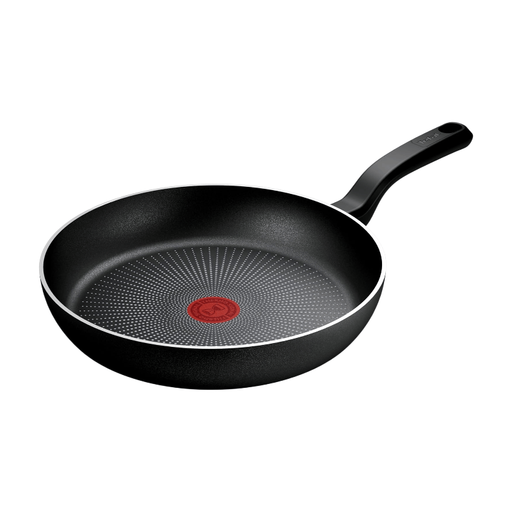
Why It Stands Out The Tefal So Expert is designed for everyday convenience. The Thermo-Signal technology is a handy feature: the spot in the centre of the pan turns solid red when the ideal cooking temperature is reached. This helps eliminate guesswork and ensures consistent results.
Advantages
Who is this pan for? This is an excellent all-rounder for the home cook looking for reliability and convenience for daily meals, from a fried egg to a piece of meat.
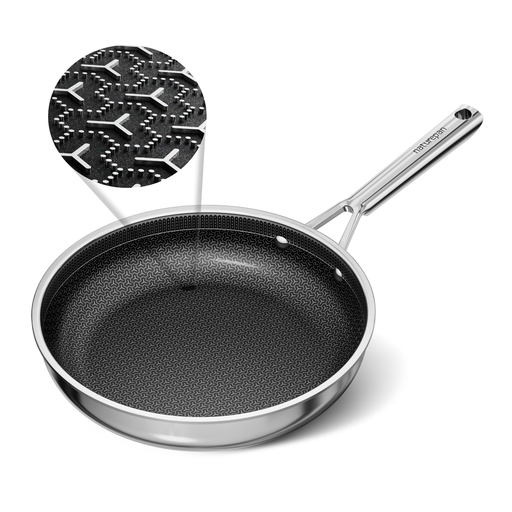
Why It Stands Out The naturepan combines the benefits of stainless steel and a ceramic non-stick coating. The surface features a hexagonal pattern of stainless steel that is slightly raised above the ceramic frying pan layer. This design is intended to offer the durability of stainless steel for searing, while the food doesn't stick thanks to the ceramic layer.
Advantages
Who is this pan for? For the ambitious home cook who wants the benefits of a stainless steel frying pan (great searing) but doesn't want to compromise on the convenience of a non-stick coating. Also a great choice for those specifically looking for a PFAS-free frying pan.
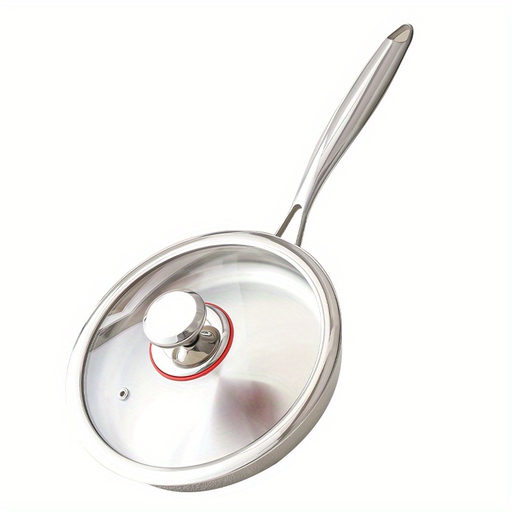
Why It Stands Out This PURECOOK pan is a classic stainless steel frying pan with a modern construction. The three-layer ('triple-ply') base and walls, featuring an aluminium core between two layers of 304 stainless steel, provide exceptionally fast and even heat distribution. This is a pan built for performance and durability.
Advantages
Who is this pan for? For the serious or experienced cook investing in equipment that will last a lifetime. Perfect for those who want control over the temperature and enjoy searing and frying in a professional-grade frying pan.
The pans above are versatile choices. However, are you specifically looking for a pan that excels at cooking at very high temperatures, such as for perfectly searing a steak?
Then check out our selection of frying pans for high temperatures for more specialised options.
A traditional non-stick frying pan often uses a PTFE-based coating. A ceramic frying pan has a coating based on a derivative of sand (sol-gel) that hardens when heated. Ceramic coatings are typically PFAS-free and can often handle higher temperatures, but they can lose their non-stick properties slightly faster over time if not maintained correctly.
A stainless steel frying pan has no special coating, making it very durable. To prevent sticking, first, preheat the pan over medium-high heat. Only then should you add the oil or butter. When the oil shimmers, it's ready to use. After cooking, it's best to let the pan cool down and then clean it with a sponge and some washing-up liquid. For stubborn stains, a scouring pad or a special stainless steel cleaner can be used.
No, not all pans work on an induction hob. A pan must have a magnetisable base to be heated by the cooktop's magnetic field. Pans made of stainless steel, cast iron, or pans with a special induction base are suitable. You can easily test this by holding a magnet to the bottom of the pan. If the magnet sticks, the pan is suitable for induction.
