
Vandaag of morgen in huis

Kwaliteit gegarandeerd

Welkomstaanbiedingen ontgrendelen: GRATIS bezorging | Tot 80% korting | Gratis 30 dagen JoyPlus-proefperiode
Download de app
Frozen fish balls are handy to keep in the freezer. Add them straight from frozen to hotpot, soup, noodles or a stir-fry. However, Chinese fish balls and other Asian varieties can differ considerably in their ingredients, size, filling and preparation method.
Packaging can also give a misleading impression. A product with a name such as “seafood”, “lobster” or “premium” tells you little by itself about the fish content, allergens or how it should be prepared. Use these checks to avoid making the wrong choice.
Fuzhou fish balls often contain a pork filling, but not every product with “Fuzhou” in its name has the same balance of fish, starch and filling. So check the ingredients list and the quantitative ingredient declaration. This tells you, for example, whether a product contains 40%, 50%, 60% or 95% fish.
For filled fish balls with pork, also check the allergens in the filling, such as soya, wheat and sesame. A lobster-flavoured fish ball may also contain artificial flavourings and shellfish ingredients without containing any actual lobster. According to the product information for FRESHASIA Lobster Flavoured Fish Balls, the product contains, among other ingredients, 70% fish meat, artificial lobster flavouring and prawn seasoning.
Most frozen fish balls in this range need to be heated. “Ready to cook” therefore means ready to prepare, not necessarily ready to eat cold. Add the frozen balls to boiling water, stock or hotpot and follow the cooking time on the packaging.
For many varieties, 5 to 7 minutes is sufficient, but filled products must also be piping hot in the centre. Zhen Wei Xiang Fuzhou fish balls state a cooking time of 3 to 5 minutes; always check the individual packaging, as sizes and recipes vary.
A 200-gram bag may seem good value, but for a hotpot meal for several people, it can soon run out. So compare the price per 100 grams, not just the price per pack. Options range from 200 grams and 300 grams to a 440-gram pack or a multipack of 3 x 400 grams.
Also consider your freezer space. A multipack is practical for regular hotpot meals, but less suitable if you have limited freezer space or only use fish balls occasionally.
Fish content is a useful, objective point of comparison. A higher fish content does not automatically mean you will prefer the taste, but it does help you distinguish products with a high starch content.
Texture also depends on the type of product. Classic fish balls are usually smooth and springy. Fried fish balls have a firmer exterior. Taro fish balls combine a crisp coating with taro and fish. This variety is particularly suitable as a snack or for adding extra texture to a hotpot.
For a clear soup or noodle dish, simple fish balls or spring onion fish balls work well. If you prefer a richer bite, choose Fuzhou fish balls with a savoury pork filling. In a hotpot, you can combine different varieties, such as fish balls, squid balls and beef balls.
For baking or frying, pay attention to the preparation instructions. FRESHASIA Fried Taro Fish Balls are recommended for frying at 170–180 °C for approximately 4–6 minutes. According to the product information, ordinary fish balls can be boiled, stir-fried, deep-fried or pan-fried, but always check that they are fully cooked.
Before buying, check the allergens highlighted in bold on the label. This range includes fish, crustaceans, molluscs, egg, soya, wheat and sesame, among others. Even if you are only buying one product, the packaging may also warn of possible cross-contamination.
Store the products at –18 °C or below. Do not refreeze thawed fish balls. Plan your meal in advance and only take the amount you need from the bag.
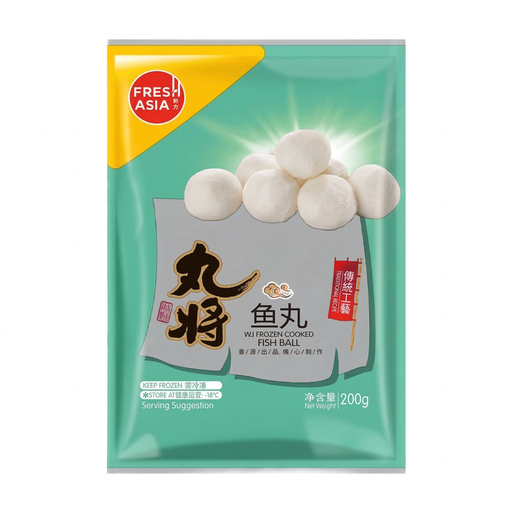
Why it suits this profile: A compact pack for anyone looking to try Asian fish balls in soup, hotpot or stir-fries.
The 50% fish content is clearly stated, so you do not have to rely on the product name alone.
200 grams, suitable for boiling, stir-frying, deep-frying and pan cooking; contains fish and soya as declared allergens.
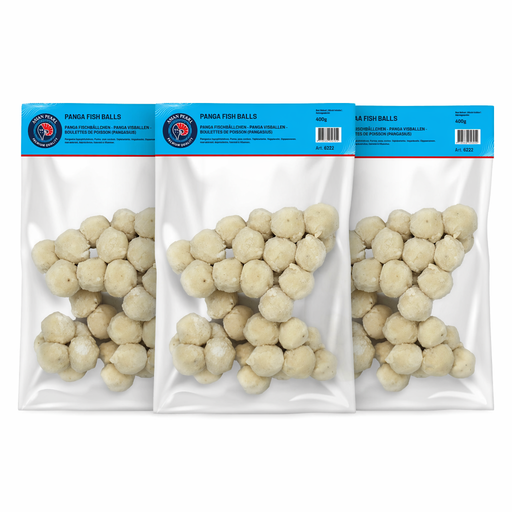
Why it suits this profile: A large stock-up option for households that regularly prepare hotpot, noodle soup or quick meals rich in fish.
The product information states 95% pangasius, making the fish content easy to verify.
3 x 400 grams, made with pangasius; the packaging lists fish as an allergen and may contain traces of crustaceans, molluscs and soya.
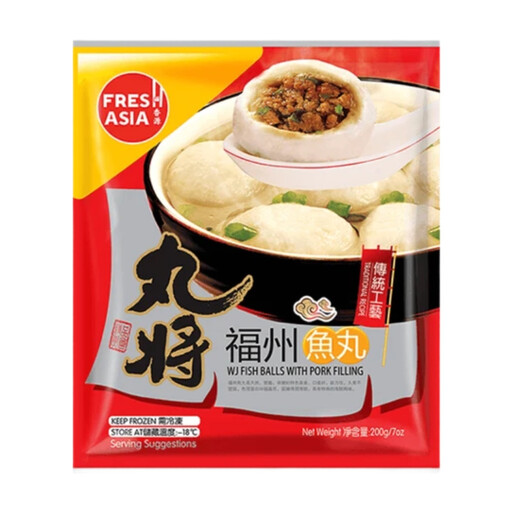
Why it suits this profile: For anyone specifically looking for filled fish balls with pork for clear broth, noodles and Chinese hotpot.
The product description explicitly mentions the pork filling and the allergens fish, wheat, soya and sesame.
Filled Fuzhou-style fish balls; can be cooked straight from frozen and, according to the product information, are suitable for soup, hotpot and noodle dishes.
We have compiled a complete, up-to-date list of products that fully meet these strict selection criteria and the applicable European safety regulations.
You usually do not need to thaw them. Add the balls to gently boiling water, stock or hotpot and heat them until cooked and piping hot throughout. Many products float to the surface when they are ready, but do not use this as your only check. Follow the packaging instructions and do not eat raw fish balls.
Store them unopened at –18 °C or below until the best-before date on the packaging. Do not refreeze them after thawing. Store leftovers according to the instructions on the label and reheat them thoroughly.
Smooth Chinese fish balls, spring onion fish balls, Fuzhou fish balls and squid balls are all suitable choices for hotpot. Fried fish balls add extra bite. If you would like to try several flavours, a mixed pack containing fish, meat and squid balls is a practical option.
