
Vandaag of morgen in huis

Kwaliteit gegarandeerd

Welkomstaanbiedingen ontgrendelen: GRATIS bezorging | Tot 80% korting | Gratis 30 dagen JoyPlus-proefperiode
Download de app
When buying chicken instant noodles, many people focus mainly on the picture on the packaging. That can be misleading. A large chicken on the front does not automatically mean that the product contains chicken meat. Multipacks can also work out more expensive per serving than a larger box, while an appealing word such as “ramen” tells you little about heat level, preparation method or allergens.
This guide compares Asian instant noodles based on verifiable factors: serving size, packaging, ingredients, flavour profile and intended use.
In several products, the chicken flavour comes from a seasoning mix or artificial chicken flavouring. For example, Indomie Special Chicken lists 1% artificial chicken flavouring among its ingredients. This is different from a product containing chicken stock or dried chicken.
Always check:
Brand information about flavour or origin is not an independent guarantee. According to the brands’ own information, some varieties are inspired by Indonesian, Chinese or Korean dishes. Always check the current label before buying.
A pack containing five sachets is convenient for occasional use. For shared student houses, families and offices, a box with 20, 30 or 40 servings may be more practical. Do not just compare the total price; also compare the price per sachet and per 100 grams.
Also pay attention to the net quantity. A 70 or 80-gram cup takes up less storage space than a 120-gram sachet, but it also contains fewer noodles. A larger pack is particularly worthwhile if you eat that flavour regularly and have enough dry, cool storage space.
Korean ramen can be mild, creamy or extremely spicy. According to the product description, Nongshim Shin Ramyun has a spicy, hot broth containing, among other ingredients, red chilli. Samyang Buldak Rose and Carbonara combine a creamy flavour with a spicy sauce. If you are looking for a mild chicken flavour, classic chicken soup varieties from China, Indonesia or Vietnam may be a better choice.
Chicken noodle sachets usually need to be prepared in a pan or heat-resistant bowl. Cups are convenient at the office or on the go: according to the product information, Cup Noodles Chicken Flavor requires boiling water and around three minutes covered.
Check:
Many Chinese instant noodles, Indonesian instant noodles and Korean ramen contain wheat and soya. Some varieties also list milk, egg, celery, sesame, peanuts, fish or shellfish. Check the allergen information before ordering and again when your order arrives.
Halal consumers need to take extra care. A product title may mention halal, but also check the certification information and the current label. The Baixiang varieties in this guide are described as halal in the product information; check the packaging for the full, up-to-date information.
Instant noodles often contain relatively high levels of salt per 100 grams. In the product information provided, this reaches approximately 4 to 5 grams of salt per 100 grams for some chicken varieties. This makes them suitable as a quick meal or snack, but not automatically as a complete meal.
You can add ingredients such as pak choi, spring onion, egg or tofu. This changes the nutritional value and flavour, but does not replace checking the original ingredients list.
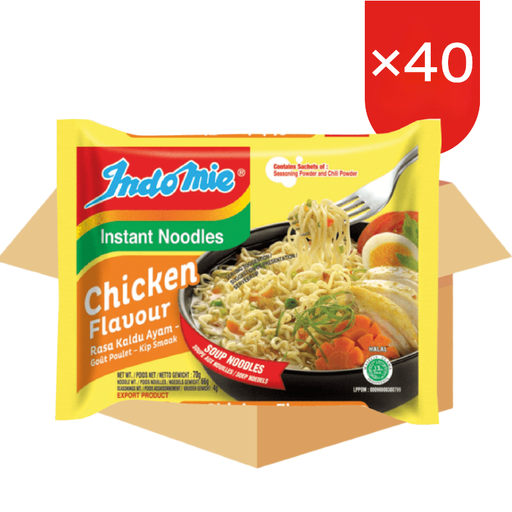
Why it suits this profile: A box with 40 sachets is practical if you eat chicken noodles regularly and want to compare the cost per serving. According to the product description, preparation takes three to four minutes.
The boxed format makes it easier to check the price per serving rather than looking only at the total price.
40 individual servings, 70 grams per sachet and a classic chicken variety from Indonesia.
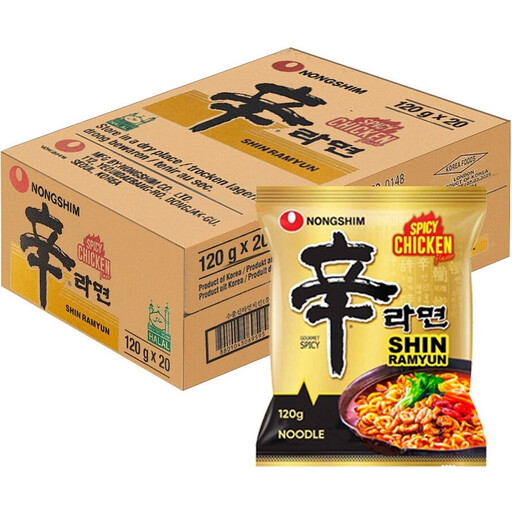
Why it suits this profile: For lovers of firm wheat noodles and a distinctly spicy Korean broth. According to the product description, the sachet contains dried vegetables and a spicy soup base.
The product information clearly states the spicy flavour, the 120-gram contents and the box containing 20 servings.
Large 120-gram servings, produced in South Korea, with wheat noodles and dried vegetables.
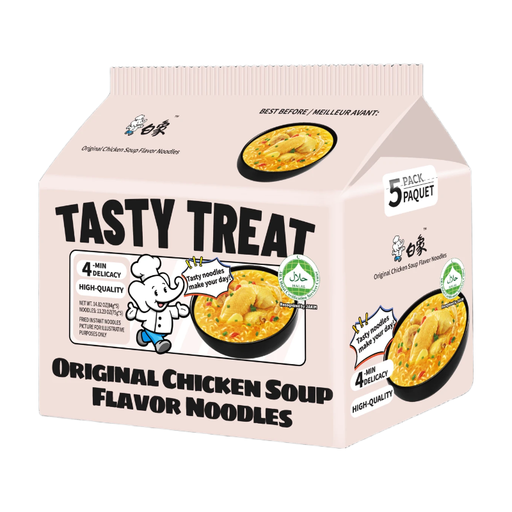
Why it suits this profile: The product listing describes these Chinese chicken soup noodles as halal and packs them as five 84-gram sachets.
The product information states that it is halal. Nevertheless, check the certification mark and the current ingredients on the packaging when it arrives.
Five individually packed servings, a chicken soup base and a preparation method using approximately 500 ml of boiling water.
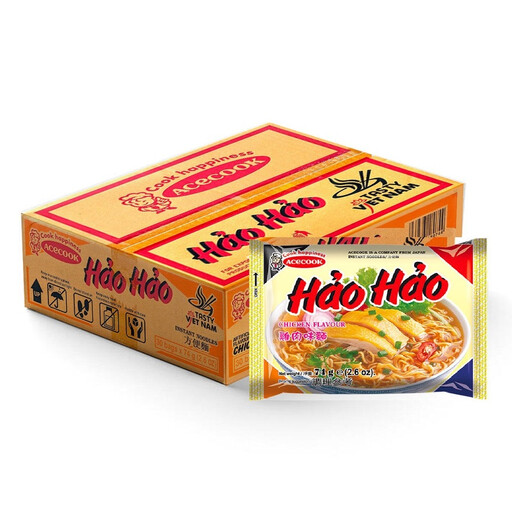
Why it suits this profile: A box with 30 servings is ideal for offices, shared student houses and families that regularly need a quick bowl of noodles.
The fixed contents of 30 sachets and 74 grams per serving make stock planning and price comparison straightforward.
30 individual servings, chicken soup-style noodles and suitable for preparation at home, in the office or on the go wherever boiling water is available.
We have put together a complete, up-to-date list of products that fully meet these strict selection criteria and the applicable European safety regulations.
Store unopened sachets and cups in a cool, dry place, away from direct sunlight and heat or moisture. Check the best-before date on both the individual packaging and the box. Do not use any product if a sachet is damaged or leaking.
When preparing the noodles, always follow the instructions on the label. Use boiling water, take care around hot steam and stir carefully. With cup noodles, keep the lid closed while the noodles are soaking. If you like, add fresh vegetables, egg or tofu once the noodles are cooked.
This varies by product and market version. Some Baixiang and Indomie products are described as halal in the product information, but always check the halal certification mark, ingredients list and packaging of the variant delivered.
The exact shelf life is stated on the packaging. Store the products in a dry, cool place and keep them unopened. It is best not to use a damaged sachet or packaging showing signs of moisture.
This depends on the brand, weight and packaging. Divide the purchase price by the number of sachets or cups and, if useful, also compare the price per 100 grams. A box with 20, 30 or 40 servings is not automatically cheaper, but it may be more practical if you use it regularly.
