
Vandaag of morgen in huis

Kwaliteit gegarandeerd

Welkomstaanbiedingen ontgrendelen: GRATIS bezorging | Tot 80% korting | Gratis 30 dagen JoyPlus-proefperiode
Download de app
A ceramic pan set can be an appealing choice if you want to cook simply, use less oil, and find pans that are quick to clean afterwards. However, a light ceramic exterior doesn’t automatically tell you anything about the cooking surface on the inside. Terms like “non-stick”, “healthy” and “suitable for all hobs” also need checking.
For households in the UK, induction compatibility, storage space and maintenance are particularly important. Below, you’ll find out what to look for and which options suit different cooking styles.
Some pans only have a ceramic coating on the outside. The inside is then made of stainless steel, as with several PURECOOK pans. That’s not a disadvantage, but it is a different type of pan from a ceramic frying pan with a non-stick coating.
Always check:
A ceramic coating is also not the same as solid ceramic. Many ceramic pans are fundamentally made of aluminium or stainless steel.
A PFAS-free pan set can suit consumers who want to avoid certain fluorinated substances in their cookware. Do check whether the claim relates to PFAS, PTFE and PFOA individually, and whether it comes from the product information.
Be careful when phrasing claims: according to their own product information, USELUCK and Redchef state that certain models are PFAS-, PTFE- and PFOA-free. That is a product specification from the brand, not a general statement about all ceramic pans. “Healthy pan set” is therefore not an objective quality guarantee. Instead, look at the material, instructions for use and maintenance.
A pan set for induction needs a magnetically compatible base. Also check whether the pan is suitable for gas, ceramic and electric hobs. On some models, halogen or infrared is listed separately.
Also pay attention to oven use. A detachable handle makes a pan set more versatile, but the handle usually needs to be removed before use in the oven. The permitted temperature varies by model.
Aluminium with a ceramic non-stick coating generally heats up quickly and is relatively light. That can be handy in a small kitchen or for students. Stainless steel, such as 304 stainless steel, is suitable for those looking for a cooking surface without a chemical inner layer. The cooking properties are different though: food can stick more easily if you don’t preheat the pan properly and use enough fat.
A hybrid pan sometimes combines stainless steel with coated sections. The Naturepan Deep Sauté Pan, for example, has a multi-layer stainless steel body with an aluminium core and an etched honeycomb surface. According to the product information, it is suitable for induction, gas, electric and ceramic hobs.
Choose the size based on your household:
A large set may seem good value, but unused pans take up space. For a pan set for a small kitchen, stackable pans and a detachable handle are often more practical than lots of separate lids and long handles.
Always follow the product instructions. For coated pans, preferably use wooden, silicone or nylon utensils. Avoid prolonged dry heating, sudden temperature changes and abrasive scouring pads.
A product may be dishwasher-safe, but hand washing can keep the coating and handles looking good for longer. Also check whether the handle needs to be removed before putting it in the dishwasher. Stop using the pan when the coating is visibly damaged or starting to peel.
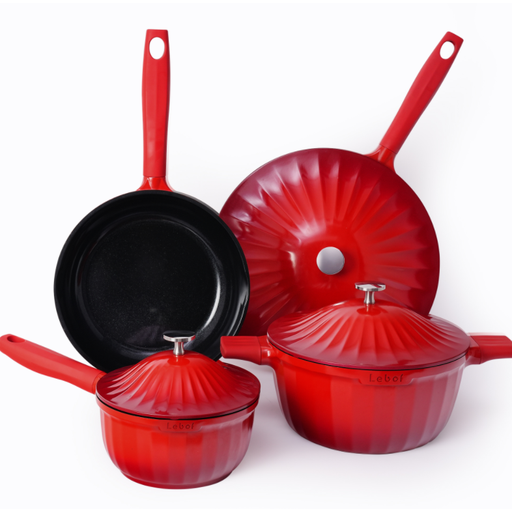
Why this fits the profile: This cookware set includes frying pans, saucepans and a casserole dish with lid. According to the product information, the set is suitable for all hobs, including induction.
The specifications explicitly mention a PFAS-, PFOA- and PTFE-free Ti-Ceramic coating and state that the set is not oven-safe. This makes its usage limits clearer.
7 pieces, suitable for induction and dishwasher according to the product description. Check which size you’ll use most often before buying.
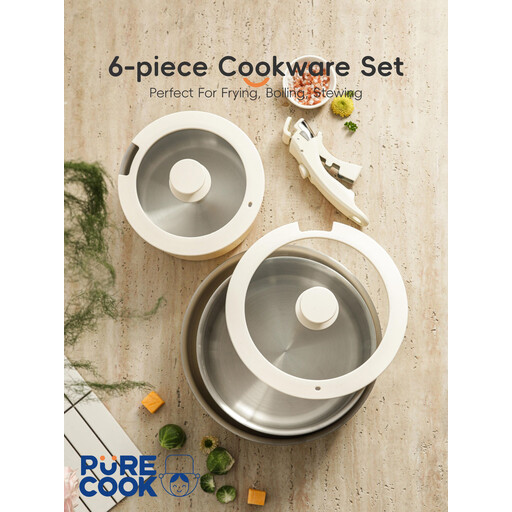
Why this fits the profile: The set combines a 304 stainless steel interior with a ceramic exterior, glass lids and a detachable handle.
According to the product information, the interior is described as 304 stainless steel without a chemical coating. The material construction is therefore separate from the ceramic outer layer.
Tri-ply construction, glass silicone lid and multiple cooking formats. Check the included parts and oven limits before use.
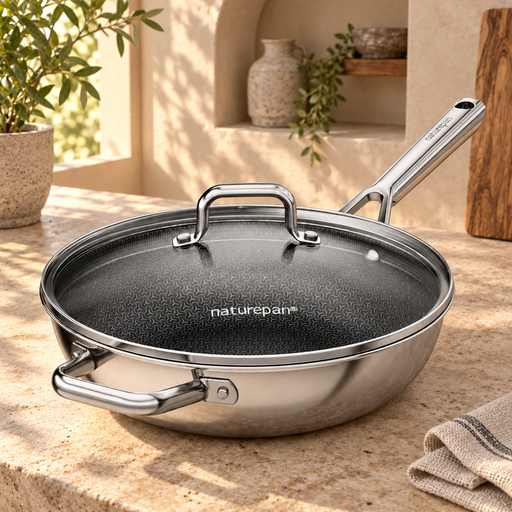
Why this fits the profile: This sauté pan with lid is suitable for stir-frying, simmering and larger meals. The pan supports induction, gas, electric and ceramic hobs.
The product information mentions a hybrid construction, a ceramic coating and specific oven conditions: a maximum of 230 °C without the lid. This prevents any confusion about oven use.
28 cm diameter, matching lid and oven use within the stated limit. Hand washing is recommended to protect the coating.
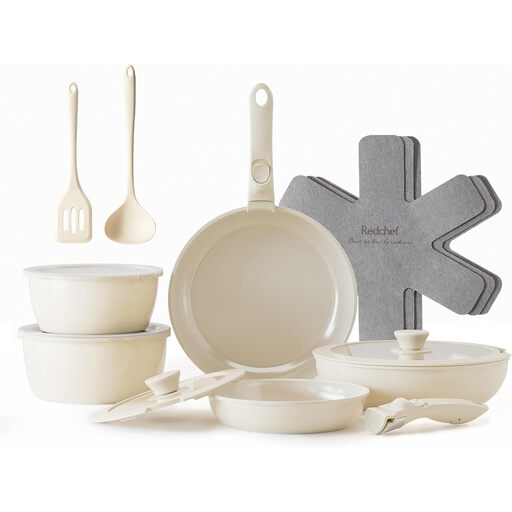
Why this fits the profile: The stackable pans and detachable handle are practical when cupboard space is limited or when you’re taking cookware in a campervan or to a campsite.
According to the product information, the set is suitable for various hobs and the handle must be removed before oven use. This makes the limitations clear.
16 pieces, stackable design and detachable handle. Use non-metal utensils and check the locking mechanism before lifting.
We’ve put together a full, up-to-date list of products that fully meet these strict selection criteria and comply with current European safety regulations.
That depends on the base. Look in the product specifications for “induction compatible” or “magnetic base”. A pan may also be suitable for gas, electric and ceramic hobs. If in doubt, use the manufacturer’s compatibility information.
The lifespan depends on temperature, utensils and cleaning. Use low to medium heat, don’t heat the pan empty for long periods, and avoid metal spatulas and abrasive products. Replace the pan when the coating is visibly damaged.
No. “PFAS-free” describes a specific material property and is not a general health assessment. According to their own product information, certain brands state that specific models are PFAS-free. Always check the full composition, instructions for use and maintenance guidelines.
