
当日/次日达

品质保障

开启新人专享福利: 全场免邮 | 低至 2 折 | 免费试用 30 天 JoyPlus 会员
下载 Joybuy
A bulk pack of Asian instant noodles might seem like a great deal, but the wrong choice can quickly disappoint. You could end up with 30 servings that are too spicy, take longer to prepare than expected, or have a shelf life that doesn't match how quickly you'll use them. Allergens and portion sizes aren't always obvious from a product image either.
With this practical guide, you'll focus on what really matters: number of servings, flavour profile, preparation method, country of origin and allergen information. That way, you can find a noodle box for home, the office, a student house, catering or resale without being swayed by marketing claims alone.
A box of 40 sachets might look like a bargain. But you should also check the weight per serving and the total contents. A pack of 20 × 120 g can work out very differently in practice from a box of 30 × 78 g. So, calculate the price per serving and work out how much you actually need.
For a family or office, a large box is often practical. For someone who only eats Korean ramen occasionally, a multipack of 10 or 12 servings might be more suitable. That way, you avoid noodles sitting around for ages or losing their optimum quality.
Spicy ramen, Thai instant noodles and Korean ramen can vary hugely in flavour intensity. A product with chilli oil can taste sharper than a noodle soup with a spiced broth. Creamy varieties sometimes contain milk, egg or other allergens.
So, always check the ingredients list and the preparation instructions. With Samyang Buldak Carbonara, most of the cooking water is drained off and the sauce is then stirred through the noodles briefly. That gives a very different result to a soup variety where the cooking water stays as part of the dish.
A Korean brand doesn't automatically mean every pack is made in South Korea. The product information states the country of origin for each item. For example, the Samyang Buldak Hot Chicken Carbonara Ramen lists China as the country of production in the product details, whereas Nongshim Kimchi states Republic of Korea as its origin.
Always check the packaging when it arrives. Product information and packaging can change. For anyone with an allergy, the label is what you should rely on.
Most instant noodles are ready in a few minutes, but the preparation method varies:
A product for the office is more convenient if you only need a kettle. For home use, a pan can give you more control over texture and sauce thickness.
Look out for wheat, gluten, soya, sesame, fish, shellfish, milk, egg, peanuts, nuts, celery and mustard. Some products also state that they are produced in an environment where other allergens are handled.
The salt content can also vary significantly between products. In the nutritional information provided, this ranges, for example, from 1.1 g to 4.8 g of salt per 100 g. So, compare the labels if you're stocking up on multiple boxes. These figures are nutritional information from the product description; always check the current packaging before buying.
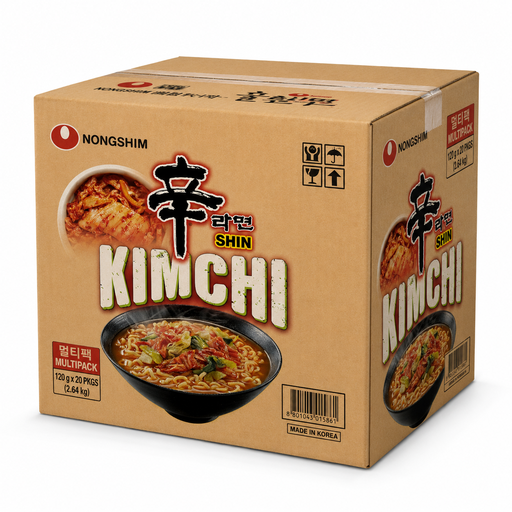
Why this suits the profile: This box contains 20 individual servings of 120 g and has a recognisable kimchi flavour with vegetable flakes. That makes it a straightforward introduction to Korean ramen without going straight for the biggest box.
The fixed quantity of 20 servings makes stock management easier. The product information also lists the ingredients and allergens, including wheat, soya, fish and mustard.
20 servings of 120 g; prepared as a noodle soup; country of origin according to product details: Republic of Korea.
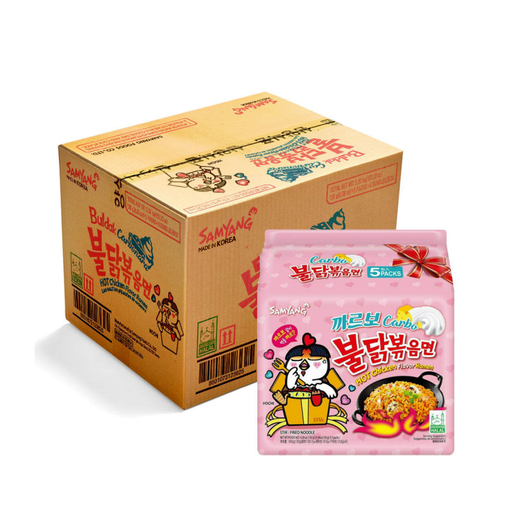
Why this suits the profile: For fans of spicy ramen who want a large supply. The combination of chicken seasoning and carbonara sauce is clearly a dry, creamy stir-fry variety, not a standard soup.
The product description gives a specific preparation method: 550 ml of water, five minutes of boiling, leave around 120 ml in the pan, then mix briefly. So you know in advance that this isn't a cup noodle with a full broth.
40 servings of 130 g; ready in around five minutes; according to the product information, contains wheat, soya and sesame among other ingredients.
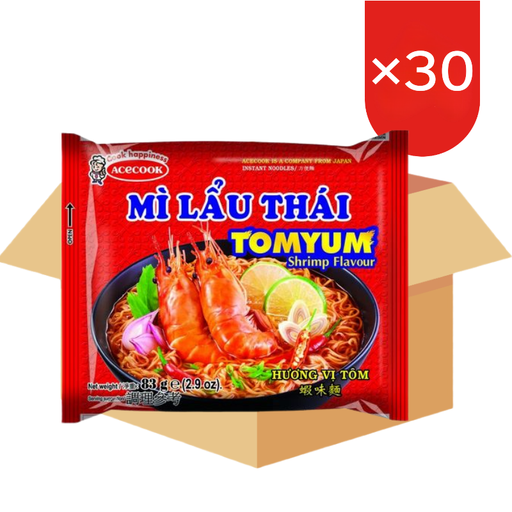
Why this suits the profile: A practical choice for an office, catering kitchen or household where individual portions are used regularly. The flavour direction is Thai tom yum with prawns.
The box contains 30 servings of 83 g and the instructions mention preparation with boiling water and a waiting time of around four minutes. Do check the allergen section beforehand: the product details list soya and prawns.
30 individual servings; tom yum prawn flavour; prepared in a bowl with hot water.
We've put together a full, up-to-date list of products that fully meet these strict selection criteria and comply with current European safety regulations.
The best-before date is on the packaging and varies by product. Store the boxes in a cool, dry place, out of direct sunlight and away from heat and moisture. Don't buy any products in damaged packaging, and use opened sachets promptly.
They can be, but always compare the price per serving and the net weight. A box with more sachets isn't automatically better value if the portions are smaller. Also check the shelf life and how much you'll actually use.
Cup noodles or varieties that only need boiling water are usually the most practical for the office. Sachet noodles can be more economical, but they often need a pan, draining or extra crockery. Also check whether the packaging is easy to store individually.
