
Vandaag of morgen in huis

Kwaliteit gegarandeerd

Welkomstaanbiedingen ontgrendelen: GRATIS bezorging | Tot 80% korting | Gratis 30 dagen JoyPlus-proefperiode
Download de app
Kimchi noodles are handy for a quick lunch, late-night snack or simple meal. However, Korean instant noodles vary greatly in portion size, preparation, spiciness, allergens and packaging. A brightly coloured packet tells you little about what’s inside. Terms like “authentic flavour” often come from the brand’s own product description and are no guarantee of objective quality.
With these checks, you can avoid a disappointing purchase and more easily choose between kimchi ramen, kimchi ramyun, cup noodles and bulk packs.
A cup is practical for the office, school or on the go, but the portion can be smaller than that of a packet. For example, the Nongshim Kimchi Ramyun cup contains 75 g, while several packet versions contain 120 g. So a larger package doesn’t automatically mean more edible content per serving.
When comparing, look at:
The flavour can come from dried kimchi, kimchi powder, spices, flavourings or a combination of these. In Nongshim Kimchi Ramyun 120 g, the product information lists dried kimchi cabbage flakes, garlic and red pepper. Ottogi mentions a kimchi spice mix with kimchi powder and dried kimchi.
So check the ingredients list if you’re specifically looking for kimchi ramen with dried vegetables or, alternatively, a strongly spiced broth. According to the brands’ product information, flavour, ingredients and allergens can vary between different versions.
Many Korean instant noodles contain wheat and soya. Depending on the product, mustard, sesame, fish or other allergens may also be present. Nongshim Kimchi Ramyun 120 g, for instance, lists wheat, soya and mustard; the 75 g cup version also lists sesame and fish.
Always read the label on the packaging. Online product information may differ from the current packaging. Also pay attention to the salt content. In the nutritional information provided, this is around a few grams per 100 g of dry product for different versions. That’s relevant information if you eat several portions a week.
A packet is usually best when you’re using a pan at home. You can measure the amount of water precisely and add egg, spring onion, tofu or vegetables if you like. A cup or bowl is more practical without a kitchen, as you only need boiling water. Just check that the packaging is intended for hot water and follow the instructions on the label.
Most versions of instant noodle soup are ready in about three to five minutes. Ottogi KIMCHI RAMEN 120G, for example, recommends around 550 ml of water and a cooking time of three to five minutes. Nongshim Kimchi Ramyun also uses pan preparation with roughly 550 ml of water and a cooking time of four to five minutes.
With cup noodles, water is usually added up to a marked line. Don’t automatically use the same amount of water for every product. Too much water makes the broth bland; too little water can make the flavour too concentrated.
Compare per 100 g and per pack:
A 120 g serving isn’t directly comparable with a 75 g or 100 g cup. So always look at the total contents first.
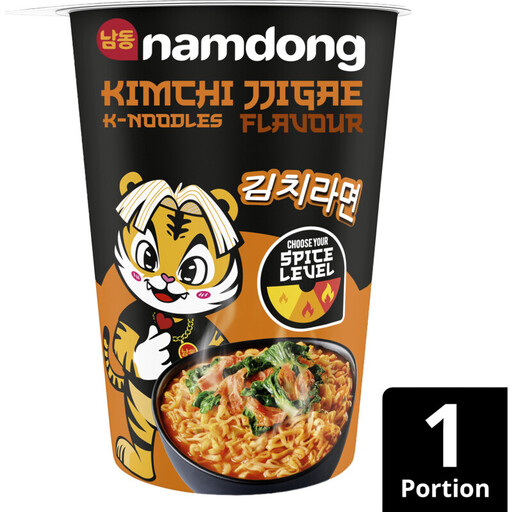
Why this fits the profile: The 83 g pack is a straightforward way to try kimchi noodles without buying a large number of portions straight away.
The net weight is clearly stated. According to the product information, this version contains none of the 14 main EU allergens; however, always check the current label before purchasing.
83 g per pack and storage advice for a cool, dry place.
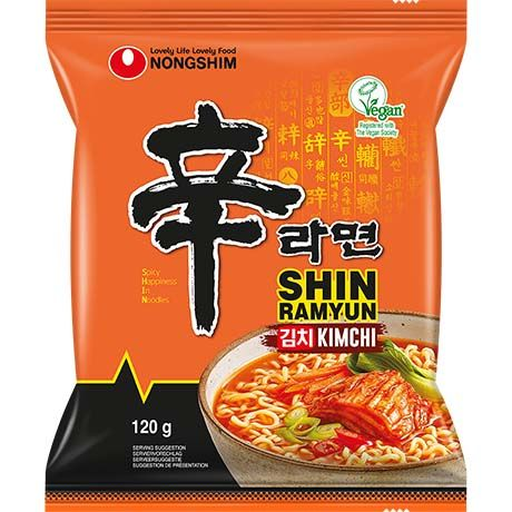
Why this fits the profile: A 120 g serving and pan preparation suit those looking for a generous, spicy noodle soup.
The ingredients and nutritional values are listed in detail, including 4.8 g of salt per 100 g and allergens such as wheat, soya and mustard.
120 g per serving, with dried kimchi cabbage, pak choi, carrot and spring onion according to the product information.
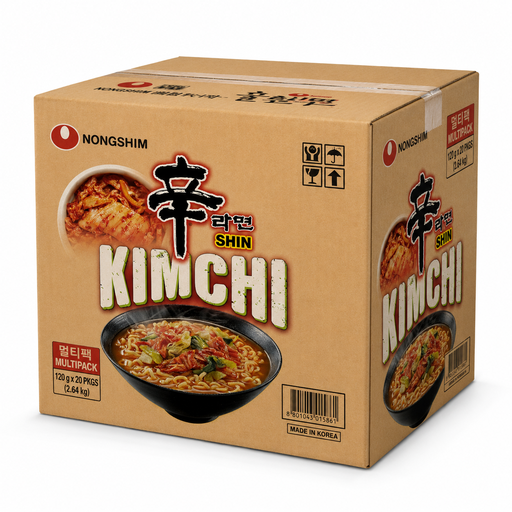
Why this fits the profile: The box of 20 individual packs is practical for shared use, stock management or anyone who buys instant noodles regularly.
The contents per packet and the total number of packs are listed separately. Check the best-before date and allergens on the box before purchasing.
20 x 120 g, with pan preparation and storage advice for a cool, dry place.
We’ve put together a full, up-to-date list of products that fully meet these strict selection criteria and comply with current European safety regulations.
Add ingredients that suit your meal and check beforehand that they fit your preferences. Consider spring onion, sweetcorn, mushrooms, tofu or a soft-boiled egg. Only add extra sambal or chilli flakes after tasting; the spiciness varies by brand and product type.
With dry versions like Shin Kimchi Stir-Fry Instant Noodles, you cook the noodles first, drain the water and then stir the sauce through. That’s different from a regular spicy noodle soup. So read the preparation method before you buy a product.
No. The intensity varies by brand, spice mix and amount of sauce. Product descriptions often use words like spicy or seasoned, but a fixed scale for spiciness is usually missing. You could start with a smaller pack and add toppings to soften the flavour.
The relevant date is on the packaging. Store unopened products according to the advice given, usually cool, dry and out of direct sunlight. Don’t use any packaging that is damaged and always follow the current instructions on the label.
A bulk pack can be practical if you eat Korean ramen regularly, but compare the price per 100 g and check the best-before date. For a first purchase or occasional use, individual packets, cups or a smaller multipack are more flexible.
