
Vandaag of morgen in huis

Kwaliteit gegarandeerd

Welkomstaanbiedingen ontgrendelen: GRATIS bezorging | Tot 80% korting | Gratis 30 dagen JoyPlus-proefperiode
Download de app
Looking to buy a water filter for your kitchen, coffee machine or office? You’ll soon come across terms such as “5-stage filtration”, “0 micron” and “100% pure”. These claims only tell you so much: you also need to consider the intended use, certification, capacity and the cost of replacement filters.
A water filter can affect the taste and smell of tap water. Some systems may also help reduce limescale build-up or certain substances. However, no filter is a universal solution for every water source. Only use filters as instructed and with suitable cold drinking water.
A water filter cartridge won’t automatically fit every jug, dispenser or coffee machine. Check the exact model number and product range. For example, a filter for a BRITA system won’t necessarily fit a Waterdrop or WOOX jug.
Before you buy, check:
This is especially important for coffee machines. A Siemens water filter for EQ appliances and a Philips Saeco AquaClean filter each have their own fittings and instructions for use.
“Three stages” or “five stages” sounds clear, but it doesn’t automatically tell you which substances are reduced. Check the filter material used, such as activated carbon, ion-exchange resin, a sediment filter or a reverse osmosis membrane.
Pay attention to the standard, too. NSF/ANSI 42 covers aspects including taste, odour and chlorine reduction in products assessed against that standard. It doesn’t mean the filter removes every possible substance. Always read claims about performance alongside the official product information and the stated test standard.
A cheap water filter jug may seem appealing, but the cost of replacement water filter cartridges also affects the total price. So compare more than just the purchase price. Consider:
For example, a filter may last for two months or 757 litres. In practice, its lifespan can vary depending on water quality, the amount of water filtered and daily use.
A small water filter jug fits easily in a fridge, but needs refilling more often. For several users, a water filter dispenser or a model with a larger tank may be more convenient. Always check the difference between the total capacity and the amount of water it actually filters.
For example, a 2.5-litre jug doesn’t necessarily hold 2.5 litres of filtered water. If you’re considering a 7-litre dispenser, check how much space it takes up in your fridge.
Activated carbon is often used to improve taste and odour. According to product descriptions, an ion-exchange resin may help reduce certain dissolved substances, while a reverse osmosis water filter uses a very fine membrane. With reverse osmosis, you’ll need to consider water drainage, filter costs and, sometimes, a power connection.
An under-sink water filter is a good option if you want a permanent solution in your kitchen. Check that it fits your cold water pipe and that there’s enough space for the housing and cartridge replacements.
Certification or independent testing is more useful than a general marketing claim, but always check exactly what has been assessed. For example, the Waterdrop WD-10CT is listed as meeting NSF/ANSI 42 according to WQA information for reducing chlorine, taste and odour. The manufacturer also states that it’s compatible with WD-TSA and WD-TSB systems.
Other products may list NSF certification in their product information. Check whether it relates to material safety, structural integrity or a specific reduction claim. Don’t draw broader conclusions than the documentation supports.
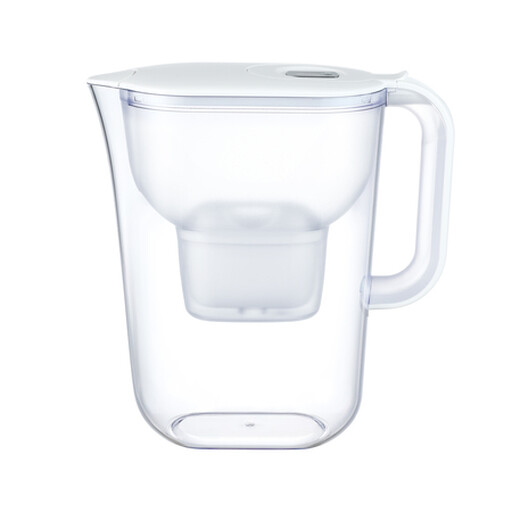
Why it suits this shopper: A simple jug is an easy way to try filtered tap water without installing a system under your sink.
It’s easy to choose: simply check the capacity, size and which replacement filter it takes.
2.5-litre total capacity and a compact design for everyday use.
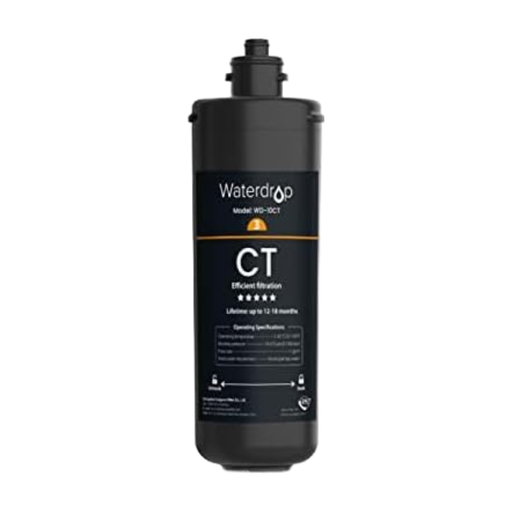
Why it suits this shopper: This fixed system is ideal for households that want filtered water straight from the kitchen tap and are happy to check the installation requirements.
The WD-10CT model number and compatibility with WD-TSA and WD-TSB make it easy to check the system before you buy.
Three filtration stages, a stated pore size of 0.5 micron and a WQA listing for NSF/ANSI 42; according to the product information, replacement is recommended every 12 to 18 months.
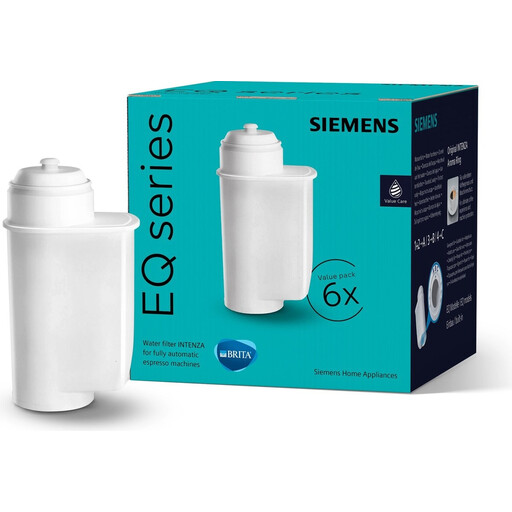
Why it suits this shopper: Designed for owners of a fully automatic Siemens EQ coffee machine looking for a filter that fits their appliance.
The stated TZ70063A model code and compatibility with Siemens EQ.series help you avoid ordering a general tap water filter by mistake.
Pack of 6 filters and an Aroma Ring, according to the product description; the manufacturer says it’s designed to reduce water hardness.
A filter will only perform to its stated specifications if you replace it on time. According to the product information, a BRITA MAXTRA PRO filter can filter up to 150 litres per cartridge. The Waterdrop WD-PF-01A Plus is rated for up to 757 litres or around two months per filter, depending on use. Always check your system’s manual after purchase.
Coffee machines use specific cartridges. A Philips Saeco AquaClean filter is designed for certain Saeco models, while Waterdrop filters for De’Longhi machines are listed as compatible with models including ECAM, Eletta, Dinamica and Magnifica. Check the model number before ordering.
Don’t use hot water in a filter jug or drinking water filter unless the manufacturer says it’s suitable. Clean jugs and reservoirs regularly, and store unused cartridges in a dry place according to the instructions.
We’ve put together a complete, up-to-date list of products that meet these strict selection criteria and the applicable European safety regulations.
It depends on what you want to achieve. Many households use a filter to improve taste and odour or to reduce limescale build-up in an appliance. A filter isn’t designed to make water from an unknown or contaminated source safe to drink. Only use water that’s suitable according to the instructions.
Follow the manufacturer’s recommended interval or litre capacity. This could be around 35 days, two months, 12 to 18 months or a stated number of litres. Frequent use and local water conditions can affect the actual lifespan.
The purchase and maintenance costs are often higher than for a water filter jug. You’ll need to factor in several cartridges, a membrane, possible water drainage and, sometimes, electricity. Compare the total running costs, not just the price of the unit.
