
Vandaag of morgen in huis

Kwaliteit gegarandeerd

Welkomstaanbiedingen ontgrendelen: GRATIS bezorging | Tot 80% korting | Gratis 30 dagen JoyPlus-proefperiode
Download de app
Thinking about buying a water filter for your home, office, campervan or coffee machine? You’ll soon come across terms like water purifier, microfiltration, activated carbon and reverse osmosis. These words sound technical, but they don’t automatically mean a product is right for your situation.
Most costly mistakes come down to three common pitfalls:
The right choice depends on the water you want to filter and how you plan to use it.
Always check the exact model number of your appliance. On coffee machines, you’ll usually find this on a sticker on the side, underneath or behind the water tank. Then search for the model number of the replacement filter, not just the brand name.
Examples:
A filter that looks like it fits may still have the wrong connection or an inadequate seal. So always check your appliance’s manual too.
Activated carbon is often used to reduce chlorine, odour and taste. Other systems combine this with PP material, KDF, hollow fibre membrane or an RO membrane.
Look for objective data such as:
Claims about reducing substances come from the product description or the brand’s own research. So treat them as product specifications for that particular model, not as a general guarantee for every household.
A cheap system can work out more expensive if you have to buy replacement filters frequently. So calculate:
price of a replacement filter × number of replacements per year
Also consider the installation. An under-sink filter may take up little space, but it does need a suitable cold water pipe. A filter jug doesn’t need a connection, but requires manual filling. With a coffee machine, timely replacement is important for the filter’s performance and the appliance’s maintenance programme.
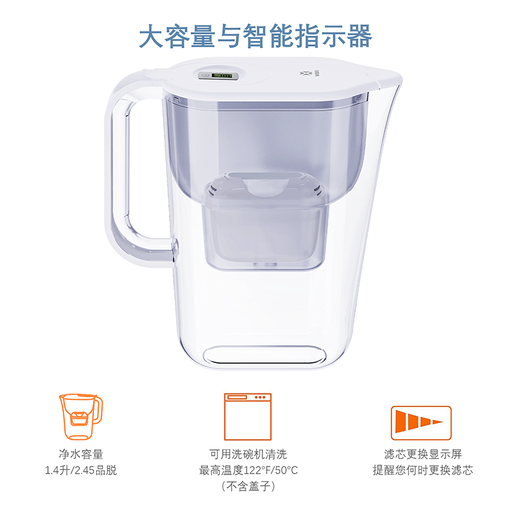
Why this fits the profile: This water filter jug has a total capacity of 2.4 litres and holds 1.4 litres of filtered water. That makes it suitable for daily use without any installation.
According to the product information, the electronic reminder indicates when the filter needs replacing after approximately 35 days. Only fill the jug with cold water.
No fixed connection needed; according to the product information, the jug is dishwasher-safe at temperatures below 50 °C.
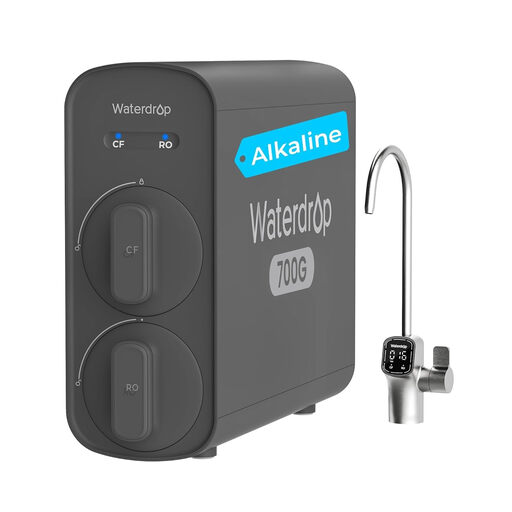
Why this fits the profile: This tankless system is designed for households that use a lot of water and want an under-sink filter.
The product description mentions eight filtration stages, a 0.0001 µm RO membrane and a 2:1 ratio of filtered to waste water. Check the space and installation instructions beforehand.
According to the product information, the capacity is 700 GPD and the system is NSF/ANSI 372 certified and SGS tested.
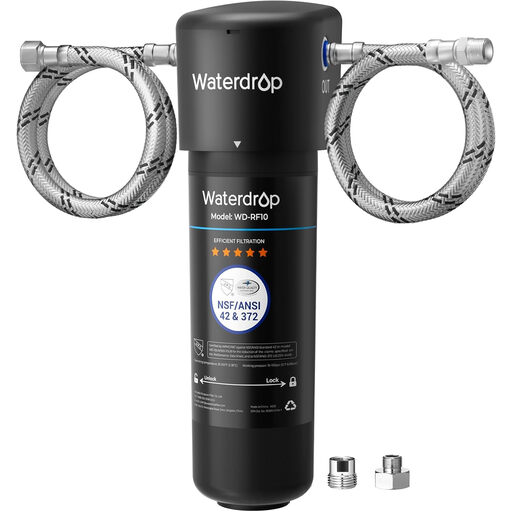
Why this fits the profile: This direct under-sink system suits households, offices, campervans and rental properties where a compact cold water connection is needed.
The push-to-connect fitting and twist-and-lock cartridge are, according to the product description, designed for quick installation and replacement without tools.
The stated capacity is up to 11,000 gallons or twelve months, depending on water conditions. The product description mentions IAPMO certification to NSF/ANSI 42 and 372.
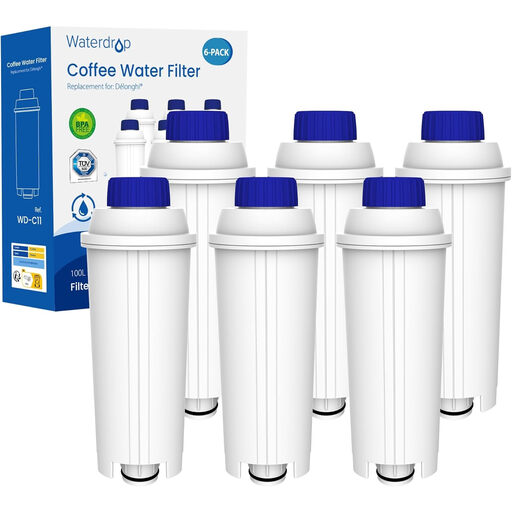
Why this fits the profile: The pack of six filters is practical for regular maintenance of compatible DeLonghi models.
Check before buying whether your machine falls within the stated ECAM, Eletta, Dinamica, Magnifica, ETAM or ESAM range. Rinse the filter before first use.
According to the product description, the filter uses activated carbon and ion exchange resin. The recommended replacement interval is approximately two months, depending on usage and local water quality.
We’ve put together a full, up-to-date list of products that fully meet these strict selection criteria and comply with current European safety regulations.
It varies by product. A water filter jug may state a fixed usage period, while an under-sink water filter might quote six or twelve months. With a coffee machine, the interval is often linked to the number of months, cups or the maintenance programme. Always follow the manual and take your water usage into account.
Not without checking first. Consider the available space under the sink, the cold water connection, the drain and any power supply needed. A countertop model is easier to install, but takes up worktop space and often has its own water tank.
Don’t just look at the purchase price. Factor in the cost of replacement filters, any electricity usage and installation. A filter with a larger capacity can work out more economical with heavy use, while a water filter jug requires less investment for a small household. For each model, check the price and availability of the corresponding replacement filter.
