
Vandaag of morgen in huis

Kwaliteit gegarandeerd

Welkomstaanbiedingen ontgrendelen: GRATIS bezorging | Tot 80% korting | Gratis 30 dagen JoyPlus-proefperiode
Download de app
A water filter can be useful if you want to adjust the taste of tap water, reduce limescale in a kettle or fill your coffee machine with filtered water. However, not every water filter is suitable for every situation. A compact water filter jug works differently from an under-sink filter, while a limescale filter serves a different purpose from a lead filter or reverse osmosis water filter.
The biggest buying mistakes usually result from three recurring pitfalls:
An activated carbon filter is often used to reduce chlorine, odours and unpleasant tastes, according to the product description. A limescale filter is particularly relevant for households that want to reduce limescale build-up in appliances. If you want a water filter for tap water that targets a specific substance, such as lead, check whether the manufacturer states this explicitly and which testing standard applies.
A reverse osmosis water filter uses an extremely fine membrane and is generally more extensive than a filter jug. This type of water purification system usually requires more space, installation and maintenance. Also pay attention to the ratio between filtered water and wastewater.
Claims about removing or reducing substances come from the manufacturer or the certification body mentioned. According to a brand’s own research, results may depend on the composition of the mains water, how frequently the filter is used and whether it is replaced on time. Treat product claims as specifications to verify, rather than as a general guarantee for every home.
Do not only look at the jug’s total capacity, but also at the amount of water it can actually filter. For example, a 2.4-litre jug may hold 1.4 litres of filtered water. This is important for families, who may need to refill the jug several times a day.
Also check:
For a BRITA water filter, the product information may state that it should be replaced after four weeks or approximately 100 litres. Another system may specify an interval of 12 to 18 months, although the actual service life may vary according to local conditions, as stated by the manufacturer.
Measure the available space in your fridge door, on the worktop or under the sink beforehand. A large filter jug is not practical if it does not fit in the fridge. For an under-sink filter, check the connection, the hoses supplied and whether the system is intended for cold water only.
For a water filter for a coffee machine, compatibility is crucial. Check the brand, model range and part number. For example, a filter for Siemens EQ series machines will not automatically be suitable for another espresso machine. For a filter kettle, also check the boiling capacity, boil-dry protection, automatic switch-off and how easy it is to clean the removable filter.
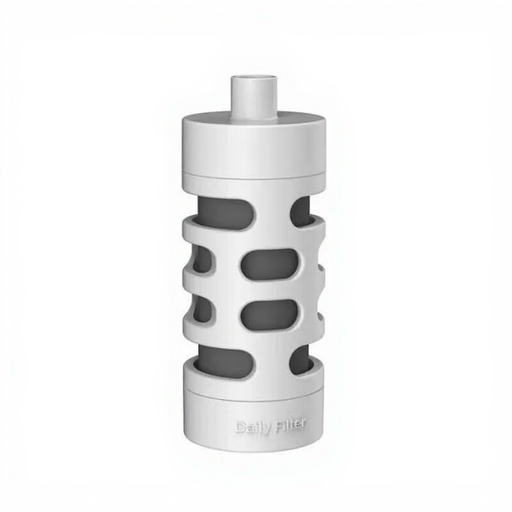
Why it suits this profile: This replacement filter is suitable for anyone looking for a simple solution without installing an extensive water purification system. The product information states a capacity of 150 litres and activated carbon technology.
The stated filter capacity makes it easier to estimate running costs in advance. However, check that this filter is compatible with your existing system.
Activated carbon filter; stated capacity of 150 litres; NSF mentioned in the product name.
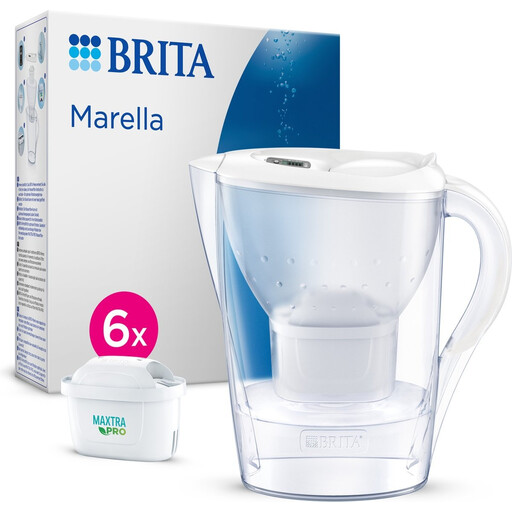
Why it suits this profile: The jug has a total capacity of 2.4 litres, of which 1.4 litres is stated to be filtered water. Its size is designed to fit in a fridge door, and the set includes six cartridges.
Stating the total and filtered capacities separately prevents you from overestimating your daily supply. The filter indicator helps you replace the cartridge on time.
2.4-litre total capacity; 1.4 litres of filtered water; six MAXTRA cartridges included; suitable for a fridge door according to the product information.
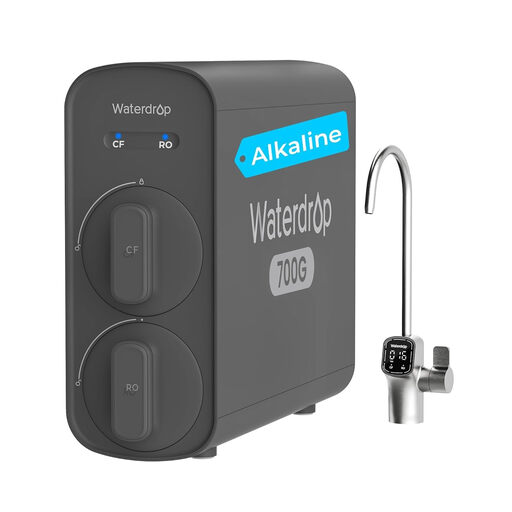
Why it suits this profile: This advanced system is intended for households looking for a more extensive water purification solution. The product information lists eight filtration stages, a 0.0001-micron RO membrane and a capacity of 700 GPD.
The technical specifications are more specific than a general claim about “pure water”. Bear in mind the space required under the sink, cartridge replacement and the stated 2:1 ratio between filtered water and wastewater.
Eight filtration stages; 700 GPD according to the product specification; tankless design; NSF/ANSI 372 mentioned.
We have put together a complete, up-to-date list of products that fully meet these strict selection criteria and the applicable European safety regulations.
For coffee, a compatible appliance filter can be a practical choice. According to the product information, the Bosch TCZ7003 Brita Intenza Water Filter is suitable for Bosch, Siemens, Gaggenau and Neff coffee machines. Always check the exact model before buying.
If you want a filter kettle, look at the combination of boiling capacity and filter capacity. The Russell Hobbs Purity has a boiling capacity of 1 litre, a built-in BRITA filter, a removable filter and an indicator showing when the cartridge needs replacing. The Melitta PRIME AQUA MINI has a 1-litre capacity, 2200 watts, automatic switch-off and boil-dry protection, but the product information does not describe an integrated water filter. This distinction is important: a kettle with a removable limescale filter is not the same as a full-size water filter jug.
For a larger household, a water dispenser with a filter may be worth considering. Pay attention to the tank capacity, placement, power supply and cleaning requirements. A reverse osmosis dispenser may offer more features, but it also requires more maintenance than a simple jug.
It varies from one system to another. Many filter jugs work with an interval of approximately four weeks or a specified number of litres. Some under-sink filters state 12 to 18 months. Follow the instructions and replace the filter sooner if the flow rate or taste changes.
Not always. Dutch tap water is monitored and is generally suitable for drinking. However, you may choose a filter to improve taste or odour, reduce limescale or suit a specific application, such as coffee. If you have concerns about water quality, check the information provided by your water supplier first.
Calculate the cost by dividing the price of a cartridge by its stated service life in litres or weeks. Include any electricity costs, wastewater from reverse osmosis and maintenance. This gives you a fair comparison between a filter jug, an under-sink system and a water dispenser with a filter.
