What should you look for?
First, check whether a separate appliance can be installed safely and practically. Then compare its drying capacity, energy use and maintenance needs with your towel loads and how often you use it.
Separate heat pump tumble dryer
Choose this option: if you have room for a second appliance and regularly dry towels.
The trade-off: Milieu Centraal says it uses less electricity than older dryers without a heat pump, but programmes may take longer.
Washer-dryer
Choose this option: if there’s no room for a separate tumble dryer and you need one appliance to do both jobs.
The trade-off: The maximum drying load is smaller than the washing load. Milieu Centraal also says washer-dryers use more energy than washing and drying in separate appliances.
Clothes line or occasional air-drying
Choose this option: if you sometimes have a suitable place to hang washing and don’t need to machine-dry every towel load.
The trade-off: You’ll need temporary drying space and time. Air-drying doesn’t use electricity for a drying cycle.
Existing dryer without a heat pump
Consider this: if you’re continuing to use an appliance you already own or comparing older stock in shops.
The trade-off: Milieu Centraal says it uses more electricity than a heat pump tumble dryer. Also compare the venting requirements and actual energy use.
| What to consider |
What to look for |
Who should pay particular attention? |
| Will it fit in your home? |
Measure the appliance, alcove, delivery route and doorway. Check the installation instructions and whether the appliances can be stacked. |
If I have little space to hang washing, I want to know whether the appliance will fit safely in the available space; around 36% of consumers prioritise where it can be installed. |
| Capacity for towels |
Compare the drying capacity with the size of your usual load, and check the specifications for cotton programmes. |
If I often dry larger loads of thick towels, I want to know whether the drum capacity suits my washing; around 29% of consumers prioritise their towel load. |
| Electricity use |
Compare energy use on the same basis using the current EU energy label, and consider programme duration too. |
If I dry clothes regularly, I want to take the electricity use of recurring cycles into account; around 21% of consumers prioritise running costs. |
| Use and maintenance |
Check how easy it is to reach the lint filter and drain away condensation, as well as the model’s maintenance requirements. |
If I use the tumble dryer often, I want to know how much emptying and cleaning will be part of my routine; around 14% of consumers particularly value easy maintenance. |
Stacking can save floor space, but only if the appliances and the stacking arrangement are suitable. The Dutch Consumers’ Association recommends using a suitable stacking kit and warns against placing the washing machine on top of the tumble dryer. A heat pump tumble dryer doesn’t vent warm, damp air outside like a vented tumble dryer, but check how condensation is drained away on the model you choose.
Brands and model examples
These examples show the model-specific features you can compare; they are not an assessment of a brand’s entire range.
Bosch
The WTH8520CNL is an example of a separate heat pump tumble dryer with a stated capacity of 8 kg.
- Bosch lists dimensions of 842 × 598 × 613 mm and Auto Dry for this model.
- Bosch doesn’t list a self-cleaning condenser for this model. Its short programme is intended for a small load of thin synthetic laundry, not specifically for towels.
Beko
The BM3T3824B is a heat pump tumble dryer with a stated capacity of 8 kg.
- Beko lists dimensions of 84,6 × 59,8 × 67,2 cm and energy class B on the EU 2025 label for this model.
- Given its stated depth, it’s worth measuring the full installation space. These specifications alone don’t indicate how well it dries towels.
Samsung
The DV90DG52A0ABEN is an example of a model with a stated drying capacity of 9 kg.
- Samsung lists dimensions of 600 × 850 × 600 mm and a reversible door for this model.
- Check how much space you’ll need to open the door too. The stated capacity doesn’t guarantee a particular drying result for thick towels.
AEG
The TR838A2B is a heat pump tumble dryer with a stated capacity of 8 kg.
- AEG lists maximum external dimensions of 850 × 596 × 663 mm, energy class C and 97 kWh per 100 eco cycles for this model.
- The dimensions and energy use are model specifications; they aren’t an independent comparison of towel-drying performance.
Miele
The TEA528WP 8kg Active is a separate heat pump tumble dryer with model-specific controls and drainage features.
- Miele lists a capacity of 8 kg and an integrated condensation drain for this model.
- Check that the drain will work with the connection in your home. Miele’s claims about laundry care are manufacturer claims, not an independent assessment of towel-drying performance.
Joybuy products for drying towels
These product picks are separate heat pump tumble dryers. Compare their stated capacity and dimensions with your towel load and the space available.
 No image available
Candy BR 8N3BX-S, 8 kg
An option to compare if you’re looking for a separate tumble dryer for towels within the stated capacity.
Heat pump tumble dryer; drying capacity 8 kg; energy class C; sensor-controlled drying according to the product information.
The 30-minute Turbo Dry programme is intended for small loads of lightly damp clothes, so it doesn’t indicate how long towels will take to dry.
View at Joybuy
 No image available
Bosch WQB245B40 Series 8, 9 kg
An option to compare if you’re looking for a separate appliance with a dedicated towel programme.
Heat pump tumble dryer; drying capacity 9 kg; AutoDry; self-cleaning condenser; dimensions 84,2 × 59,8 × 66,2 cm.
The product title gives energy class B for a German label; don’t treat this as a confirmed Dutch label rating.
View at Joybuy
 No image available
Midea MD205H80WB/W-NL, 8 kg
An option to compare if the stated capacity and available space suit your towel loads.
Heat pump tumble dryer; drying capacity 8 kg; energy class C; dimensions 850 × 595 × 600 mm; sensor-controlled drying according to the product information.
The 30-minute Turbo Dry programme is intended for small loads of lightly damp clothes, so it doesn’t indicate how long towels will take to dry.
View at Joybuy
 No image available
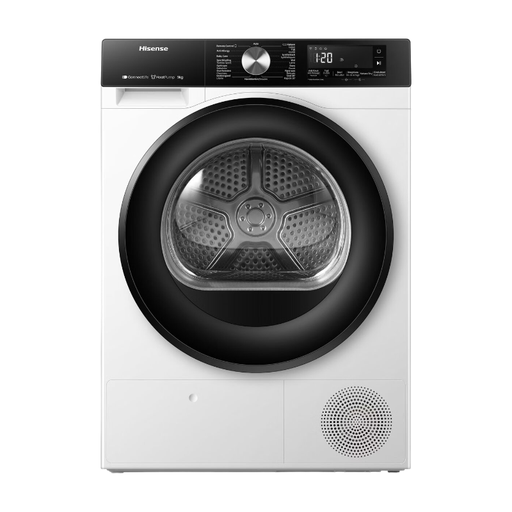
Hisense DH3S902BW3, 9 kg
An option to compare if you usually dry larger towel loads and have enough space.
Heat pump tumble dryer; drying capacity 9 kg; dimensions 84,5 × 59,5 × 64 cm; the product information lists a reversible door and a humidity sensor.
View at Joybuy
 No image available
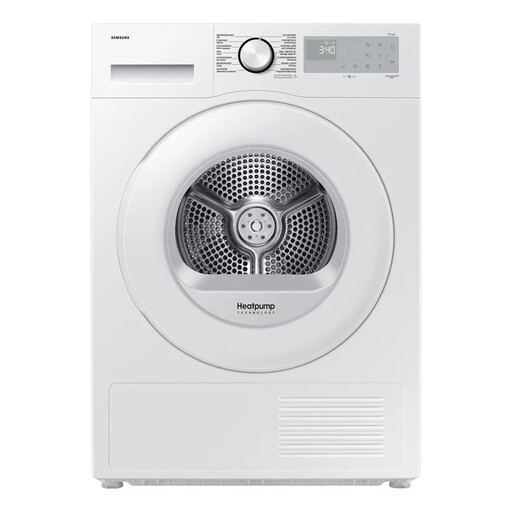
Samsung DV9UDG52A0THEN, 9 kg
An option to compare if you’re looking for a larger drying capacity and can leave enough space for ventilation.
Heat pump tumble dryer; drying capacity 9 kg; energy class C; dimensions 85 × 60 × 60 cm; the product information lists Optimal Dry.
The product information says sufficient clearance around the appliance is required for installation; check the installation instructions.
View at Joybuy
Frequently asked questions
Can all towels go in the tumble dryer?
No. Only tumble-dry a towel if its care label says it’s suitable. Choose the programme and load size according to the label and the tumble dryer’s instructions.
Can I put the tumble dryer on top of my washing machine?
This can save space if both appliances and a suitable stacking arrangement are designed for it. The Dutch Consumers’ Association recommends using a suitable stacking kit and warns against placing the washing machine on top of the tumble dryer. Check the installation instructions for your specific models.
Does a heat pump tumble dryer need an outside vent?
Not for warm, damp air: unlike a vented tumble dryer, a heat pump tumble dryer doesn’t need to vent it outside. Condensation is collected in a tank or, if the model and connection allow, drained away through a water outlet.
What should I clean after drying?
The Dutch Consumers’ Association recommends cleaning the lint filter after every drying cycle. Empty the condensation tank if no drain is connected, and follow the instructions for cleaning the condenser and other parts of your exact model.
Which energy label applies to tumble dryers in the Netherlands?
The updated EU energy label, with classes from A to G, has applied since 1 July 2025. The European Commission says this label must be displayed in shops and online. Don’t compare an older A+++ rating directly with a class on the current label.


