
Vandaag of morgen in huis

Kwaliteit gegarandeerd

Welkomstaanbiedingen ontgrendelen: GRATIS bezorging | Tot 80% korting | Gratis 30 dagen JoyPlus-proefperiode
Download de app
A stick vacuum cleaner can be a useful addition to your household. You can grab it more quickly than a traditional vacuum cleaner, and many models can also be used as a handheld vacuum cleaner for furniture, stairs or your car interior. However, an attractive price or high wattage does not automatically mean it is the right choice.
The key question is: what do you want to use the vacuum cleaner for? Just crumbs and everyday dust, or also pet hair, carpets, liquids and larger cleaning jobs? Below, we cover the main pitfalls, technical considerations and some popular choices for different usage profiles.
A motor rating in watts mainly indicates how much electrical energy the appliance uses. It does not fully tell you how well a powerful vacuum cleaner will pick up dirt. Where available, also look at suction power in kPa or air watts, as well as the brush type and airflow.
A motorised brush can, for example, help with carpets and pet hair. A narrow floor nozzle, meanwhile, is practical for cleaning underneath sofas and cupboards. Also check whether the stated performance applies in the standard mode or only in turbo mode.
‘Up to 40 minutes’ often means the lowest suction setting and a limited accessory configuration. In turbo mode, the operating time can be considerably shorter. Therefore, pay attention to:
A cordless stick vacuum cleaner is particularly convenient for quick daily cleaning. For a large home, a corded model may be more suitable, as you will not need to stop to recharge it.
A vacuum cleaner with a HEPA filter can filter fine particles, but check which type of filter is actually specified and whether the filter is washable or replaceable. The seal of the entire appliance also plays a role. A standalone filter does not provide a complete picture of the air filtration system.
Claims about removing allergens, bacteria or dust mites should be read as brand information. Based on the relevant brand’s own research, certain results may be reported, but they are not automatically a guarantee for every home or user. It is therefore better to rely on verifiable information such as the filter type, maintenance requirements and replaceability.
For a flat or everyday tidy-up, a lightweight cordless stick vacuum cleaner is often sufficient. Do not just look at the weight of the motor unit; consider the weight during use as well. A heavy appliance in your hand can become awkward when cleaning furniture, ceilings or stairs.
A corded model, on the other hand, can provide a constant power supply. The Deerma DX700S, for example, has a 4.5-metre cord, a 0.8-litre dust container and a stated weight of 2.75 kg. According to the product specifications, its suction power is 15 kPa and its maximum noise level is 75 dB. This model is not suitable for liquids.
If you are looking for a stick vacuum cleaner for carpets and hard floors, it is worth checking which brushes are included. A soft brush may be suitable for delicate hard floors, while a rotating turbo brush can be useful for carpets or pet hair.
Also consider hair build-up. A brush that needs to be cleared by hand regularly requires more maintenance. Check the manual to see how to remove and clean the roller brush.
An ordinary stick vacuum cleaner is generally intended for dry dirt only. A wet and dry vacuum cleaner is a separate product category with a liquid tank and specific maintenance instructions. Never vacuum up liquids with a model that was not designed for this purpose.
When using a wet vacuum, empty the dirty-water tank after every cleaning session and allow all parts to dry completely. Even when cleaning dry dirt, emptying the container promptly and keeping the filters clean are important for maintaining airflow.
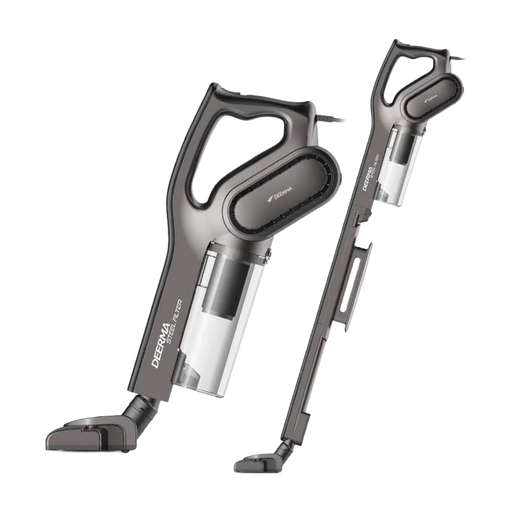
Why it suits this profile: This corded model is designed for everyday dry cleaning on various surfaces. The integrated handheld vacuum and several brush options make it suitable for floors, furniture and crevices.
The cord means you are not dependent on a battery. The product specifications also state both 15 kPa suction power and a specific 4.5-metre cord length.
600 W motor, 0.8-litre dust container, swivelling floor brush and wall mounting.
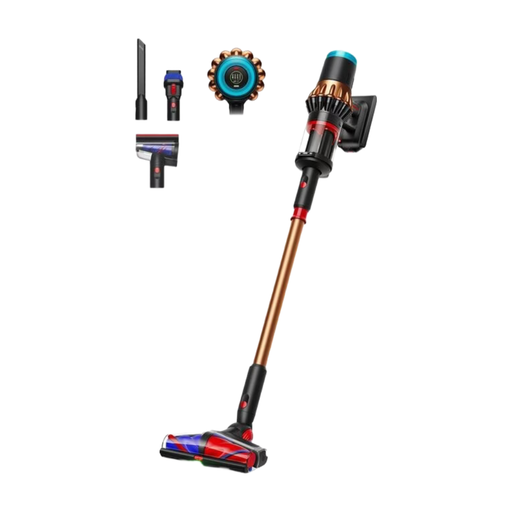
Why it suits this profile: This is a cordless stick vacuum cleaner for households that value battery life, ease of use, filtration and pet-hair removal. The product information mentions a Motorbar brush and a design suitable for different floor types.
The product specifications separately list the battery life, suction power, dust-bin capacity and filter information, so you do not have to compare products based on motor power alone.
315 air watts, up to 70 minutes according to the product information, a 1.35-litre dust bin and a fully sealed HEPA filtration system according to the manufacturer.
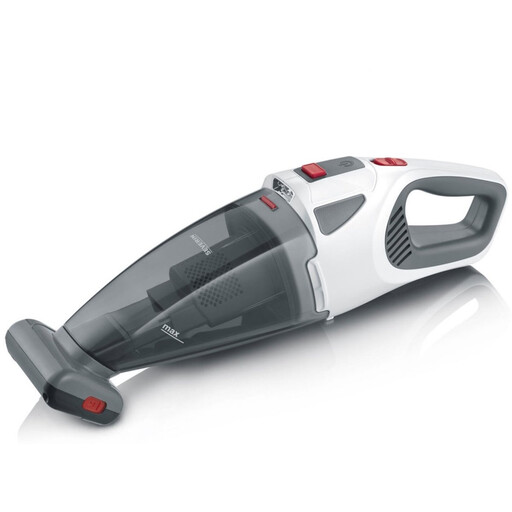
Why it suits this profile: This compact option is designed for furniture, car seats, cushions and spills. It is therefore a good fit for users looking for a handheld vacuum cleaner for pets or a practical car vacuum cleaner.
Its intended use is clearly defined: dry and wet dirt, with a separate warning to follow the capacity limits and cleaning instructions.
18.5 V lithium-ion battery, up to 30 minutes according to the product specification, rotating turbo brush, LED lighting and 4-in-1 accessories.
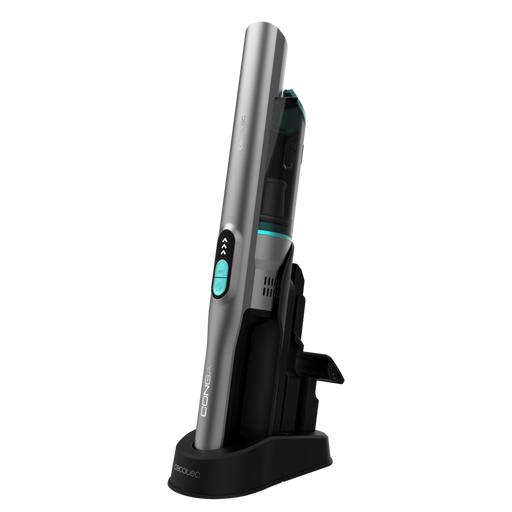
Why it suits this profile: This compact handheld vacuum cleaner is designed for furniture, mattresses, crevices and the car. The motorised mattress and upholstery nozzle is well suited to households with lots of textiles and pets.
The product information specifies two modes, a removable battery and a dedicated accessory for mattresses and upholstery.
20 kPa according to the manufacturer, up to 40 minutes of operating time according to the product description, a 2500 mAh battery and cyclonic filtration.
We have put together a complete, up-to-date list of products that fully meet these strict selection criteria and the applicable European safety regulations.
That depends on your home and cleaning routine. For a small flat with mainly hard floors, a stick vacuum cleaner may be sufficient. For large areas, thick carpets or extended use, a model with a larger dust container, replaceable battery or cord is often more practical.
Battery life varies depending on use, charging cycles and maintenance. Do not leave the battery completely flat for long periods, and use the supplied charger. Before buying, check whether the battery can be replaced. A removable battery can extend the practical operating time of the appliance when a spare is available.
For a corded model, consumption depends on the motor power and how long it is used. An appliance rated at 600 watts theoretically uses 0.6 kWh when used for one hour. With a cordless model, charging losses and charging frequency also play a role. The exact cost depends on your energy tariff. Cleaning the filters regularly and emptying the container helps maintain airflow and performance.
