Who is a slimline dishwasher suitable for?

People living alone with limited kitchen space

A slimline model may fit where a standard-width dishwasher would be a squeeze, but check the height, depth, connections and appliance type too. The Consumentenbond describes slimline dishwashers as around 45 cm wide; they are a similar height to standard dishwashers.

Households that mainly wash cutlery

Choosing between a cutlery drawer and a removable cutlery basket affects how you load your cutlery and how much room is left in the bottom basket. The Consumentenbond explains these practical differences; check which option the exact model includes.

People living alone who don’t accumulate much washing-up

Match the capacity and expected washing routine to the amount of washing-up you actually accumulate. Milieu Centraal recommends running a well-filled standard machine where possible; a smaller model may be a better fit if you can’t fill a standard machine.

What should you look for when choosing one?

First, check that the appliance type and dimensions will fit in your kitchen. Then compare the cutlery layout and match the capacity and energy use to how much washing-up you accumulate between cycles.

What to consider What should you check? Who should pay particular attention?
Space and appliance type Measure the width, height and depth. For an integrated model, also check the niche, door panel, hinge system and model manual. If you have limited kitchen space, you’ll want to know whether the machine will really fit in the available space. Around 30% of consumers put having a suitable space first.
Cutlery layout Check whether the model has a cutlery drawer or removable cutlery basket, and whether your other dishes will fit around it. If you mainly wash cutlery, you’ll want it to be easy to load and unload. Around 30% of consumers put the layout first.
Loading routine and energy use Compare capacity, kWh per 100 eco cycles and litres per eco cycle on the current energy label; take your own washing routine into account. If you don’t accumulate much washing-up, you’ll want to avoid running a partly loaded machine unnecessarily often. Around 30% of consumers prioritise loading routine and energy use.
Installation and total costs Check the connections against the manual and find out whether the retailer charges for installation. When choosing a dishwasher, you’ll want to know in advance whether it can be connected and what additional costs apply. Around 10% of consumers put installation and total costs first.

Common buying mistakes

  • Assuming people living alone always need the smallest model

    A slimline machine has less capacity and isn’t automatically more efficient per load than a well-filled standard machine. Milieu Centraal recommends a standard machine if you can fill it properly.

    Compare the capacity and energy use with the amount of washing-up you accumulate between cycles and how often you want to run the machine.

    Running a partly loaded machine more often can use more water and electricity; this depends on how you actually use it.

  • Looking only at the width

    A dishwasher around 45 cm wide is roughly the same height as a standard model. An integrated model also needs to fit the niche, cabinet door and hinge system.

    Measure the entire space and check the connections and installation manual for the exact model.

    If the appliance doesn’t fit, modifications or installation work may be needed.

  • Treating a cutlery drawer and cutlery basket as the same thing

    A drawer and a removable basket differ in how you load cutlery and how much space is left in the bottom basket.

    Check the cutlery option on the exact model and think about how you usually load cutlery and other dishes.

  • Comparing old energy labels directly with new ones

    Since 1 March 2021, the EU energy label for household dishwashers has used a scale from A to G. This means the old label classes can’t be compared directly with the current scale.

    Compare the current label class and eco figures, such as kWh per 100 cycles and water per cycle. If a product develops a fault, the retailer remains responsible under the applicable statutory guarantee; the manufacturer’s guarantee period is not automatically the limit of your rights.

Brands and models for reference

Beko

The BDFS26046XQ is an example of a freestanding slimline model with a cutlery drawer and space for 10 place settings.

  • Beko lists energy class C, 8,9 litres of water per cycle and 44 dBA for this model.
  • These stated figures are product specifications and don’t prove how its washing performance compares with other models.

Inventum

The VVW4530AW is a freestanding 45 cm model with a removable cutlery basket and a half-load option.

  • Inventum lists 10 place settings, energy class D and 45 dB for this model.
  • The product specifications alone don’t provide a quantitative comparison between a half load and a full eco cycle.

Bosch

The SPS4EMI17E is a freestanding 45 cm model with a VarioDrawer. The SPS4HKW49E is a different version, so its specifications shouldn’t be compared with those of the SPS4EMI17E as if they were the same model.

  • Bosch lists energy class B and 8,7 litres of water per eco cycle for the SPS4EMI17E.
  • Bosch lists the SPS4HKW49E as no longer available. Check the exact model number and current product status with the retailer.

ETNA

The VW47SM is an example of a fully integrated 45 cm model with a cutlery basket.

  • ETNA lists 9 place settings, energy class E, 47 dB, a niche height of 820–880 mm and a door-on-door system for this model.
  • This integrated model will only fit a suitable niche and cabinet door; this says nothing about the performance of other ETNA models.

Dishwashers at Joybuy

The dishwashers shown vary in width: one is described as a 45 cm model, while the product information for the Beko lists a width of 59,8 cm. So check the dimensions before choosing a model for a narrow kitchen.
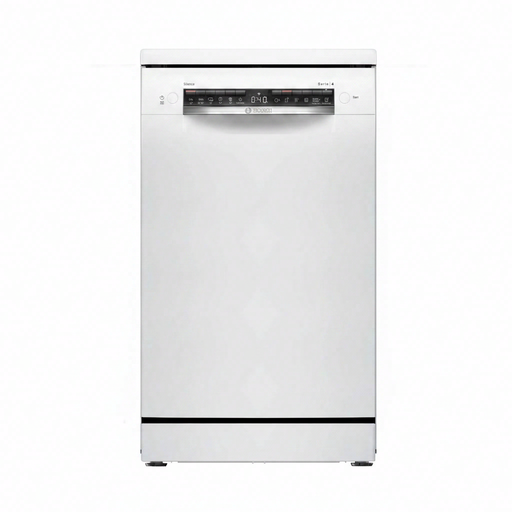
Bosch SPS4HKW49E Series 4 freestanding dishwasher, 45 cm, white

Bosch SPS4HKW49E Series 4 freestanding dishwasher, 45 cm, white

The stated width of 45 cm may suit a narrow kitchen, provided the height, depth and connections are suitable too.

Bosch lists the SPS4HKW49E as no longer available, so check the current product status with the retailer.

View at Joybuy
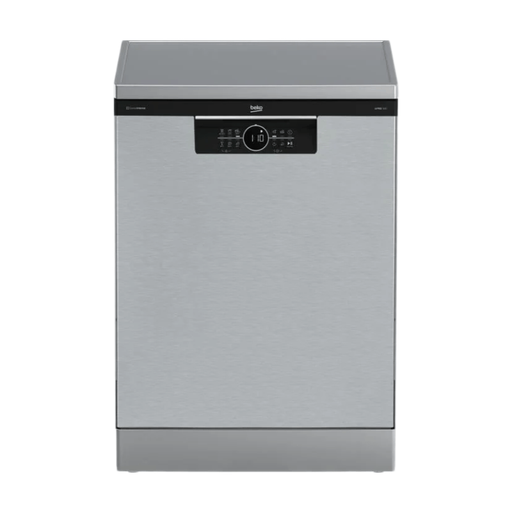
Beko BDFN26442XC CornerIntense dishwasher

Beko BDFN26442XC CornerIntense dishwasher

The product information mentions a sliding cutlery basket, but also lists a width of 59,8 cm. Measure your available space before considering this model for a narrow kitchen.

View at Joybuy

Frequently asked questions

Is a slimline dishwasher always more efficient for one person?

No, it also depends on how often you can fill the machine. Compare the kWh per 100 eco cycles and water per eco cycle on the current label with your own washing routine. Milieu Centraal recommends a well-filled standard machine where possible.

How can I stop cutlery coming out of the dishwasher dirty?

First, check that your cutlery is dishwasher-safe and position it so that water can reach the surfaces. For a cutlery basket, Bosch recommends mixing forks and spoons to stop them nesting together. If the results are still disappointing, check the filter, spray arms and programme according to your machine’s manual.

What should I check before installation?

Check the installation manual for your chosen model for guidance on positioning, drainage, the mains water connection and the electrical connection. Bosch provides instructions for its own models; don’t assume model-specific connection details apply to other brands without checking.

What are my rights if my dishwasher develops a fault after purchase in the Netherlands?

Alongside any manufacturer’s guarantee, you have a statutory guarantee. According to ACM ConsuWijzer, the retailer is responsible for providing an appropriate solution if a product breaks sooner than you could reasonably expect under normal use. A stated manufacturer’s guarantee period doesn’t automatically limit this right.

What energy label does a new dishwasher have?

The current EU energy label for household dishwashers runs from A to G. The European Commission says this scale has applied since 1 March 2021, so don’t compare an old A++ label directly with a current class.
