
Making congee for a small lunch
You make a small portion of watery rice porridge and want a porridge programme, without having to use a large pan.


If you make congee regularly, start by choosing a size that suits your portions, then check whether the exact model has a porridge or congee setting. A basic rice cooker may be suitable if you mainly cook plain rice, but the standard rice setting is not automatically suitable for a liquid porridge. Also check whether the manual allows you to make your recipe: congee and rice pudding made with milk are not necessarily the same, and the stated rice capacity does not tell you the maximum amount of porridge the cooker can hold.
You make a small portion of watery rice porridge and want a porridge programme, without having to use a large pan.
You want to make congee for a larger group. So check the usable porridge capacity, not just the number of cups of uncooked rice.
You usually cook plain rice and want to check whether a basic rice cooker can also handle your specific porridge recipe.
Start with the type of porridge you want to make, then work out how much you need and see which features suit the way you cook and serve it.
Ideal if: you usually make congee for one or a few people and want to keep worktop space to a minimum.
Consider: the stated capacity or number of rice cups does not automatically indicate the maximum amount of liquid porridge.
Ideal if: you need a larger pan or regularly cook different types of rice.
Consider: a larger pan needs more storage space; still check the porridge markings and fill limit.
Ideal if: plain rice is what you cook most, and rice porridge is only on the menu occasionally.
Consider: a one-button model does not automatically have a dedicated congee setting; check whether the manual allows you to make your porridge recipe.
| What to consider | What should you check? | Who is this important for? |
|---|---|---|
| Suitable porridge programme | Check whether the setting supports congee, another type of porridge or both. Follow the recipe and fill limit in the manual. | If I’m making congee for lunch, I want to know whether the programme suits my recipe and ingredients. Around 36% of consumers rank suitability for making porridge as their main concern. |
| Amount of porridge | Look up the maximum porridge capacity or porridge marking and compare it with your recipe. | When cooking for several people, I want to know how much prepared porridge will actually fit in the pan, not just how much uncooked rice it holds. Around 29% of consumers put usable portion size first. |
| Planning and leftovers | Check whether the timer is suitable for your ingredients. Follow the Netherlands Nutrition Centre’s advice on storing leftovers. | If I’m planning lunch in advance, I want to know whether the timer and keep-warm function are suitable for the cooking process, and what to do with leftovers. Around 21% of consumers give planning top priority. |
| Operation and cleaning | See how the appliance is operated and read the cleaning instructions for the inner pot. | If I usually cook plain rice, I want a cooker that’s easy to use and clean; porridge is an extra use. Around 14% of consumers put ease of use and maintenance first. |
The stated number of cups refers to rice; adding extra liquid means it no longer indicates the maximum amount of porridge.
Choose the size only after comparing the porridge marking or maximum porridge capacity in the manual with your recipe.
A mention of congee does not automatically tell you which ingredients or quantities the appliance allows. The Netherlands Nutrition Centre describes rice pudding as milk thickened with rice.
Decide which type of porridge you want to make, then check the recipe and instructions for the exact model.
A keep-warm function is no substitute for advice on storing cooked rice. The Netherlands Nutrition Centre warns about Bacillus cereus in rice dishes that are stored for too long or not kept cold enough.
Serve lunch and cool any leftover rice quickly. Store it in a sealed container in the fridge, and don’t leave cooked rice out of the fridge for more than two hours, according to the Netherlands Nutrition Centre.
Reishunger lists a congee setting for the Digital Mini and Digital Rice Cooker, which come in different stated pan capacities.
Yum Asia lists porridge cooking for its rice cookers and describes the Panda Mini as a more compact option than the Sakura.
The Classic RK1028 is a basic rice cooker for anyone who mainly cooks plain rice and is considering porridge as an occasional extra use.
These product picks are for anyone looking for a rice cooker whose product description mentions a porridge function. For your recipe, check the manual, the permitted porridge capacity and the version intended for the Dutch market.
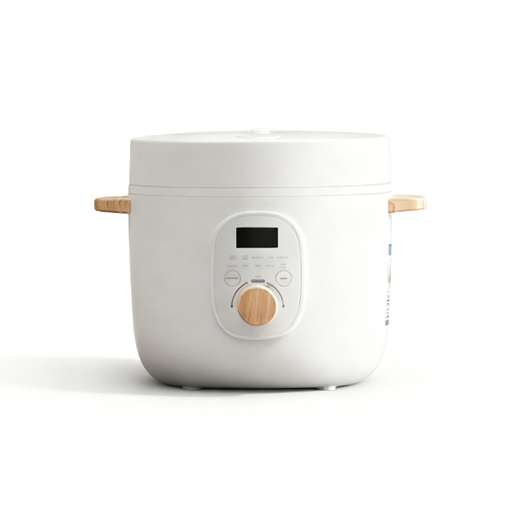 No image available
The product description mentions a porridge function for anyone wanting to make rice porridge.
The description lists a capacity of 2 L, a timer and a keep-warm function. The product name mentions 400 W and a non-stick coating.
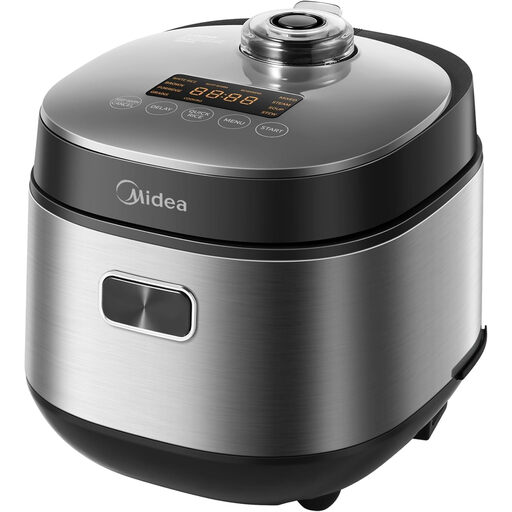 No image available
The product description mentions porridge and presents this cooker as an option for smaller household meals.
The description lists 2 L, 4 cups and 1–3 people, as well as a timer and keep-warm function.
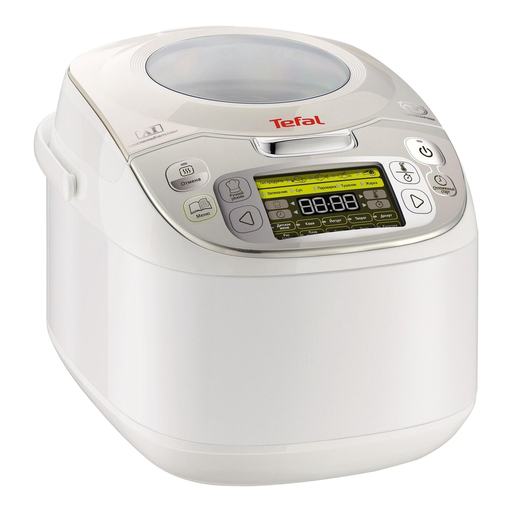 No image available
The product description mentions a porridge programme for anyone wanting to make porridge.
The description lists 5 L and up to 10 cups of rice, as well as 45 programmes, a delayed start and a keep-warm function. The number of cups is not a porridge fill limit.
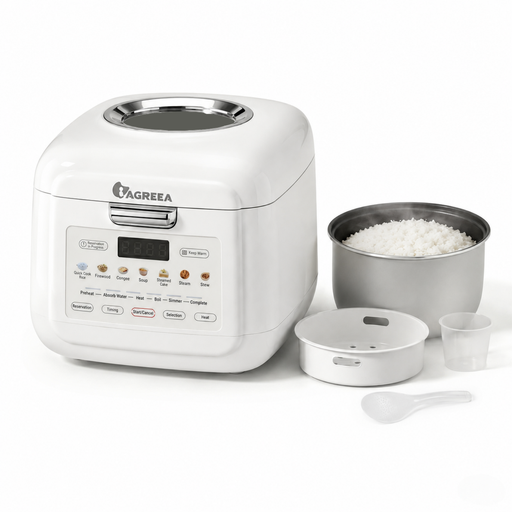 No image available
The product description mentions porridge and describes the cooker as suitable for 1–3 people.
The description lists a timer of up to 24 hours and automatic keep-warm.
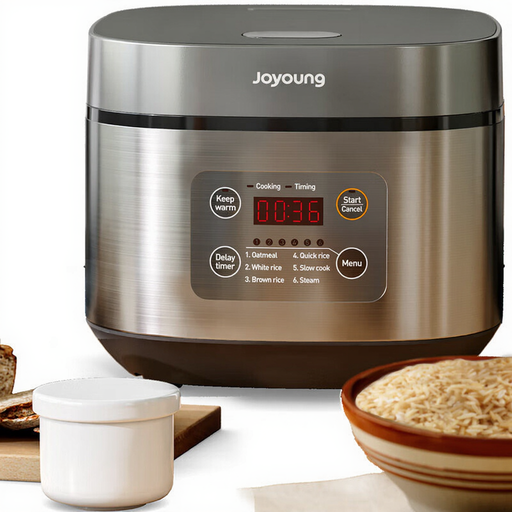 No image available
The product description mentions porridge and describes the 4 L capacity as suitable for family meals.
The description lists a timer, an LED indicator and a non-stick inner pot.
Not necessarily. The Netherlands Nutrition Centre describes rice pudding as milk thickened with rice, so a congee setting on a rice cooker doesn’t automatically mean the appliance is suitable for your milk-based recipe. Check the manual for the exact model.
Don’t use the number of cups as a porridge limit: it refers to rice. For porridge with extra liquid, check the separate filling and recipe instructions for your chosen cooker.
According to the Netherlands Nutrition Centre, cooked rice should be cooled quickly and stored in a sealed container in the fridge. Don’t leave cooked rice out of the fridge for more than two hours, and keep it in the fridge for no more than two days. Also follow the storage advice for any other ingredients.
No. The Dutch government says there is no fixed statutory guarantee period in the Netherlands. What you can expect from a product depends, among other things, on the product and the information provided by the seller; report faulty products to the seller. A manufacturer’s guarantee is separate from your statutory rights.
Mains-powered appliances that fall within the scope of European low-voltage rules must meet conformity assessment requirements. Among other things, the manufacturer responsible must draw up the EU declaration of conformity and affix the required CE marking. Check the version and documentation for the exact product; a general claim about a brand does not automatically confirm that an individual listing is compliant.