
If you regularly make rice porridge
You often make rice porridge and are looking for an appliance with a specifically named porridge or congee setting. Reishunger and Yum Asia list this feature on the models discussed here.


If you regularly make rice porridge, start with a compact model that the manufacturer explicitly says has a porridge or congee setting, such as the Reishunger Digital Mini or the Yum Asia Panda Mini. Then measure the space available and allow room for the lid and steam vent. A small rice capacity doesn’t tell you how much space the appliance takes up or how much porridge you can make. According to the Netherlands Food and Consumer Product Safety Authority, CE marking is mandatory for electrical products covered by the relevant regulations. This general rule doesn’t confirm that an individual product meets the requirements.
You often make rice porridge and are looking for an appliance with a specifically named porridge or congee setting. Reishunger and Yum Asia list this feature on the models discussed here.
You want to compare the appliance’s external dimensions with the space available, while leaving enough room to open the lid and let steam escape safely.
You usually cook for one or a few people and don’t want to confuse the stated rice capacity with the amount of rice porridge you can make.
If you often make rice porridge, prioritise a clearly specified porridge setting. If you mainly cook plain rice, a simpler model may also suit you. Also consider the space available, the portion size you need and how the appliance is operated.
| Buying consideration | What to look for | Who is this important to? |
|---|---|---|
| Making rice porridge | Check whether the manufacturer specifies a porridge or congee setting, and consult the instructions for the exact model. | I often make rice porridge and want a setting specifically designed for it; around 36% of consumers prioritise this feature. |
| Worktop space | Compare the appliance’s external dimensions with the space available, leaving room for the lid and steam vent. | I want to know whether the appliance will fit on a narrow worktop and be safe to use; around 29% of consumers prioritise available worktop space. |
| Portion size | Compare the measuring cup and maximum fill level specified in the manual with the amount of porridge you want to make. | I cook for one or a few people and want to know how much porridge one batch will make; around 21% of consumers prioritise the portion size they need. |
| Operation and cleaning | Check the cooking programmes and cleaning instructions for the exact model’s bowl. | I mainly cook plain rice and want an appliance that’s easy to use and clean; around 14% of consumers prioritise ease of use and maintenance. |
A stated capacity or number of cups of rice doesn’t automatically tell you how much water-rich rice porridge the appliance can make.
Use the fill lines and porridge instructions for the exact model to work out your portions. Don’t convert cups of rice directly into bowls of porridge.
An automatic keep-warm function doesn’t, by itself, mean the appliance can make rice porridge to your recipe.
If you often make porridge, check whether the manufacturer specifies a porridge or congee setting, and follow the instructions provided.
The appliance’s external dimensions, the room needed to open the lid and the position of the steam vent all affect whether it will work on a narrow worktop.
Measure the space available and compare it with the appliance’s full external dimensions. When positioning it, allow room for the lid and hot steam.
The Digital Mini Rice Cooker is marketed as a compact rice cooker with a specified congee setting.
Yum Asia offers the Panda Mini with a dedicated porridge setting.
The RK-6142 is a basic mini rice cooker worth comparing if worktop space is a key consideration.
The 27020-56 is a small rice cooker worth comparing if easy cleaning matters to you.
These Joybuy products list rice porridge as a feature and come in different capacities. Check the dimensions and portion instructions for the version you choose.
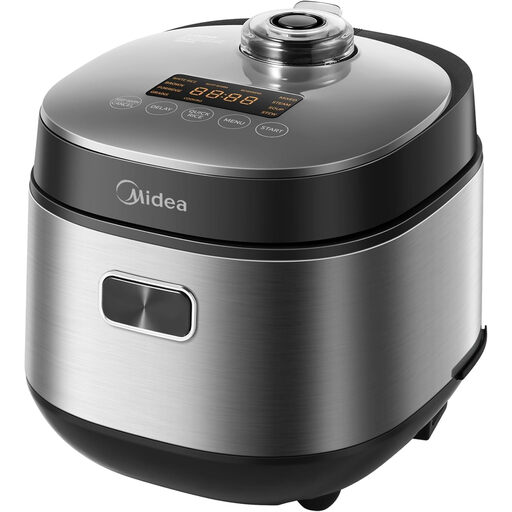 No image available
The product information lists a porridge function and suitability for small kitchens. Check the external dimensions before placing it on a narrow worktop.
Listed features: 2-litre capacity, 4 cups and suitable for 1–3 people.
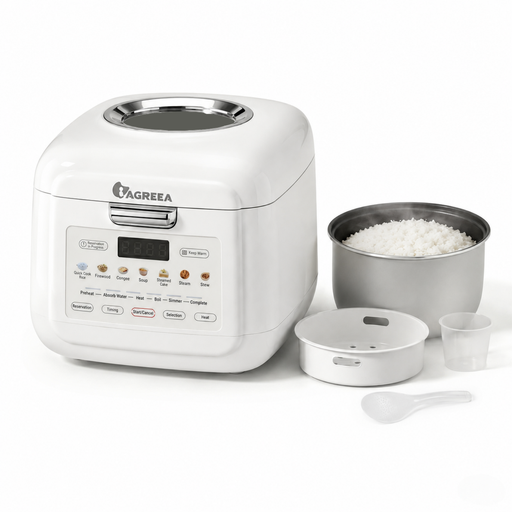 No image available
The product information lists a porridge function and a slim design. Compare the actual external dimensions with the space available.
Listed features: 2-litre capacity, capacity for 3 cups of uncooked rice, viewing window, steam basket and keep-warm function.
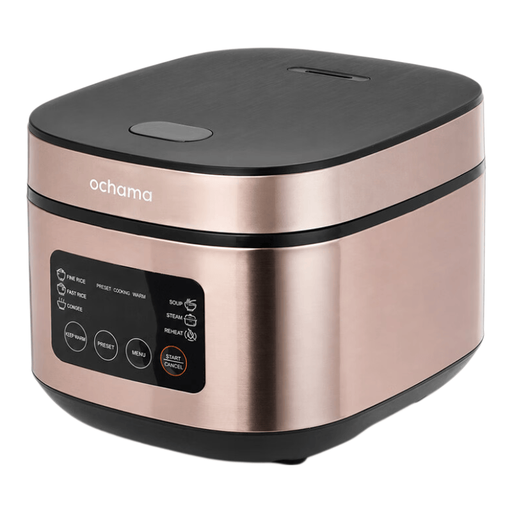 No image available
The product information lists a porridge function. With a 4-litre capacity, it’s especially important to check that the appliance and the portion size you have in mind suit your kitchen.
Listed features: 6 cooking functions, timer and ceramic-coated inner bowl. Take care around hot steam while cooking and when opening the lid.
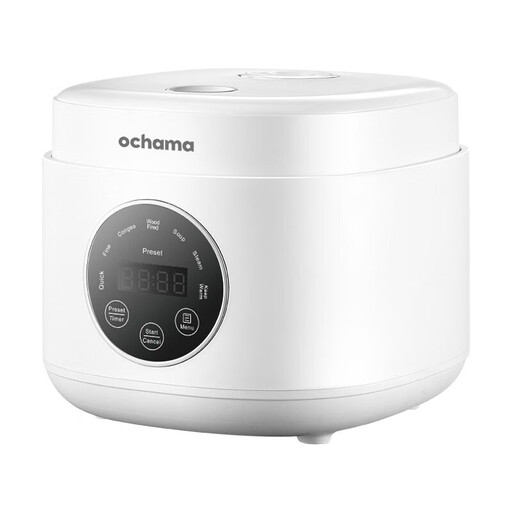 No image available
The product information lists a porridge function and says it’s aimed at households of 2–3 people. Check the fill lines for the amount of porridge you want to make.
Listed features: 7 cooking functions, timer, keep-warm function and steam basket.
No. The stated number of cups describes the rice capacity, not a guaranteed amount of cooked porridge. Check the fill lines and porridge instructions for the exact model.
The Netherlands Nutrition Centre advises cooling leftover cooked rice quickly, storing it in a sealed container in the fridge or freezer, and not leaving it out of the fridge for more than two hours.
Yes. According to the Government of the Netherlands, you’re entitled to a product that’s fit for purpose when you buy it. If there’s a problem, the retailer must provide a solution; any manufacturer’s warranty is in addition to this.
According to the Netherlands Food and Consumer Product Safety Authority, CE marking is mandatory for electrical products covered by the relevant regulations. The low-voltage rules apply to electrical equipment with a rated AC voltage of 50 V to 1000 V. Check the marking and product information for the specific appliance; the general rule alone doesn’t confirm that an individual product meets the requirements.